
Heavy Duty Warehouse Racking Systems
Heavy Duty Warehouse Racking Systems
Heavy Duty Warehouse Racking Systems
Heavy-duty warehouse racking systems enable the safe, organized, and high-capacity storage of palletized, bulky, and long products. In this content, you can review the areas of use and technical features of pallet rack, drive-in, drive-through, and cantilever solutions.
Learn comprehensive information about heavy-duty warehouse rack systems, pallet racks, drive-in solutions, and cantilever systems.
Heavy-duty warehouse racking systems enable the safe, organized, and high-capacity storage of palletized, bulky, and long products. In this content, you can review the areas of use and technical features of pallet rack, drive-in, drive-through, and cantilever solutions.

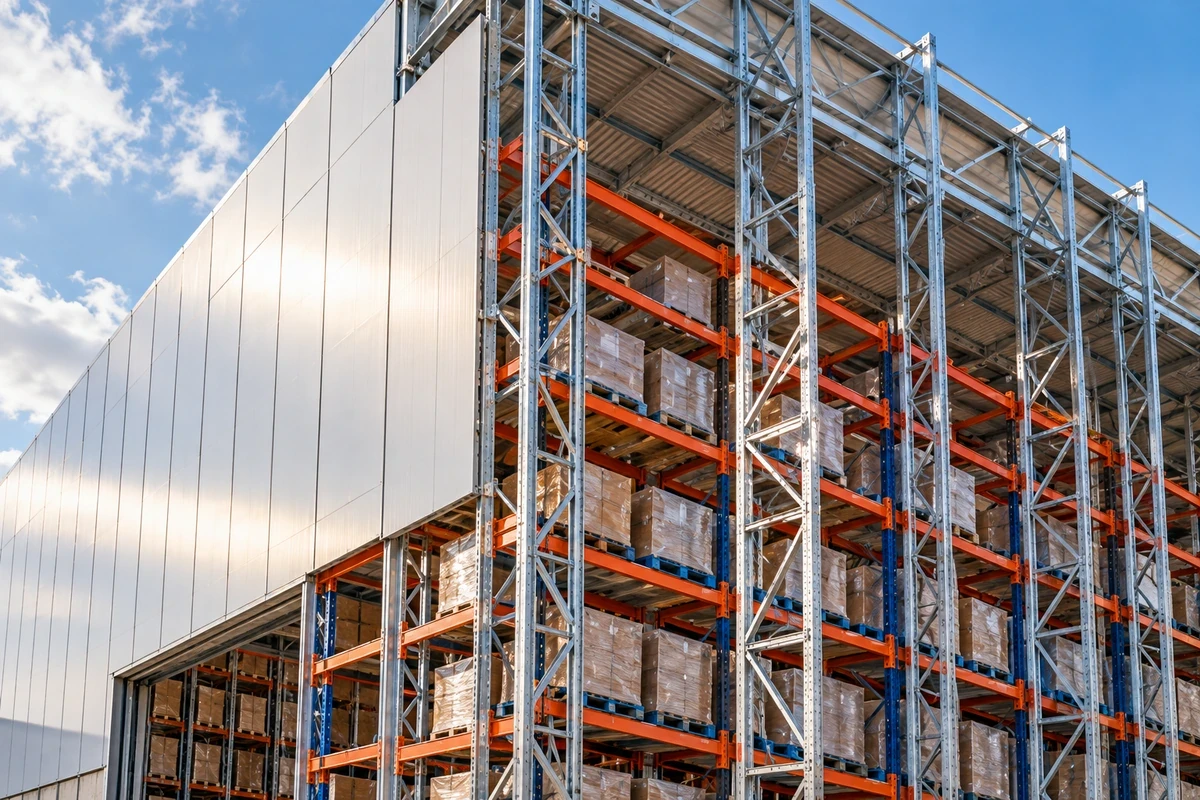
Heavy-duty warehouse racking systems are industrial shelving solutions developed for the safe and efficient storage of products with high load-bearing capacity. These systems provide significant advantages particularly to businesses that practice intensive stocking, work with palletized products, or wish to store heavy-volume materials in an organized manner.
Proper planning of storage areas has numerous critical factors, from speeding up logistics processes to reducing operational costs. That's why heavy-duty shelf systems are a fundamental investment for businesses, as they both enhance warehouse efficiency and meet safety standards.
Features of Heavy-Duty Warehouse Racking Systems
High Load Capacity
Heavy-duty racks allow for the safe storage of tonnage products thanks to their steel construction structures. The amount of load that each shelf can bear is precisely determined through proper engineering calculations.
Modular and Flexible Structure
Thanks to structures customizable to the warehouse area, shelf spaces, floor levels, and widths can be adjusted according to the business's product structure. This presents a system that can be easily expanded according to needs in the long term.
Ensuring Warehouse Efficiency
Properly positioned heavy-duty racks maximize usable space in the warehouse. Quick locating and easy transport of products increase operational speed.
Safe Storage
Since storing heavy products can pose risks, anchor connections, cross braces, and durable steel profiles are used in these systems. Thus, rack stability is maintained and safety standards are met.
Compatibility with Different Warehouse Structures
Heavy-duty racks can be designed to work compatibly with forklifts, reach trucks, or warehouse automation systems. This allows businesses to use their existing equipment efficiently without needing to switch.
Who Are Heavy-Duty Warehouse Racking Systems Suitable For?
Heavy-duty warehouse racking systems are commonly preferred in the following sectors:
Logistics warehouses
Manufacturing facilities
Wholesalers and distribution centers
Construction material warehouses
Food, packaging, and chemical sectors
Any business managing palletized stock
Pallet Racking Systems
Pallet racking systems are one of the most commonly used and preferred heavy-duty storage solutions in warehouses. This system, which enables the organized, safe, and fast storage of palletized products, offers both high capacity and significantly speeds up warehouse operations. It is an ideal storage structure, especially for businesses working with forklifts.
Key Features of Pallet Racking Systems
Extensive Storage Capacity
Pallet racks allow the shelving of palletized products in layers. Thus, both horizontal and vertical storage can be executed, optimizing the use of space to the fullest.
Compatible Working with Forklifts
The system's design allows forklifts, reach trucks, and similar equipment to easily enter between racks to place pallets. This compatibility shortens transportation times and increases operational speed.
Advantage of Modular Structure
Pallet racking systems are completely modular. Shelf spaces, heights, and depths can be adjusted according to the enterprise's needs. They can be expanded or used in combination with different storage structures as needed.
Easy Stock Tracking
Since pallets are placed at specific addresses, stock control can be done more quickly and orderly. This arrangement provides a great advantage, especially in warehouses with high volume product flow.
Durable and Safe Design
Thanks to its steel construction, it can withstand high weights. The junction points of the rack elements are determined through engineering calculations suitable for the load-bearing capacity.
FIFO and LIFO Operational Scenarios in Pallet Racking Systems
Pallet racking systems can be adapted to different stock management methods:
FIFO (First In First Out): Shelves are planned for one-way entry and exit to ensure the products are consumed chronologically.
LIFO (Last In First Out): This method can also be applied as needed according to the warehouse structure.
This flexibility helps enterprises optimize their systems according to product cycles.
Who Should Prefer Pallet Racking Systems?
Pallet racking systems are quite suitable for the following businesses:
Medium and large-scale warehouses
Companies with fast product circulation
Pallet-based manufacturing and distribution centers
Food, packaging, plastics, automotive, and logistics sectors
Drive-In and Drive-Through Racking Systems
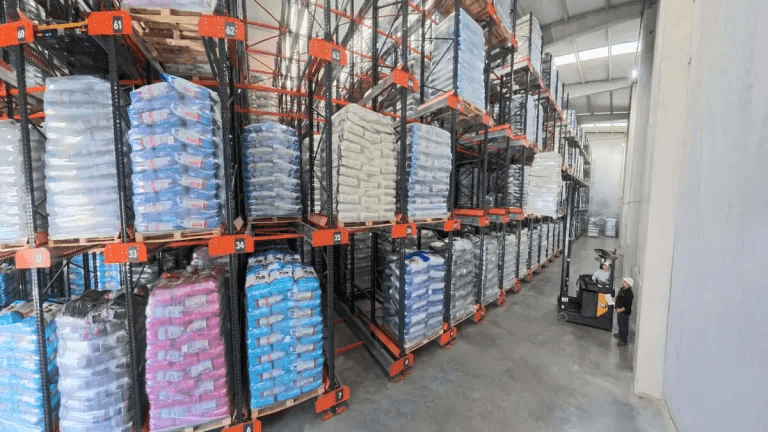
Drive-in and drive-through racking systems are high-efficiency-focused storage solutions designed to achieve maximum storage density within the warehouse. They allow pallets to be placed back-to-back, minimizing the need for aisles, and are therefore preferred by businesses that store high volumes of single-type products.
In these systems, the forklift enters directly into the rack aisle to place the pallets on designated surfaces. This structure allows for much greater product storage compared to classic racking systems.
What is the Difference Between Drive-In and Drive-Through Racking Systems?
Drive-In Racking System
In the drive-in system, the entry and exit are from the same point. Due to this feature, the system operates on the LIFO (Last In First Out) principle.
Ideal for single-type and non-fast-turnover products.
Provides deep storage.
One of the solutions offering the highest volume savings.
Drive-Through Racking System
In the drive-through system, pallet entry and exit can be conducted from different points. This system is suitable for the FIFO (First In First Out) rule.
Preferred in sectors where products need to be consumed chronologically.
Particularly common in food, beverage, and frozen product warehouses.
Highlighted Features of Drive-In and Drive-Through Racking Systems
Maximum Storage Density
Much fewer aisles are required compared to classic racking systems. This means the warehouse area is used energetically, significantly increasing the amount of product stored per square meter.
Ideal for Single-Type Products
Drive-in and drive-through systems are suitable for storing similar-sized products with the same stock code together. Stock management proceeds more orderly in this way.
Durable and Solid Structure
In these rack systems, steel construction elements are reinforced to be suitable for forklift entries. Side guards, slides, and bottom supports increase the safe use of the racks.
Effective Movement with Forklifts
Forklift operators can enter the rack aisle directly to place pallets, which gives an advantage in terms of time and labor.
Which Sectors Use Them?
Drive-in and drive-through racks are particularly suitable for the following sectors:
Food and beverage warehouses
Cold storage warehouses
Frozen product preservation centers
Manufacturing facilities storing single-type products
Packaging, plastics, and chemical sectors
Cantilever Racking Systems
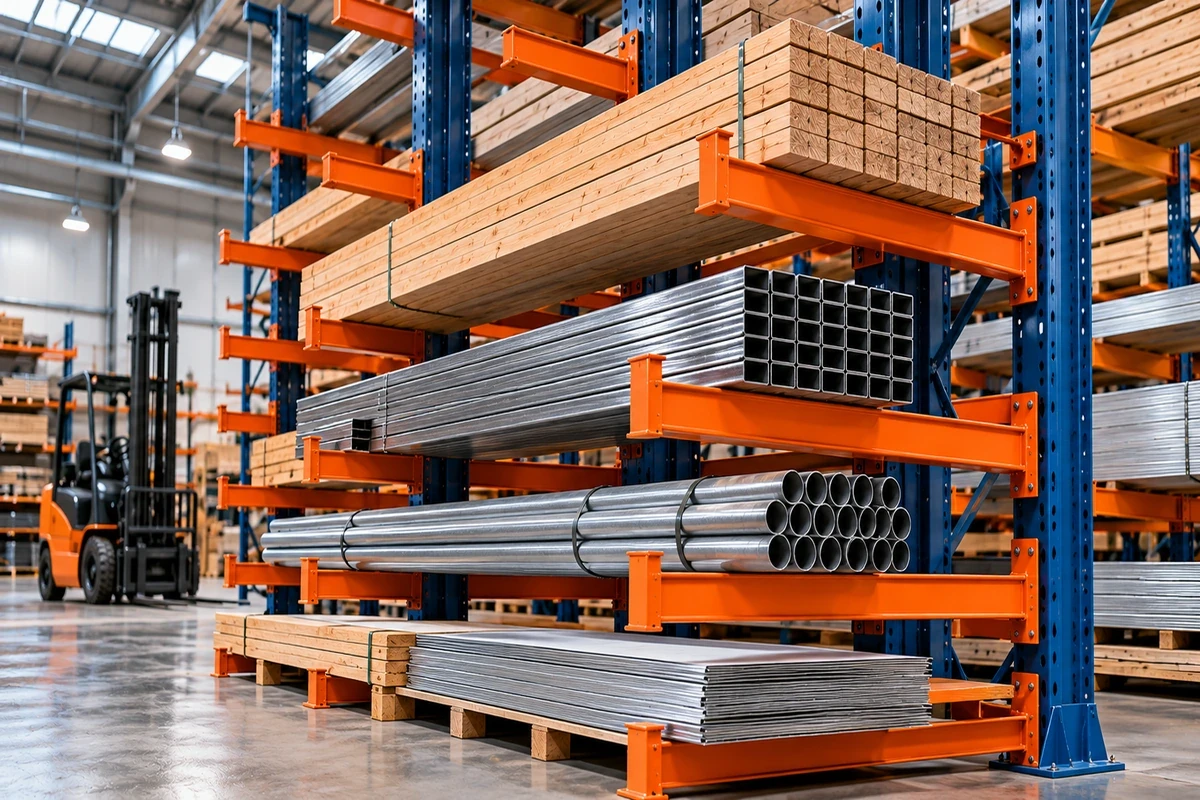
Cantilever racking systems are heavy-duty shelving solutions specially designed for the safe storage of long, bulky, and irregularly shaped products. Unlike traditional pallet racks, they allow easy placement of long materials since they do not have posts on the front side. This structure provides great convenience, especially in the construction, metal, wood, and industrial manufacturing sectors.
Structure of Cantilever Racking Systems
The cantilever racking system has a modular structure consisting of posts, horizontal arms, and base feet. Arm lengths are set according to needs and strengthened according to the weight of the load. This structure allows for both single-sided and double-sided use.
Single-Sided Cantilever Racks
Suitable for use along the wall.
Optimally utilizes warehouse space.
Double-Sided Cantilever Racks
Allows two-way loading.
Provides high storage capacity in middle spaces.
For Which Products are Cantilever Racking Systems Ideal?
Cantilever racking systems are particularly preferred for the storage of the following product types:
Steel pipes
Metal products like profiles, angle bars, and box profiles
Timber and wooden pallets
PVC and aluminum profiles
Rolled materials
Large dimensions or irregularly shaped materials
Placing these products on standard racks is both difficult and risky. Cantilever racks, on the other hand, eliminate these challenges and create a safe storage area.
Highlighted Features of Cantilever Racking Systems
Open Front Design
Thanks to the absence of a front post, products can be easily placed using forklifts or cranes. This not only enhances safety but also speeds up work processes.
Modular and Expandable Structure
Arm, post, and base elements can be configured according to the enterprise's product dimensions. If necessary, the arm length or number of layers can be increased.
High Load Capacity
Cantilever arms are manufactured with engineering calculations to carry heavy and long materials. Therefore, they can be safely used in both industrial and heavy industry warehouses.
Easy Access and Organised Storage
Direct access to products from the front makes material flow more organized. Stock control can be done much more smoothly.
Who Should Use Cantilever Racking Systems?
Cantilever racking systems are ideal solutions particularly for the following businesses:
Metalworking and steel production facilities
Wood and lumber storage centers
Construction material manufacturers
Factories processing PVC, aluminum, or long profiles
Wholesale material warehouses
Technical Structure of Heavy-Duty Racks
It is of great importance that the technical structure of heavy-duty rack systems is designed correctly to ensure security, durability, and longevity. Since these systems require high load capacity, both the quality of the materials used and engineering calculations play a decisive role. The technical structure directly affects not only the operational efficiency in the warehouse but also occupational safety.
Materials and Steel Quality Used in Heavy-Duty Racks
In heavy-duty rack systems, steel material with high-strength grade is usually used. These steel profiles are produced using the cold forming method and provide high strength. Rack posts, beams, and connecting elements are specially designed to evenly distribute the load.
The following criteria are considered in material selection:
Load-bearing capacity
Structural integrity
Corrosion resistance
Suitability for warehouse environment (humidity, temperature, chemical contact, etc.)
Static and Engineering Calculations in Heavy-Duty Warehouse Racks
One of the most critical stages in the technical structure of heavy-duty racks is static calculations. Engineering analyses are conducted according to the amount of load to be carried, rack height, number of levels, and mode of operation.
The main criteria considered in this context:
Maximum load per rack
Dynamic and static forces distributed along the rack
Compliance with earthquake regulations
The anchorage plan for rack legs applied to the base
Balance provided by cross connections
These calculations guarantee the safe and long-term use of the system.
Safety Components in Heavy-Duty Racks
Various safety components are used to enhance the durability of heavy-duty racks and reduce occupational safety risks.
Cross and Diagonal Connections
Increase rack stability and prevent sideways tipping.
Foot Guards
Protect the leg parts of the racks against impacts like forklift collisions.
Anchor Connections
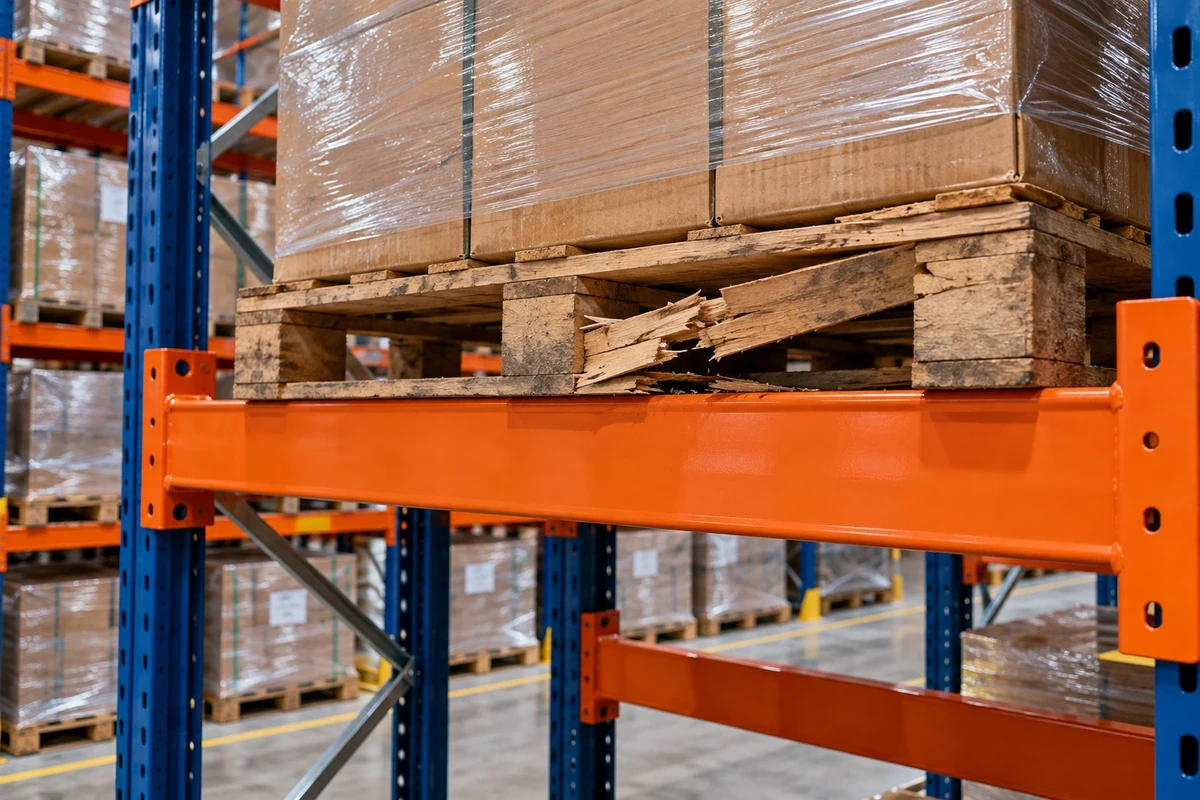
Ensure that rack legs are fixed to the floor. These connections are among the most important safety elements preventing the rack from tipping over.
Safety Pins and Locking Systems
Prevent beams from being dislodged and support the structural integrity of the rack.
Load Distribution and Load-Bearing Capacity in Heavy-Duty Racks
The technical structure is planned to ensure balanced distribution of the load. Overloading threatens not only product security but also the structural integrity of the entire rack. Therefore:
The maximum load capacity for each level is determined
Pallet type and center of gravity are considered
Ensures that load is evenly distributed along the rack
A design that meets these criteria contributes to the much longer lifespan of the rack system.
Technical Details During Assembly and Installation Process in Heavy-Duty Racks
The assembly process is also a critical part of the technical structure. Installations carried out with the correct steps by professional teams are essential for the safe use of the system.
Basic points considered during assembly:
Checking the level of the ground
Correct positioning of anchorage holes
Tightening connecting elements according to standards
Post-installation stability check
Conducting load tests if necessary
Following installation, periodic maintenance and control processes also support the long-term performance of the system.
Heavy-duty warehouse racking systems are industrial shelving solutions developed for the safe and efficient storage of products with high load-bearing capacity. These systems provide significant advantages particularly to businesses that practice intensive stocking, work with palletized products, or wish to store heavy-volume materials in an organized manner.
Proper planning of storage areas has numerous critical factors, from speeding up logistics processes to reducing operational costs. That's why heavy-duty shelf systems are a fundamental investment for businesses, as they both enhance warehouse efficiency and meet safety standards.
Features of Heavy-Duty Warehouse Racking Systems
High Load Capacity
Heavy-duty racks allow for the safe storage of tonnage products thanks to their steel construction structures. The amount of load that each shelf can bear is precisely determined through proper engineering calculations.
Modular and Flexible Structure
Thanks to structures customizable to the warehouse area, shelf spaces, floor levels, and widths can be adjusted according to the business's product structure. This presents a system that can be easily expanded according to needs in the long term.
Ensuring Warehouse Efficiency
Properly positioned heavy-duty racks maximize usable space in the warehouse. Quick locating and easy transport of products increase operational speed.
Safe Storage
Since storing heavy products can pose risks, anchor connections, cross braces, and durable steel profiles are used in these systems. Thus, rack stability is maintained and safety standards are met.
Compatibility with Different Warehouse Structures
Heavy-duty racks can be designed to work compatibly with forklifts, reach trucks, or warehouse automation systems. This allows businesses to use their existing equipment efficiently without needing to switch.
Who Are Heavy-Duty Warehouse Racking Systems Suitable For?
Heavy-duty warehouse racking systems are commonly preferred in the following sectors:
Logistics warehouses
Manufacturing facilities
Wholesalers and distribution centers
Construction material warehouses
Food, packaging, and chemical sectors
Any business managing palletized stock
Pallet Racking Systems
Pallet racking systems are one of the most commonly used and preferred heavy-duty storage solutions in warehouses. This system, which enables the organized, safe, and fast storage of palletized products, offers both high capacity and significantly speeds up warehouse operations. It is an ideal storage structure, especially for businesses working with forklifts.
Key Features of Pallet Racking Systems
Extensive Storage Capacity
Pallet racks allow the shelving of palletized products in layers. Thus, both horizontal and vertical storage can be executed, optimizing the use of space to the fullest.
Compatible Working with Forklifts
The system's design allows forklifts, reach trucks, and similar equipment to easily enter between racks to place pallets. This compatibility shortens transportation times and increases operational speed.
Advantage of Modular Structure
Pallet racking systems are completely modular. Shelf spaces, heights, and depths can be adjusted according to the enterprise's needs. They can be expanded or used in combination with different storage structures as needed.
Easy Stock Tracking
Since pallets are placed at specific addresses, stock control can be done more quickly and orderly. This arrangement provides a great advantage, especially in warehouses with high volume product flow.
Durable and Safe Design
Thanks to its steel construction, it can withstand high weights. The junction points of the rack elements are determined through engineering calculations suitable for the load-bearing capacity.
FIFO and LIFO Operational Scenarios in Pallet Racking Systems
Pallet racking systems can be adapted to different stock management methods:
FIFO (First In First Out): Shelves are planned for one-way entry and exit to ensure the products are consumed chronologically.
LIFO (Last In First Out): This method can also be applied as needed according to the warehouse structure.
This flexibility helps enterprises optimize their systems according to product cycles.
Who Should Prefer Pallet Racking Systems?
Pallet racking systems are quite suitable for the following businesses:
Medium and large-scale warehouses
Companies with fast product circulation
Pallet-based manufacturing and distribution centers
Food, packaging, plastics, automotive, and logistics sectors
Drive-In and Drive-Through Racking Systems
Drive-in and drive-through racking systems are high-efficiency-focused storage solutions designed to achieve maximum storage density within the warehouse. They allow pallets to be placed back-to-back, minimizing the need for aisles, and are therefore preferred by businesses that store high volumes of single-type products.
In these systems, the forklift enters directly into the rack aisle to place the pallets on designated surfaces. This structure allows for much greater product storage compared to classic racking systems.
What is the Difference Between Drive-In and Drive-Through Racking Systems?
Drive-In Racking System
In the drive-in system, the entry and exit are from the same point. Due to this feature, the system operates on the LIFO (Last In First Out) principle.
Ideal for single-type and non-fast-turnover products.
Provides deep storage.
One of the solutions offering the highest volume savings.
Drive-Through Racking System
In the drive-through system, pallet entry and exit can be conducted from different points. This system is suitable for the FIFO (First In First Out) rule.
Preferred in sectors where products need to be consumed chronologically.
Particularly common in food, beverage, and frozen product warehouses.
Highlighted Features of Drive-In and Drive-Through Racking Systems
Maximum Storage Density
Much fewer aisles are required compared to classic racking systems. This means the warehouse area is used energetically, significantly increasing the amount of product stored per square meter.
Ideal for Single-Type Products
Drive-in and drive-through systems are suitable for storing similar-sized products with the same stock code together. Stock management proceeds more orderly in this way.
Durable and Solid Structure
In these rack systems, steel construction elements are reinforced to be suitable for forklift entries. Side guards, slides, and bottom supports increase the safe use of the racks.
Effective Movement with Forklifts
Forklift operators can enter the rack aisle directly to place pallets, which gives an advantage in terms of time and labor.
Which Sectors Use Them?
Drive-in and drive-through racks are particularly suitable for the following sectors:
Food and beverage warehouses
Cold storage warehouses
Frozen product preservation centers
Manufacturing facilities storing single-type products
Packaging, plastics, and chemical sectors
Cantilever Racking Systems
Cantilever racking systems are heavy-duty shelving solutions specially designed for the safe storage of long, bulky, and irregularly shaped products. Unlike traditional pallet racks, they allow easy placement of long materials since they do not have posts on the front side. This structure provides great convenience, especially in the construction, metal, wood, and industrial manufacturing sectors.
Structure of Cantilever Racking Systems
The cantilever racking system has a modular structure consisting of posts, horizontal arms, and base feet. Arm lengths are set according to needs and strengthened according to the weight of the load. This structure allows for both single-sided and double-sided use.
Single-Sided Cantilever Racks
Suitable for use along the wall.
Optimally utilizes warehouse space.
Double-Sided Cantilever Racks
Allows two-way loading.
Provides high storage capacity in middle spaces.
For Which Products are Cantilever Racking Systems Ideal?
Cantilever racking systems are particularly preferred for the storage of the following product types:
Steel pipes
Metal products like profiles, angle bars, and box profiles
Timber and wooden pallets
PVC and aluminum profiles
Rolled materials
Large dimensions or irregularly shaped materials
Placing these products on standard racks is both difficult and risky. Cantilever racks, on the other hand, eliminate these challenges and create a safe storage area.
Highlighted Features of Cantilever Racking Systems
Open Front Design
Thanks to the absence of a front post, products can be easily placed using forklifts or cranes. This not only enhances safety but also speeds up work processes.
Modular and Expandable Structure
Arm, post, and base elements can be configured according to the enterprise's product dimensions. If necessary, the arm length or number of layers can be increased.
High Load Capacity
Cantilever arms are manufactured with engineering calculations to carry heavy and long materials. Therefore, they can be safely used in both industrial and heavy industry warehouses.
Easy Access and Organised Storage
Direct access to products from the front makes material flow more organized. Stock control can be done much more smoothly.
Who Should Use Cantilever Racking Systems?
Cantilever racking systems are ideal solutions particularly for the following businesses:
Metalworking and steel production facilities
Wood and lumber storage centers
Construction material manufacturers
Factories processing PVC, aluminum, or long profiles
Wholesale material warehouses
Technical Structure of Heavy-Duty Racks
It is of great importance that the technical structure of heavy-duty rack systems is designed correctly to ensure security, durability, and longevity. Since these systems require high load capacity, both the quality of the materials used and engineering calculations play a decisive role. The technical structure directly affects not only the operational efficiency in the warehouse but also occupational safety.
Materials and Steel Quality Used in Heavy-Duty Racks
In heavy-duty rack systems, steel material with high-strength grade is usually used. These steel profiles are produced using the cold forming method and provide high strength. Rack posts, beams, and connecting elements are specially designed to evenly distribute the load.
The following criteria are considered in material selection:
Load-bearing capacity
Structural integrity
Corrosion resistance
Suitability for warehouse environment (humidity, temperature, chemical contact, etc.)
Static and Engineering Calculations in Heavy-Duty Warehouse Racks
One of the most critical stages in the technical structure of heavy-duty racks is static calculations. Engineering analyses are conducted according to the amount of load to be carried, rack height, number of levels, and mode of operation.
The main criteria considered in this context:
Maximum load per rack
Dynamic and static forces distributed along the rack
Compliance with earthquake regulations
The anchorage plan for rack legs applied to the base
Balance provided by cross connections
These calculations guarantee the safe and long-term use of the system.
Safety Components in Heavy-Duty Racks
Various safety components are used to enhance the durability of heavy-duty racks and reduce occupational safety risks.
Cross and Diagonal Connections
Increase rack stability and prevent sideways tipping.
Foot Guards
Protect the leg parts of the racks against impacts like forklift collisions.
Anchor Connections
Ensure that rack legs are fixed to the floor. These connections are among the most important safety elements preventing the rack from tipping over.
Safety Pins and Locking Systems
Prevent beams from being dislodged and support the structural integrity of the rack.
Load Distribution and Load-Bearing Capacity in Heavy-Duty Racks
The technical structure is planned to ensure balanced distribution of the load. Overloading threatens not only product security but also the structural integrity of the entire rack. Therefore:
The maximum load capacity for each level is determined
Pallet type and center of gravity are considered
Ensures that load is evenly distributed along the rack
A design that meets these criteria contributes to the much longer lifespan of the rack system.
Technical Details During Assembly and Installation Process in Heavy-Duty Racks
The assembly process is also a critical part of the technical structure. Installations carried out with the correct steps by professional teams are essential for the safe use of the system.
Basic points considered during assembly:
Checking the level of the ground
Correct positioning of anchorage holes
Tightening connecting elements according to standards
Post-installation stability check
Conducting load tests if necessary
Following installation, periodic maintenance and control processes also support the long-term performance of the system.
Frequently Asked Questions (FAQ) About Heavy Duty Warehouse Racking Systems
Frequently Asked Questions (FAQ) About Heavy Duty Warehouse Racking Systems
Frequently Asked Questions (FAQ) About Heavy Duty Warehouse Racking Systems
How Much Weight Can Heavy Duty Racking Systems Carry?
The load capacity varies depending on the type of rack, but it can generally carry from hundreds of kilograms to several tons per level. The exact value is determined by engineering calculations.
Which Warehouses are More Suitable for Rack Systems?
Why Choose Drive-In Rack System?
Which Products Are Used in Cantilever Rack Systems?
How to Ensure Safety in Warehouse Racking Systems?

Contact
Do you want to receive more information? We have expert and reliable contact persons available for any questions, issues, and suggestions.
Reta Engineering Warehouse Racking Systems Industry and Trade Inc.
Address
Muradiye Organized Industrial Zone, 10th St. No: 30 Yunusemre / Manisa
info@retamuhendislik.com.tr