

What is a Pallet?
What is a Pallet?
What is a Pallet?
A pallet is a fundamental logistics solution that enables materials to be transported, stored, and prepared for shipment safely, quickly, and in a standardized way. Choosing the right pallet improves workplace safety, reduces damage, and increases efficiency in warehouse and construction site operations.
Palette in architecture and construction: what it is, types, dimensions, areas of use and advantages. A clear, instructive guide to help you choose the right palette.
A pallet is a fundamental logistics solution that enables materials to be transported, stored, and prepared for shipment safely, quickly, and in a standardized way. Choosing the right pallet improves workplace safety, reduces damage, and increases efficiency in warehouse and construction site operations.

A pallet is a base platform that can be grasped with a forklift or pallet jack, used for safely, quickly, and uniformly transporting and storing materials in architectural and construction processes. It organizes project logistics, reduces material damage, and makes site flow efficient.
Seeing a pallet only as a "transport table" falls short; a correctly chosen pallet directly produces benefits in terms of time, cost, and work safety from the supply chain to the assembly phase. The following key features will help you quickly understand what constitutes a "pallet."
Material Protection: Minimizes the crushing of boxes, the scratching of fragile surfaces, and topplings.
Equipment Compatibility: Works compatibly in terms of size and durability with forklifts, pallet jacks, and racking systems.
Standardization: Shipment plans and warehouse addressing become clear thanks to EPAL/ISO measurement and quality standards.
Operational Efficiency: Controlled transportation of loads in one go shortens unloading and counting times.
Sustainability: Repair and recycling in wood and long service life in plastic reduce waste amounts.
What Are the Types of Pallets?
Choosing the right pallet type has a direct impact on load safety, operational speed, and total cost. We clearly share which pallet types stand out in architectural and construction projects and which would be more appropriate in which situation.
Wooden Pallet
The wooden pallet is the most common choice due to its durability-cost balance. It is easy to repair and offers numerous construction options suitable for different load classes.
Usage Recommendations:
Medium-Heavy Loads: Bricks, bims, wooden planks, drywall profiles.
Flexible Size Requirement: Project-based special measurements and block designs.
Cost-Sensitivity: Possibility of reuse and local repair.
Plastic Pallet
Plastic pallets stand out in environments that require resistance to moisture and chemicals, dimensional precision, and hygiene. Dimension stability provides advantages in automation lines and racking systems.
Selection Criteria:
Hygiene Priority: Paint, chemical, food packaging warehouses.
Moist Environments: External site transitions, open-top storage.
Dimension Consistency: Integration of conveyor, sorter, and rack automation.
Composite (Chipboard Press) Pallet
A composite pallet is made by pressing wood fiber/chips with resin; known for its lightness and suitability for export. It is a cost-effective and smooth-surface solution for medium loads.
Usage Summary:
Ease of Export: ISPM 15 processes are streamlined.
Lightness: Ease for air cargo and manual handling.
Space Efficiency: Designs that can nest together in stacks.
Steel (Metal) Pallet
Steel pallets are a long-lasting option for challenging field conditions and very heavy loads. One of the most resistant solutions to deformation in areas with high fire risk or open fields.
Basic Selection Criteria:
Very Heavy Loads: Stone, marble blocks, large equipment crates.
Outdoor Durability: Long-term open area storage.
Lifespan Priority: Balancing high initial investment with long service life.
Special Design (Caged) Pallet
Special design pallets include spacer, locking, and clamping systems for fragile and dimensional elements like glass, facade panels, marble slabs. They significantly reduce impact and tipping risks.
Usage Areas:
Fragile Surfaces: Tempered glass, composite panels, ceramic slabs.
Long Elements: Bundles of aluminum/steel profiles, coatings at risk of being scratched.
Assembly Preparation: Set packages for direct assembly on-site.
Where Are Pallets Used?
Pallets play a critical role not just in storage but throughout the entire flow from supply to assembly in architectural and construction projects. The examples below will guide you in planning and controlling costs.
Storage and Inventory Management: Bricks, bims, ceramic boxes, paint cans, and MEP (mechanical-electrical) equipment are stacked on pallets; counting accuracy and space efficiency increase.
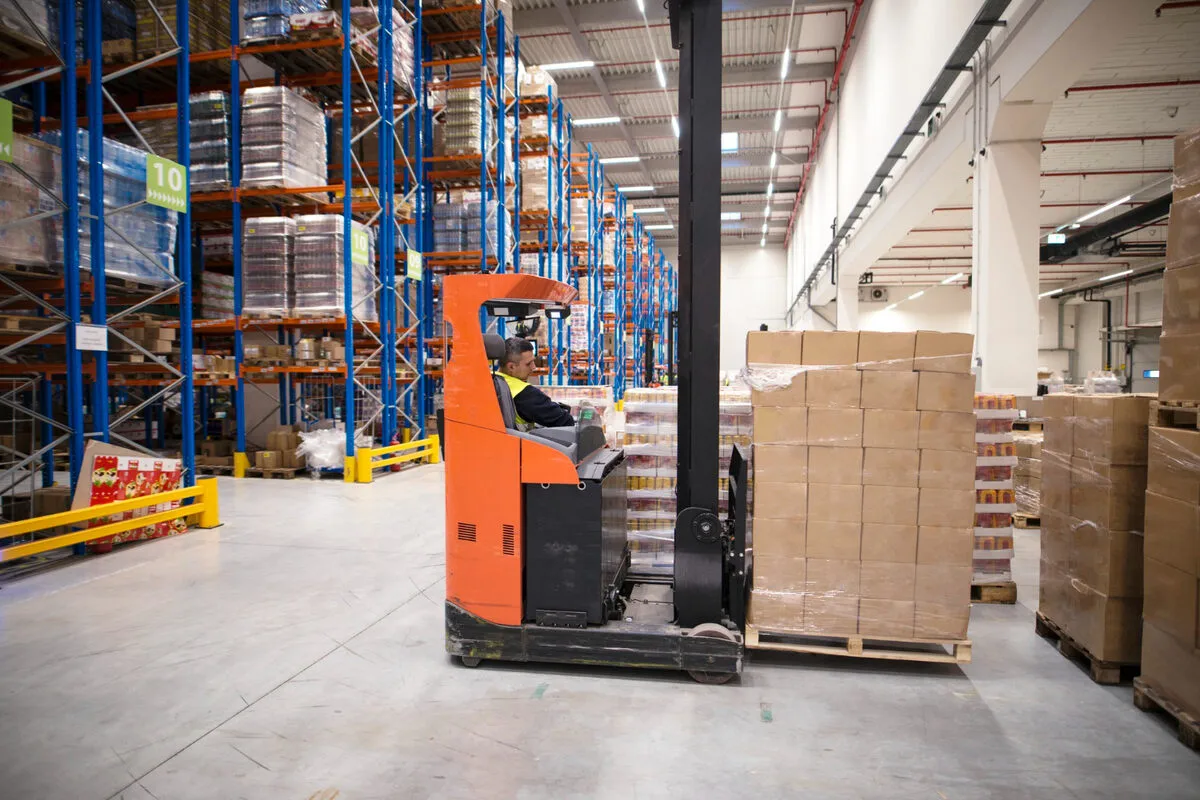
On-Site Logistics: Safe and fast transportation is provided with a forklift/pallet jack during unloading from trucks, distribution to floors, and feeding to assembly points.
Prefabricated and Modular Production Flow: Cladding sets, wall panels, wet space modules are dispatched to the site as palletized packages establishing seamless assembly flow.
Export and Supply Chain: Standard dimensions achieve harmony in container internal settlement and racking systems, reducing shipment damage.
Fragile Material Transportation: Impact and tipping risks are reduced with caged/special pallets for fragile products like glass, marble, composite panels.
Retail and Post-Project Distribution: Half pallet solutions increase agility at narrow-field sales outlets or sample shipments.
Waste and Recycling Processes: Materials to be returned at the end of the site, waste sorting containers, and return packaging are regularly collected in pallet form.
Quick Suggestions:
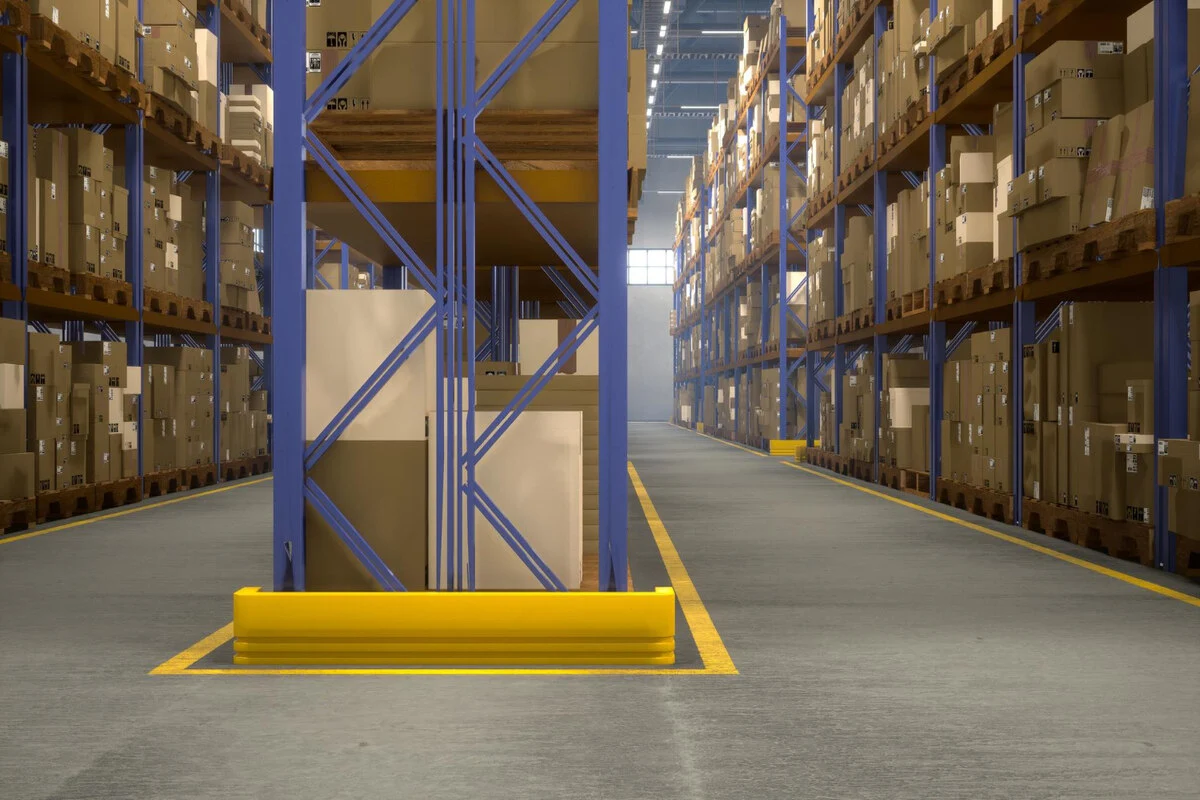
Rack Compatibility: If racking will be carried out, choose base geometry suitable for the beam spacing of the pallet.
Ground Conditions: Baseboard width and block placement play a critical role for stability on uneven grounds.
Tying and Packaging: Guarantee load integrity with stretch, corner protectors, and strapping.
What Are the Dimensions of Pallets?
Pallet dimensions directly affect the entire logistics setup, from internal truck/container placement to your racking systems. The correct size increases both space efficiency and load safety; you must look at standards and your usage scenario while choosing.
European Standard Pallet Dimensions (Pallet)
The following dimensions are the most commonly used and highly compatible with racking systems in the European supply chain. Short descriptions will help you swiftly choose the most appropriate dimension for the situation.
Euro Pallet (1200 × 800 Mm): Primary choice in retail and general storage; provides high occupancy in-vehicle placement.
Industrial Pallet (1200 × 1000 Mm): Balanced solution for bulky boxes and loads that require a wider base.
Half Pallet (800 × 600 Mm): Offers agility in narrow areas, sales points and light loads.
Other Common Pallet Dimensions (Pallet)
You may encounter different square or rectangular dimensions in international flows on non-European routes. The dimensions below are particularly useful in transportation plans in the Asia-Pacific and North America.
Square Pallet (1000 × 1000 Mm): Provides stability and stacking efficiency for barrels, large boxes, and cube-shaped loads.
Square Pallet (1100 × 1100 Mm): Widely used in Asian routes; provides good balance in container internal placement.
GMA 48 × 40 Inches ≈ 1219 × 1016 Mm: North American standard; frequently used for compatibility in import/export flows.
Custom Measurements (Project-Based): Designed according to load geometry for dimensional elements like facade panels, glass cassettes, long profiles.
Reading Capacity Values (Pallet)
The strength of two pallets of the same measurement can show significant differences according to material and base-beam design. Requesting manufacturer data and separately evaluating the following three capacity types is the most accurate approach when purchasing.
Dynamic Capacity: Safe carrying weight when moving with a forklift or pallet jack.
Static Capacity: Safe load when stacked while waiting on the ground.
Rack Overhead (Racking) Capacity: Permitted load while supported between two beams (sensitive to base geometry).
What Are the Advantages of Pallets?
Pallet usage does not only provide ease of transportation in architectural and construction projects; it directly affects your operational speed, costs, and delivery quality. Let us clearly and with concrete examples explain the fundamental benefits that will truly serve your business when deciding.
Pallet Advantages for Operational Efficiency
Minutes lost in daily flow can turn into significant delays at the end of the project. Pallets standardize the flow to reduce these losses.
Fast Loading-Unloading: More products move in one go with a forklift and pallet jack, reducing waiting times.
Less Handling: Packages change hands less, reducing labor needs and error risk.
Process Standardization: Thanks to the unit load concept, planning, counting, and addressing steps speed up.
Pallet Advantages for Cost Control
Total cost of ownership is much more than just the purchase price. Pallets reduce damage and rework to control hidden costs.
Damage Reduction: Box crushing, corner breakage, and scratch rates decrease; return and waste costs reduce.
Reuse: Wooden pallet repair and long lifespan of plastic pallets reduce per unit costs.
Transportation Efficiency: Standard dimensions increase vehicle and container fill rates, reducing costs per shipment.
Pallet Advantages for Job Safety and Quality Assurance
Safety and quality on the site are the basic conditions of planned delivery. Pallets increase load stability, supporting both areas.
Balance and Stability: Tipping risk is minimized with correct base geometry and securing.
Ergonomics: Reduces manual carrying of heavy loads; lowers injury risk.
Traceability: EPAL/ISO stamps and barcode applications facilitate batch and shipment tracking.
Sustainability and Pallet Cycle Advantages
Environmental performance is increasingly decisive in supplier selection. The correct pallet strategy reduces waste and carbon.
Repair and Recycling: Wooden pallets can be repaired; those expired are recycled.
Long Service Life: Plastic and metal pallets reduce waste amount with longer usage cycles.
Less Waste with Standard Sizes: Compatible dimensions reduce the need for cutting and extra packaging.
Pallet Advantages in Export and Supply Chain Compliance
Delays in international transport multiply the cost. Pallets accelerate the flow with regulation and infrastructure compatibility.
Standard Size Compatibility: Integrates smoothly with shelving, conveyors, and container arrays.
Regulation Ease: Processes become clear in ISPM 15 and similar requirements.
Multi-User Cycle: Pallet turnover is simplified with pool systems, easing stock management.
A pallet is a base platform that can be grasped with a forklift or pallet jack, used for safely, quickly, and uniformly transporting and storing materials in architectural and construction processes. It organizes project logistics, reduces material damage, and makes site flow efficient.
Seeing a pallet only as a "transport table" falls short; a correctly chosen pallet directly produces benefits in terms of time, cost, and work safety from the supply chain to the assembly phase. The following key features will help you quickly understand what constitutes a "pallet."
Material Protection: Minimizes the crushing of boxes, the scratching of fragile surfaces, and topplings.
Equipment Compatibility: Works compatibly in terms of size and durability with forklifts, pallet jacks, and racking systems.
Standardization: Shipment plans and warehouse addressing become clear thanks to EPAL/ISO measurement and quality standards.
Operational Efficiency: Controlled transportation of loads in one go shortens unloading and counting times.
Sustainability: Repair and recycling in wood and long service life in plastic reduce waste amounts.
What Are the Types of Pallets?
Choosing the right pallet type has a direct impact on load safety, operational speed, and total cost. We clearly share which pallet types stand out in architectural and construction projects and which would be more appropriate in which situation.
Wooden Pallet
The wooden pallet is the most common choice due to its durability-cost balance. It is easy to repair and offers numerous construction options suitable for different load classes.
Usage Recommendations:
Medium-Heavy Loads: Bricks, bims, wooden planks, drywall profiles.
Flexible Size Requirement: Project-based special measurements and block designs.
Cost-Sensitivity: Possibility of reuse and local repair.
Plastic Pallet
Plastic pallets stand out in environments that require resistance to moisture and chemicals, dimensional precision, and hygiene. Dimension stability provides advantages in automation lines and racking systems.
Selection Criteria:
Hygiene Priority: Paint, chemical, food packaging warehouses.
Moist Environments: External site transitions, open-top storage.
Dimension Consistency: Integration of conveyor, sorter, and rack automation.
Composite (Chipboard Press) Pallet
A composite pallet is made by pressing wood fiber/chips with resin; known for its lightness and suitability for export. It is a cost-effective and smooth-surface solution for medium loads.
Usage Summary:
Ease of Export: ISPM 15 processes are streamlined.
Lightness: Ease for air cargo and manual handling.
Space Efficiency: Designs that can nest together in stacks.
Steel (Metal) Pallet
Steel pallets are a long-lasting option for challenging field conditions and very heavy loads. One of the most resistant solutions to deformation in areas with high fire risk or open fields.
Basic Selection Criteria:
Very Heavy Loads: Stone, marble blocks, large equipment crates.
Outdoor Durability: Long-term open area storage.
Lifespan Priority: Balancing high initial investment with long service life.
Special Design (Caged) Pallet
Special design pallets include spacer, locking, and clamping systems for fragile and dimensional elements like glass, facade panels, marble slabs. They significantly reduce impact and tipping risks.
Usage Areas:
Fragile Surfaces: Tempered glass, composite panels, ceramic slabs.
Long Elements: Bundles of aluminum/steel profiles, coatings at risk of being scratched.
Assembly Preparation: Set packages for direct assembly on-site.
Where Are Pallets Used?
Pallets play a critical role not just in storage but throughout the entire flow from supply to assembly in architectural and construction projects. The examples below will guide you in planning and controlling costs.
Storage and Inventory Management: Bricks, bims, ceramic boxes, paint cans, and MEP (mechanical-electrical) equipment are stacked on pallets; counting accuracy and space efficiency increase.
On-Site Logistics: Safe and fast transportation is provided with a forklift/pallet jack during unloading from trucks, distribution to floors, and feeding to assembly points.
Prefabricated and Modular Production Flow: Cladding sets, wall panels, wet space modules are dispatched to the site as palletized packages establishing seamless assembly flow.
Export and Supply Chain: Standard dimensions achieve harmony in container internal settlement and racking systems, reducing shipment damage.
Fragile Material Transportation: Impact and tipping risks are reduced with caged/special pallets for fragile products like glass, marble, composite panels.
Retail and Post-Project Distribution: Half pallet solutions increase agility at narrow-field sales outlets or sample shipments.
Waste and Recycling Processes: Materials to be returned at the end of the site, waste sorting containers, and return packaging are regularly collected in pallet form.
Quick Suggestions:
Rack Compatibility: If racking will be carried out, choose base geometry suitable for the beam spacing of the pallet.
Ground Conditions: Baseboard width and block placement play a critical role for stability on uneven grounds.
Tying and Packaging: Guarantee load integrity with stretch, corner protectors, and strapping.
What Are the Dimensions of Pallets?
Pallet dimensions directly affect the entire logistics setup, from internal truck/container placement to your racking systems. The correct size increases both space efficiency and load safety; you must look at standards and your usage scenario while choosing.
European Standard Pallet Dimensions (Pallet)
The following dimensions are the most commonly used and highly compatible with racking systems in the European supply chain. Short descriptions will help you swiftly choose the most appropriate dimension for the situation.
Euro Pallet (1200 × 800 Mm): Primary choice in retail and general storage; provides high occupancy in-vehicle placement.
Industrial Pallet (1200 × 1000 Mm): Balanced solution for bulky boxes and loads that require a wider base.
Half Pallet (800 × 600 Mm): Offers agility in narrow areas, sales points and light loads.
Other Common Pallet Dimensions (Pallet)
You may encounter different square or rectangular dimensions in international flows on non-European routes. The dimensions below are particularly useful in transportation plans in the Asia-Pacific and North America.
Square Pallet (1000 × 1000 Mm): Provides stability and stacking efficiency for barrels, large boxes, and cube-shaped loads.
Square Pallet (1100 × 1100 Mm): Widely used in Asian routes; provides good balance in container internal placement.
GMA 48 × 40 Inches ≈ 1219 × 1016 Mm: North American standard; frequently used for compatibility in import/export flows.
Custom Measurements (Project-Based): Designed according to load geometry for dimensional elements like facade panels, glass cassettes, long profiles.
Reading Capacity Values (Pallet)
The strength of two pallets of the same measurement can show significant differences according to material and base-beam design. Requesting manufacturer data and separately evaluating the following three capacity types is the most accurate approach when purchasing.
Dynamic Capacity: Safe carrying weight when moving with a forklift or pallet jack.
Static Capacity: Safe load when stacked while waiting on the ground.
Rack Overhead (Racking) Capacity: Permitted load while supported between two beams (sensitive to base geometry).
What Are the Advantages of Pallets?
Pallet usage does not only provide ease of transportation in architectural and construction projects; it directly affects your operational speed, costs, and delivery quality. Let us clearly and with concrete examples explain the fundamental benefits that will truly serve your business when deciding.
Pallet Advantages for Operational Efficiency
Minutes lost in daily flow can turn into significant delays at the end of the project. Pallets standardize the flow to reduce these losses.
Fast Loading-Unloading: More products move in one go with a forklift and pallet jack, reducing waiting times.
Less Handling: Packages change hands less, reducing labor needs and error risk.
Process Standardization: Thanks to the unit load concept, planning, counting, and addressing steps speed up.
Pallet Advantages for Cost Control
Total cost of ownership is much more than just the purchase price. Pallets reduce damage and rework to control hidden costs.
Damage Reduction: Box crushing, corner breakage, and scratch rates decrease; return and waste costs reduce.
Reuse: Wooden pallet repair and long lifespan of plastic pallets reduce per unit costs.
Transportation Efficiency: Standard dimensions increase vehicle and container fill rates, reducing costs per shipment.
Pallet Advantages for Job Safety and Quality Assurance
Safety and quality on the site are the basic conditions of planned delivery. Pallets increase load stability, supporting both areas.
Balance and Stability: Tipping risk is minimized with correct base geometry and securing.
Ergonomics: Reduces manual carrying of heavy loads; lowers injury risk.
Traceability: EPAL/ISO stamps and barcode applications facilitate batch and shipment tracking.
Sustainability and Pallet Cycle Advantages
Environmental performance is increasingly decisive in supplier selection. The correct pallet strategy reduces waste and carbon.
Repair and Recycling: Wooden pallets can be repaired; those expired are recycled.
Long Service Life: Plastic and metal pallets reduce waste amount with longer usage cycles.
Less Waste with Standard Sizes: Compatible dimensions reduce the need for cutting and extra packaging.
Pallet Advantages in Export and Supply Chain Compliance
Delays in international transport multiply the cost. Pallets accelerate the flow with regulation and infrastructure compatibility.
Standard Size Compatibility: Integrates smoothly with shelving, conveyors, and container arrays.
Regulation Ease: Processes become clear in ISPM 15 and similar requirements.
Multi-User Cycle: Pallet turnover is simplified with pool systems, easing stock management.
Frequently Asked Questions (FAQ) About Pallets
Frequently Asked Questions (FAQ) About Pallets
Frequently Asked Questions (FAQ) About Pallets
How to Plan Weight Distribution on Pallets?
The center of gravity should be kept close to the midline of the pallet, with the heaviest boxes placed at the bottom and inward. The pallet height should not exceed your project's safety limits, and load integrity should be maintained with stretch wrap and corner protectors.
How to Consider Floor Carrying Capacity When Using Pallets?
What Certifications Are Important When Choosing a Pallet Supplier?
What Solutions Are Suitable for Pallet Stock Tracking?
How is the Pallet Recycling and Repair Process Managed?


Contact
Do you want to receive more information? We have expert and reliable contact persons available for any questions, issues, and suggestions.
Reta Engineering Warehouse Racking Systems Industry and Trade Inc.
Address
Muradiye Organized Industrial Zone, 10th St. No: 30 Yunusemre / Manisa
info@retamuhendislik.com.tr