

What is a Reach Truck?
What is a Reach Truck?
What is a Reach Truck?
What is a reach truck, how does it work, and with which racking systems is it used? The difference from forklifts, aisle width, and the right selection criteria are in this article.
A reach truck is a stacking vehicle whose mast can reach forward and which operates at high elevations in narrow aisles. It gets its name from this motion of extending the forks forward.
Because it carries the load close to the chassis, the need for a counterweight is reduced. The vehicle is shorter and narrower, and aisles can consequently be narrowed.
For this reason, the reach truck is essential equipment for warehouses looking to maximize pallet positions within the same area.
What Does Reach Truck Mean?
The term describes the vehicle's defining movement: the mast and fork assembly extends forward independently of the chassis.
When picking up a load, the mast moves forward, grips the pallet, and retracts the load back toward the chassis. Transport is carried out while the load's center of gravity is positioned close to between the wheels.
This design provides balance not with a counterweight, but through the position of the load. The result is a more compact vehicle and a narrower aisle.
How Does a Reach Truck Work?
The vehicle moves on two outriggers, and the load is carried between these legs.
After entering the aisle, the operator stops the vehicle in front of the target bay. The mast is raised to the required level, and the fork assembly is then extended forward to deposit the pallet into the bay.
When loading is complete, the forks are retracted and the mast is lowered. The vehicle proceeds to the next task carrying the load close to the chassis.
In most models, the operator sits sideways; this layout makes it easier to control forward and backward movement in the aisle from a single position.
What Are the Types of Reach Trucks?
Models vary according to load capacity and lifting height.
Standard reach truck: Built for general-purpose use, operating on medium-height pallet racks.
High-altitude models: Reach upper levels with a taller mast structure and may feature camera-assisted positioning systems.
Double-deep models: Reach pallets in the rear row with an extended fork structure, used in double-deep configurations.
Cold-store models: Built with an insulated cabin and components to operate at low temperatures.
Narrow-aisle variants: Designed for layouts where aisle widths are further reduced.
Which model to choose depends not only on the load, but also on rack height and aisle layout.
What Is the Difference Between a Reach Truck and a Forklift?
Both vehicles carry pallets, but they achieve balance differently.
Feature | Reach truck | Counterbalance forklift |
|---|---|---|
Method of balance | Retracting the load into the chassis | Counterweight at the rear |
Aisle requirement | Narrower | Wider |
Lifting height | Generally higher | Generally lower |
Working environment | Indoor warehouse, flat floor | Indoor and outdoor |
Outriggers | Present | None |
Reach trucks and stackers are also often confused. A stacker lifts the load but does not extend the mast forward, and it generally operates at lower elevations.
With Which Racking Systems Are Reach Trucks Used?
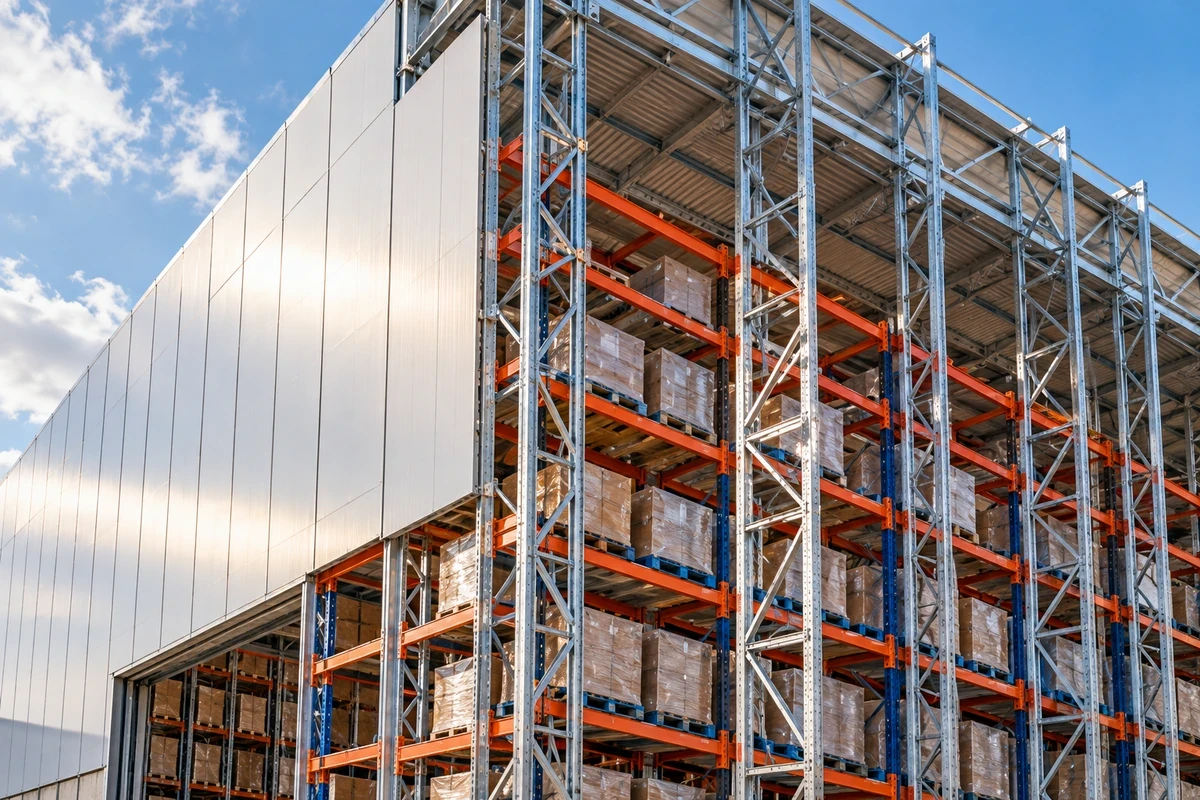
The most common area of use is selective pallet racks. When direct access to each pallet from the aisle is required, the vehicle can operate up to high levels. Details of these configurations can be found on the pallet rack systems page.
They are also preferred in configurations established to reduce the number of aisles. In back-to-back racking, two rack rows are joined from their rears and access is provided from one direction; this setup can be examined under the back-to-back rack system section.
In layouts where the aisle is narrowed for specialized equipment, the vehicle operates on guide rails or wire guidance. This configuration is known as a narrow aisle rack system.
How to Choose the Right Reach Truck for a Warehouse?
The choice is determined by the most demanding task in the warehouse.
Lifting height: The height of the top-level bay must be within the vehicle's capacity.
Load and load center: Along with pallet weight, the distance of the weight from the fork face also impacts capacity.
Aisle width: The turning and maneuvering dimensions of the vehicle must suit the planned aisle.
Floor condition: Floor unevenness and load-bearing capacity directly affect working at high altitudes.
Battery and charging setup: The number of shifts dictates battery capacity and charging area requirements.
Operator comfort: Over long shifts, visibility and cabin layout directly reflect on cycle times.
When the vehicle and racking are selected together, the dimensions of both can be optimized in relation to one another.
How Is Aisle Width Determined in Reach Truck Use?
Aisle width is calculated by adding the pallet dimensions and a safety margin to the vehicle's turning dimensions. The manufacturer provides the required aisle dimension for each model in its technical documentation.
Keeping an aisle too narrow extends the vehicle's maneuvering time and increases the risk of collision. An aisle kept too wide, on the other hand, directly wastes warehouse space.
Therefore, the width is determined by adding a few centimeters of margin to the value in the vehicle's catalog and is marked on the floor with lines.
The reach truck is the vehicle that meets the need to work at high elevations in narrow aisles, and when selected properly, it increases the number of bays extracted from the same area. However, if the vehicle, rack height, and aisle layout are not considered together, upper levels will either remain inaccessible or anticipated space gains will be lost.
Frequently Asked Questions (FAQ) About Reach Trucks
Frequently Asked Questions (FAQ) About Reach Trucks
Frequently Asked Questions (FAQ) About Reach Trucks
How many meters high can a reach truck lift?
The lifting height varies according to the model and is specified in the manufacturer's catalog. As the height increases, the carrying capacity of the vehicle at that level decreases. Therefore, the pallet weight on the top shelf must be evaluated along with the capacity curve in the catalog.
Do you need a license to drive a reach truck?
Can a reach truck be used outdoors?
What is the difference between a reach truck and a stacker?
How long does a reach truck battery last?


Contact
Do you want to receive more information? We have expert and reliable contact persons available for any questions, issues, and suggestions.
Reta Engineering Warehouse Racking Systems Industry and Trade Inc.
Address
Muradiye Organized Industrial Zone, 10th St. No: 30 Yunusemre / Manisa
info@retamuhendislik.com.tr