
Does Artificial Intelligence Really Work in Warehouse Planning?
Does Artificial Intelligence Really Work in Warehouse Planning?
Does Artificial Intelligence Really Work in Warehouse Planning?
Artificial intelligence does not solve every problem in warehouse planning on its own; however, when used with the right data, it provides significant benefits in slotting, flow optimization, and capacity planning. In this article, you can see which areas it really works well in and where its limitations begin.
When does artificial intelligence truly become useful in warehouse planning? Explore the benefits and limitations of slotting, flow, and capacity optimization with clear examples.
Artificial intelligence does not solve every problem in warehouse planning on its own; however, when used with the right data, it provides significant benefits in slotting, flow optimization, and capacity planning. In this article, you can see which areas it really works well in and where its limitations begin.
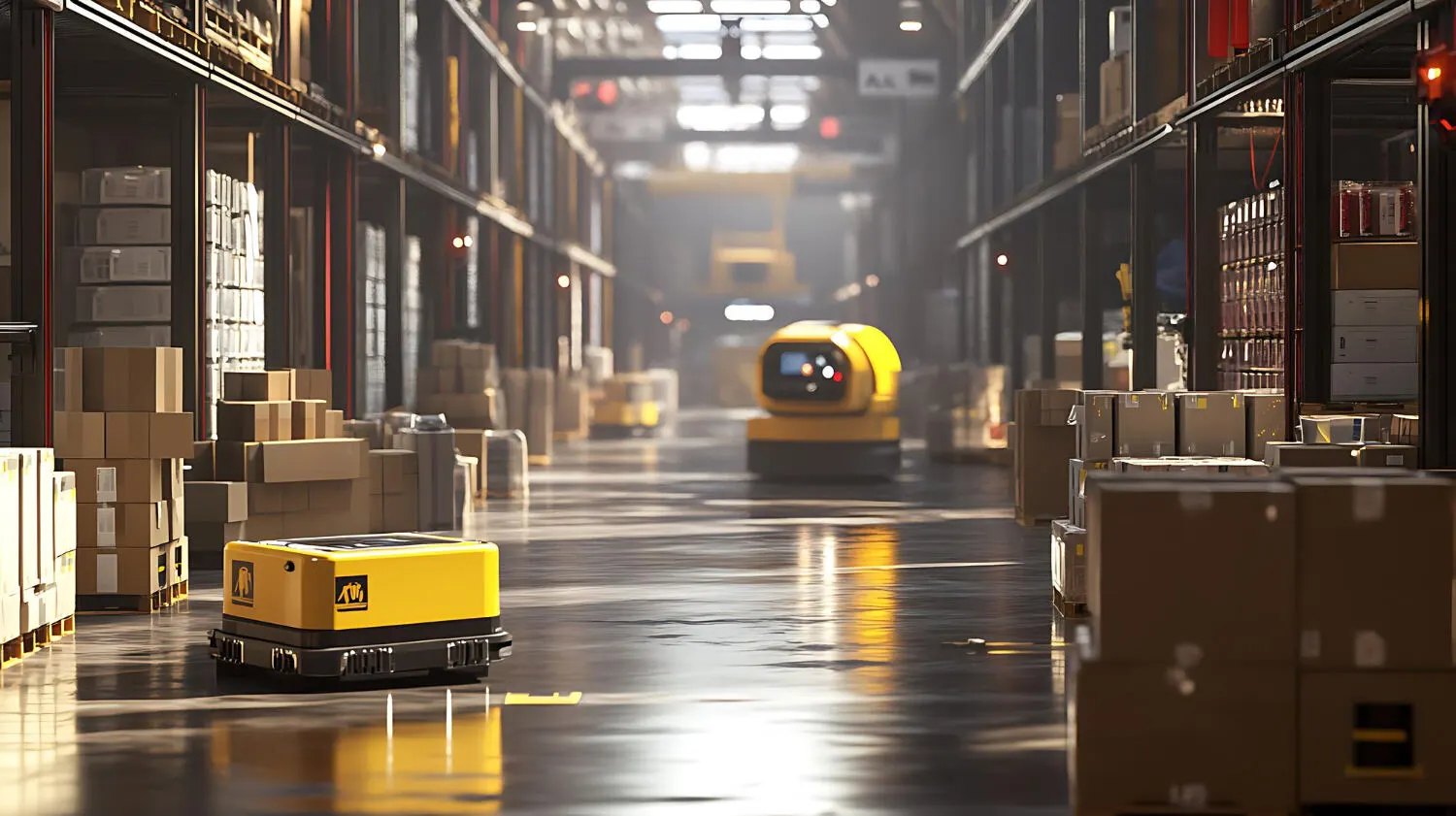
When talking about artificial intelligence, there are two extreme approaches in warehouses. On one hand, there is the expectation that "it solves everything." On the other, there's the reflex of "our job is on the field, what does software know?" The reality is in the middle: Artificial intelligence can make a significant difference in some warehouse planning problems, but in some areas, it does not fix anything on its own.
Warehouse planning runs on product data, operational habits, equipment constraints, and physical realities. Therefore, artificial intelligence creates value when it captures the right data and connects to the right target. If it runs towards the wrong target, it only adds complexity.
What Does Artificial Intelligence Mean for Warehouse Planning?
Artificial intelligence typically performs three tasks on the warehouse planning side:
It tries numerous layout and flow scenarios.
Compares scenarios with measurable metrics.
Updates suggestions based on changing order/stock behavior.
Here, "artificial intelligence" is not a single package. Some solutions work with classical optimization algorithms + rules. Some use machine learning for demand and movement prediction. Some feed a simulation engine and visualize bottlenecks. The difference in warehouse planning emerges with the question: Is the system providing decision recommendations based on real field data?
Where Does Artificial Intelligence Yield Concrete Benefits in the Warehouse Planning Process?
Concrete benefits come in measurable things in the warehouse. Measurable things are clear: walking distance, forklift route time, picking efficiency, incorrect placement, capacity usage, the number of congested aisles.
Warehouse Slotting and SKU Placement
Placing products in the right location (slotting) is a hidden cost in many warehouses. When fast-moving products are kept far away, movements swell. When slow-moving products remain in the main line, traffic increases. Here, artificial intelligence is good at two points:
It can bring "products sold together" near each other based on order history.
It can capture seasonal shifts by making classifications like ABC/XYZ dynamic.
This approach makes unnecessary movement due to "incorrect location" more visible, especially in warehouses using back-to-back racking systems. Because even though access seems easy, incorrect SKU placement rapidly increases total walking.
Warehouse Flow and Traffic Balance
The most overlooked issue in warehouse planning is traffic collisions. An aisle that seems spacious on paper can become a bottleneck when 5 forklifts operate simultaneously during a shift. AI-supported simulation makes the following issues visible:
The flow of putaway + picking loaded at the same point
Pallets accumulating in front of doors
The impact of one-way/two-way aisle decisions
Unnecessary cross traffic between the picking area and the shipping area
These types of improvements don’t appear like “more racking” but ease operations. If high capacity is targeted in a narrow area, the value of simulation in solutions such as narrow aisle racking systems increases because even a small traffic mistake can create congestion throughout the day.
Warehouse Capacity and Access Balance
Increasing capacity alone is an easy goal. The hard part is maintaining access and safety while increasing capacity. Artificial intelligence is useful here because it can compare different scenarios with the same set of metrics. For instance:
Higher level or wider picking area in the same warehouse?
Narrowing aisles or reducing the number of rack blocks?
Dense storage or quick access?
This discussion directly depends on the choice of warehouse racking system.
What Can Artificial Intelligence Do Well and Not Do in Choosing Warehouse Racking Systems?
Artificial intelligence does not choose the racking system “for you.” But it shows which layout might be more suitable through scenarios. The best thing it does is to "speak" options with metrics.
What It Does Well
Generating level range and racking height scenarios based on product dimensions
Comparing metrics like pallet position, occupancy rate, access time
Demonstrating the impact of aisle width decision on capacity and traffic
What It Cannot Do
Independently verify engineering limits like floor, anchorage, collision risk, and load safety on-site
Spontaneously create warehouse discipline
Provide reliable results with incomplete/incorrect data
For example, if a mobile racking system is considered with a density target, the software shows the "space gain" side well, but field-dependent issues like maintenance routine, movement constraints, and emergency access need to be additionally clarified.
What Data Does Artificial Intelligence Need for Warehouse Planning?
The more real the input is, the more it resembles the field in output.
The most frequently used data groups:
SKU dimensions (width, length, height), weight, packaging type
Order data (number of lines, basket size, peak hours)
Stock movement (frequency of entry and exit, replenishment need)
Pallet and box standard (pallet type, max stacking, handling rules)
Warehouse drawing (columns, doors, loading area, net height)
Equipment information (forklift type, turning radius, lifting height)
Operational constraints (shift, safety zones, fire escapes)
If data is lacking, two problems usually arise: The system assumes an “ideal” warehouse or generalizes recommendations too much. Both have weak counterparts in the field.
Where Do Expectations Inflate on the Part of Artificial Intelligence in Warehouse Planning?
Some expectations are not suitable for warehouses because a warehouse is a living system.
The most frequently inflated expectations:
The thought of “Once set up, the same plan goes for years”
The approach of “No data, but the system is smart, it will come up with something”
Connecting to a single authority like “The software said, then this is the warehouse racking system”
The assumption that “Operation speeds up once capacity increases”
The expectation of “Let’s just purchase the license, the processes will already settle”
Artificial intelligence directs the process correctly. It does not establish the process single-handedly.
Real-Life Scenarios That Work Best for Warehouse Planning
In the following scenarios, artificial intelligence generates value faster in most warehouses:
When SKU count is high and order structure is fluctuating, slotting improvement is clearly visible.
If both storage and preparation are congested in the same area, layout optimization relieves it.
If forklift traffic is dense and aisle collision exists, congestion is captured with simulation.
If rack levels do not fit product heights, "empty volume" is detected and capacity increases.
The effect of these scenarios is more markedly felt in warehouses with mezzanine systems because a small mistake in placement can turn into unnecessary ups and downs and bottlenecks between two levels.
A Simple Return Calculation for Artificial Intelligence in Warehouse Planning
Decisions can be made even without delving into complex ROI models. Even a simple time calculation is sufficient.
Example framework:
1,000 orders daily
6 minutes per order picking time
Slotting improvement reduces the time by 10% → 5.4 minutes
Daily gain:
1,000 × (6 - 5.4) = 600 minutes = 10 hours
10 hours can reduce shift pressure, allow more orders to come out with the same team, or reduce delays during peak periods. The decision point is: For how many months does this gain cover the total cost of license + integration + training?
In Which Structures is Artificial Intelligence More Compatible with Warehouse Racking Systems?
Artificial intelligence becomes more valuable as decision variables increase. Some warehouse racking systems are more “data-sensitive” in this respect.
In systems like narrow aisle racking where traffic and equipment compatibility are critical, simulation value is high.
In planning mezzanine systems, the cost of layout errors is high as the flow goes to two levels.
If dense storage is targeted, access planning and use discipline are decisive in options like mobile racking systems.
In setups close to automation, data quality and process standard are even more important for automatic storage AS/RS racks.
The Most Common Field Mistakes in Warehouse Racking Systems
Even if artificial intelligence is in play, if these mistakes are not corrected, the result weakens:
The data is not updated; the system produces recommendations with old SKU sizes.
Location discipline is not followed; the plan and field diverge.
Slotting remains as "a suggestion"; no application standard is formed.
Storage capacity increases but preparation/shipping area is choked.
Load and safety limits of warehouse racking systems are confused with software outputs.
A Control List that Clarifies the Decision for Warehouse Planning
When making a purchase decision, the following questions need clear answers:
What is the main metric you want to improve? (time, capacity, error, cost)
Is your data set up-to-date, are the dimensions correct?
Are your warehouse processes clear? (putaway, picking, replenishment)
Is there the discipline to apply recommendations in the field?
If the layout changes, can you manage the interruption to operations?
Do you know the total cost of license + integration + training?
When Does Artificial Intelligence Add Value in Warehouse Planning?
Artificial intelligence adds significant value in warehouses that have regular data, intense movement, and many decision variables. It brings speed and accuracy in areas such as slotting, flow optimization, and simulation. If data is weak or field discipline is lacking, no matter how bright the output appears, the impact on operations is limited.
As a next step, preparing a sample slotting draft by extracting the top 50 most active SKUs and comparing them with existing locations would be a good start.
When talking about artificial intelligence, there are two extreme approaches in warehouses. On one hand, there is the expectation that "it solves everything." On the other, there's the reflex of "our job is on the field, what does software know?" The reality is in the middle: Artificial intelligence can make a significant difference in some warehouse planning problems, but in some areas, it does not fix anything on its own.
Warehouse planning runs on product data, operational habits, equipment constraints, and physical realities. Therefore, artificial intelligence creates value when it captures the right data and connects to the right target. If it runs towards the wrong target, it only adds complexity.
What Does Artificial Intelligence Mean for Warehouse Planning?
Artificial intelligence typically performs three tasks on the warehouse planning side:
It tries numerous layout and flow scenarios.
Compares scenarios with measurable metrics.
Updates suggestions based on changing order/stock behavior.
Here, "artificial intelligence" is not a single package. Some solutions work with classical optimization algorithms + rules. Some use machine learning for demand and movement prediction. Some feed a simulation engine and visualize bottlenecks. The difference in warehouse planning emerges with the question: Is the system providing decision recommendations based on real field data?
Where Does Artificial Intelligence Yield Concrete Benefits in the Warehouse Planning Process?
Concrete benefits come in measurable things in the warehouse. Measurable things are clear: walking distance, forklift route time, picking efficiency, incorrect placement, capacity usage, the number of congested aisles.
Warehouse Slotting and SKU Placement
Placing products in the right location (slotting) is a hidden cost in many warehouses. When fast-moving products are kept far away, movements swell. When slow-moving products remain in the main line, traffic increases. Here, artificial intelligence is good at two points:
It can bring "products sold together" near each other based on order history.
It can capture seasonal shifts by making classifications like ABC/XYZ dynamic.
This approach makes unnecessary movement due to "incorrect location" more visible, especially in warehouses using back-to-back racking systems. Because even though access seems easy, incorrect SKU placement rapidly increases total walking.
Warehouse Flow and Traffic Balance
The most overlooked issue in warehouse planning is traffic collisions. An aisle that seems spacious on paper can become a bottleneck when 5 forklifts operate simultaneously during a shift. AI-supported simulation makes the following issues visible:
The flow of putaway + picking loaded at the same point
Pallets accumulating in front of doors
The impact of one-way/two-way aisle decisions
Unnecessary cross traffic between the picking area and the shipping area
These types of improvements don’t appear like “more racking” but ease operations. If high capacity is targeted in a narrow area, the value of simulation in solutions such as narrow aisle racking systems increases because even a small traffic mistake can create congestion throughout the day.
Warehouse Capacity and Access Balance
Increasing capacity alone is an easy goal. The hard part is maintaining access and safety while increasing capacity. Artificial intelligence is useful here because it can compare different scenarios with the same set of metrics. For instance:
Higher level or wider picking area in the same warehouse?
Narrowing aisles or reducing the number of rack blocks?
Dense storage or quick access?
This discussion directly depends on the choice of warehouse racking system.
What Can Artificial Intelligence Do Well and Not Do in Choosing Warehouse Racking Systems?
Artificial intelligence does not choose the racking system “for you.” But it shows which layout might be more suitable through scenarios. The best thing it does is to "speak" options with metrics.
What It Does Well
Generating level range and racking height scenarios based on product dimensions
Comparing metrics like pallet position, occupancy rate, access time
Demonstrating the impact of aisle width decision on capacity and traffic
What It Cannot Do
Independently verify engineering limits like floor, anchorage, collision risk, and load safety on-site
Spontaneously create warehouse discipline
Provide reliable results with incomplete/incorrect data
For example, if a mobile racking system is considered with a density target, the software shows the "space gain" side well, but field-dependent issues like maintenance routine, movement constraints, and emergency access need to be additionally clarified.
What Data Does Artificial Intelligence Need for Warehouse Planning?
The more real the input is, the more it resembles the field in output.
The most frequently used data groups:
SKU dimensions (width, length, height), weight, packaging type
Order data (number of lines, basket size, peak hours)
Stock movement (frequency of entry and exit, replenishment need)
Pallet and box standard (pallet type, max stacking, handling rules)
Warehouse drawing (columns, doors, loading area, net height)
Equipment information (forklift type, turning radius, lifting height)
Operational constraints (shift, safety zones, fire escapes)
If data is lacking, two problems usually arise: The system assumes an “ideal” warehouse or generalizes recommendations too much. Both have weak counterparts in the field.
Where Do Expectations Inflate on the Part of Artificial Intelligence in Warehouse Planning?
Some expectations are not suitable for warehouses because a warehouse is a living system.
The most frequently inflated expectations:
The thought of “Once set up, the same plan goes for years”
The approach of “No data, but the system is smart, it will come up with something”
Connecting to a single authority like “The software said, then this is the warehouse racking system”
The assumption that “Operation speeds up once capacity increases”
The expectation of “Let’s just purchase the license, the processes will already settle”
Artificial intelligence directs the process correctly. It does not establish the process single-handedly.
Real-Life Scenarios That Work Best for Warehouse Planning
In the following scenarios, artificial intelligence generates value faster in most warehouses:
When SKU count is high and order structure is fluctuating, slotting improvement is clearly visible.
If both storage and preparation are congested in the same area, layout optimization relieves it.
If forklift traffic is dense and aisle collision exists, congestion is captured with simulation.
If rack levels do not fit product heights, "empty volume" is detected and capacity increases.
The effect of these scenarios is more markedly felt in warehouses with mezzanine systems because a small mistake in placement can turn into unnecessary ups and downs and bottlenecks between two levels.
A Simple Return Calculation for Artificial Intelligence in Warehouse Planning
Decisions can be made even without delving into complex ROI models. Even a simple time calculation is sufficient.
Example framework:
1,000 orders daily
6 minutes per order picking time
Slotting improvement reduces the time by 10% → 5.4 minutes
Daily gain:
1,000 × (6 - 5.4) = 600 minutes = 10 hours
10 hours can reduce shift pressure, allow more orders to come out with the same team, or reduce delays during peak periods. The decision point is: For how many months does this gain cover the total cost of license + integration + training?
In Which Structures is Artificial Intelligence More Compatible with Warehouse Racking Systems?
Artificial intelligence becomes more valuable as decision variables increase. Some warehouse racking systems are more “data-sensitive” in this respect.
In systems like narrow aisle racking where traffic and equipment compatibility are critical, simulation value is high.
In planning mezzanine systems, the cost of layout errors is high as the flow goes to two levels.
If dense storage is targeted, access planning and use discipline are decisive in options like mobile racking systems.
In setups close to automation, data quality and process standard are even more important for automatic storage AS/RS racks.
The Most Common Field Mistakes in Warehouse Racking Systems
Even if artificial intelligence is in play, if these mistakes are not corrected, the result weakens:
The data is not updated; the system produces recommendations with old SKU sizes.
Location discipline is not followed; the plan and field diverge.
Slotting remains as "a suggestion"; no application standard is formed.
Storage capacity increases but preparation/shipping area is choked.
Load and safety limits of warehouse racking systems are confused with software outputs.
A Control List that Clarifies the Decision for Warehouse Planning
When making a purchase decision, the following questions need clear answers:
What is the main metric you want to improve? (time, capacity, error, cost)
Is your data set up-to-date, are the dimensions correct?
Are your warehouse processes clear? (putaway, picking, replenishment)
Is there the discipline to apply recommendations in the field?
If the layout changes, can you manage the interruption to operations?
Do you know the total cost of license + integration + training?
When Does Artificial Intelligence Add Value in Warehouse Planning?
Artificial intelligence adds significant value in warehouses that have regular data, intense movement, and many decision variables. It brings speed and accuracy in areas such as slotting, flow optimization, and simulation. If data is weak or field discipline is lacking, no matter how bright the output appears, the impact on operations is limited.
As a next step, preparing a sample slotting draft by extracting the top 50 most active SKUs and comparing them with existing locations would be a good start.
Frequently Asked Questions (FAQ) About Artificial Intelligence Warehouse Planning
Frequently Asked Questions (FAQ) About Artificial Intelligence Warehouse Planning
Frequently Asked Questions (FAQ) About Artificial Intelligence Warehouse Planning
What Is the Most Critical Data for Artificial Intelligence Warehouse Planning?
SKU dimensions and order/movement data are the two most critical inputs. If the dimensions are incorrect, the layout will be incorrect, and if the movement data is weak, slotting recommendations become generalized.
Can Artificial Intelligence Make Warehouse Racking System Selection on Its Own?
How Long Does It Take for Artificial Intelligence to Show Benefits for Warehouse Planning?
Is AI Warehouse Planning Logical in Small Warehouses?
Is Automation Essential with AI Warehouse Planning?

Contact
Do you want to receive more information? We have expert and reliable contact persons available for any questions, issues, and suggestions.
Reta Engineering Warehouse Racking Systems Industry and Trade Inc.
Address
Muradiye Organized Industrial Zone, 10th St. No: 30 Yunusemre / Manisa
info@retamuhendislik.com.tr