

Publication Date:
RETA Engineering carries out the design, production, and installation of industrial racking systems for production facilities, finished goods warehouses, and distribution centers in Kütahya under a single point of responsibility. Founded in 1979, the company manufactures its systems in its own production facility in Manisa Muradiye OIZ and provides services to the Inner Western Anatolia region through organized shipping and installation.
Production Sectors Determining Storage Needs in Kütahya
Kütahya is one of the centers of ceramic and porcelain production in Turkey, and storage needs largely stem from the unique characteristics of this product group.
Ceramic, porcelain, tile, and sanitary ware production is concentrated around the Kütahya Organized Industrial Zone. In these facilities, the load is both heavy and fragile, and it is managed in two different forms: palletized tiles carry high weight, while porcelain and tableware products are lightweight but extremely sensitive to impact. In the same warehouse, these two characteristics must be addressed with different bay logics.
Mining, boron processing, and energy facilities are located along the Tavşanlı, Emet, and Gediz line. In these enterprises, heavy equipment spare parts and long materials are kept together; inventory turnover is low, but downtime costs are high. In sugar, flour, and food facilities, sack and big bag storage is common. Wood, furniture, and metal processing facilities, along with regional distribution warehouses around Simav and the Kütahya central district, form the third pillar of the province.
Damage Prevention in Fragile Product Storage
In ceramic and porcelain production, breakage occurring in the warehouse is as costly as production waste and is often not noticed until the moment of shipment. In these facilities, the purpose of rack design is not only to bear the load, but also to prevent the product from being damaged inside the bay and during handling.
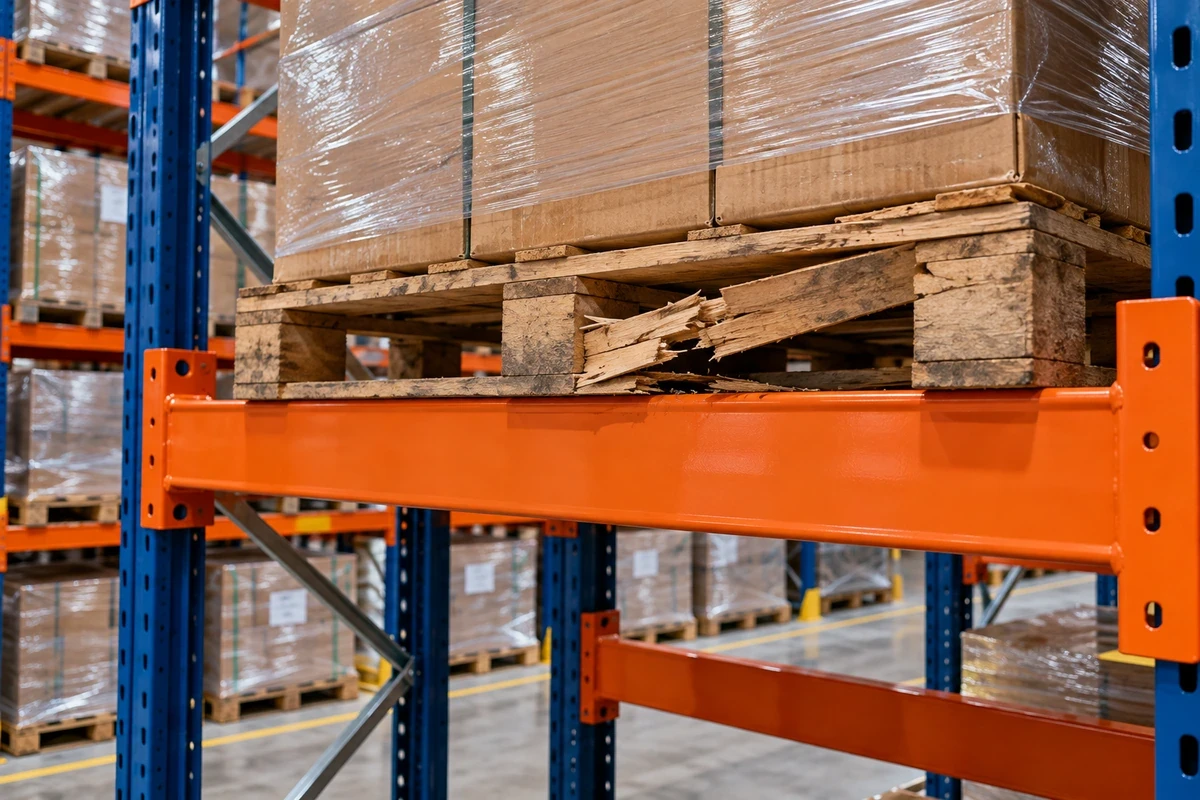
The primary determining factor in design is whether the load-bearing surface provides full support. Ensuring the pallet base does not hang in empty space, the product does not lean against its own packaging, and forklift tines enter the bay safely are all taken into account. Bay depth is planned to the exact dimensions where the pallet will sit fully, leaving no overhang allowance.
The second determining factor is the risk of impact. Upright protectors are planned for the uprights at aisle entrances, and the aisle width is maintained at a dimension that does not strain the operator according to the type of forklift used. Stacking height is limited according to the product's own load-bearing strength; for heavy loads such as palletized tiles, the beam cross-section is dimensioned according to the weight per pallet.
Kütahya is located in a region with moderate spectral acceleration values according to earthquake regulations; anchoring and bracing layouts are calculated according to the load carried and the rack height. Static calculations are performed separately for each project; quotes are not provided based on generic catalog capacities.
Prominent Systems in the Kütahya OIZ and Tavşanlı Line
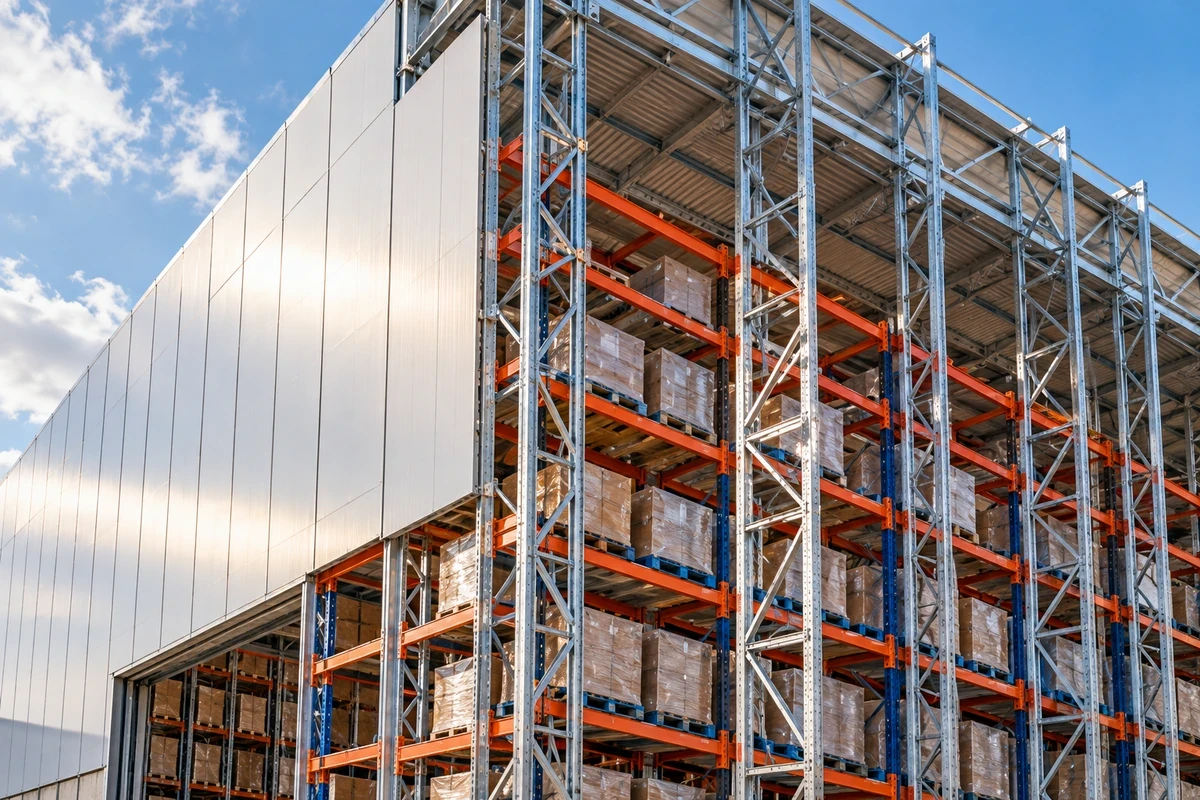
In the finished goods warehouses of ceramic, porcelain, and food facilities, pallet racking systems are designed according to pallet dimensions, forklift type, and clear ceiling height. Euro pallet (800x1200 mm) and industrial pallet (1000x1200 mm) dimensions require different bay depths and beam spans; beam profiles are calculated separately for heavy palletized tile loads.
For porcelain, tableware products, and boxed finished goods, box and carton handling rack systems are used. Level heights are adjusted according to box dimensions, the load-bearing surface is planned to provide full support for fragile products, and bays are arranged in an addressable order.
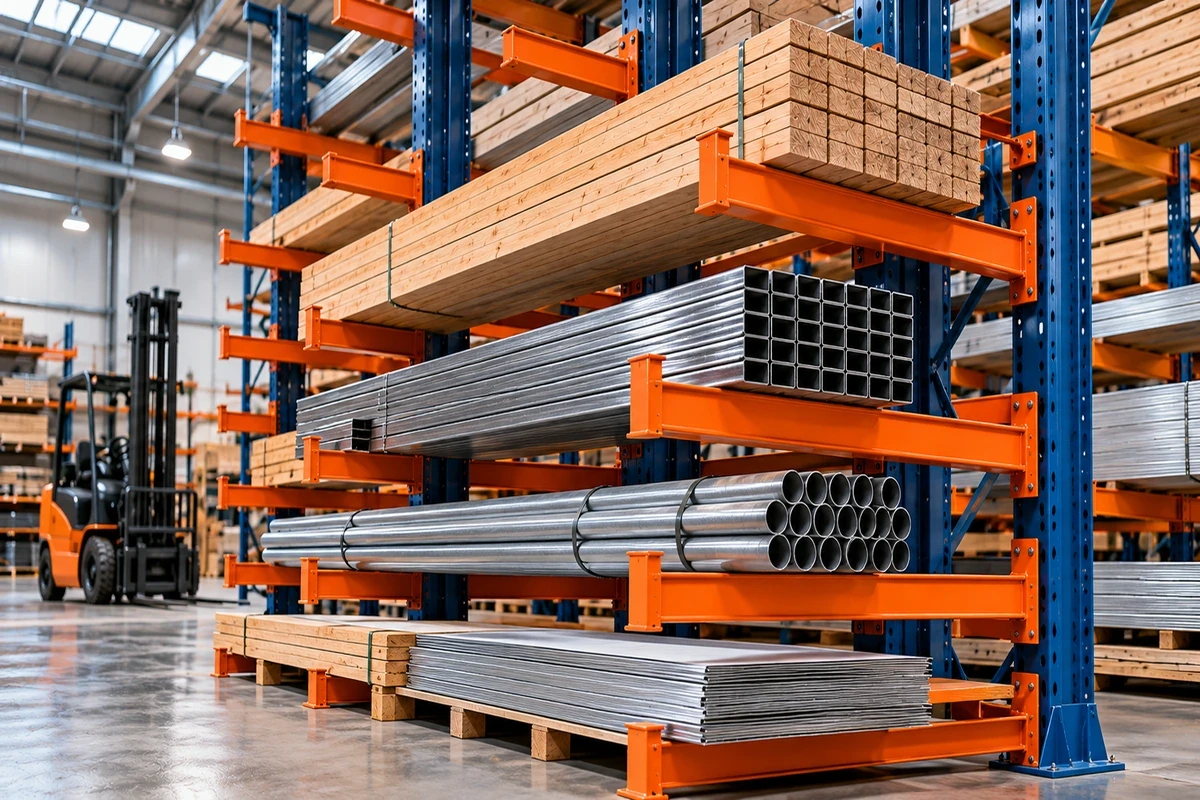
In mining and energy facilities, profiles, pipes, and long components are stored using cantilever racking systems. Arm length and the spacing between arms are determined by the weight of the material and its deflection behavior.
In facilities where ceiling height cannot be fully utilized, mezzanine solutions double or triple the available floor space. Die and mold management is handled with mold racking systems, while warehouses with high inventory turnover rates are managed with automated AS/RS storage applications. All system types can be found on the racking systems page.
Kütahya Warehouse Racking Systems Survey and Quotation Process
Reach out via the contact page to receive a layout plan and price quote for your facility in Kütahya. Completed applications across various sectors can be found on our projects page.
Implementation Stages from Measurement to Installation
During the on-site survey, floor condition and flatness, column axes, clear ceiling height, sprinkler and lighting placement, the type of forklift used, and pallet and box dimensions are recorded. In facilities storing fragile products, pallet base dimensions, stack height, and the product's own strength are also specifically noted, as the load-bearing surface and bay depth are derived directly from these values.
After capacity calculations, static calculations, and technical drawings are approved, manufacturing takes place at the facility in Muradiye OIZ. Dispatch, transportation, and installation team planning are unified into a single schedule. Installation is carried out by our own teams, and work can proceed by dividing the warehouse into phases. Load capacity labels and operating instructions are provided upon delivery.
Frequently Asked Questions About Kütahya Racking Systems
Can a layout be established to reduce breakages occurring in the warehouse?
Yes, it can. The design ensures that the load-bearing surface provides full support to the pallet, the bay depth leaves no overhang allowance, and the forklift tines enter the bay safely. Upright protection elements are planned for aisle ends.
Can palletized tiles and porcelain be managed in the same warehouse?
Yes, they can, but sections are designated separately. For heavy palletized tiles, the beam cross-section is calculated based on the weight per pallet, while boxed porcelain is managed within level heights planned according to box dimensions.
What determines the limit on stacking height?
The limit is often determined by the product's own strength rather than the capacity of the rack. The value at which the bottom layer of packaging can support the load above is taken as a baseline; if necessary, the number of levels is reduced to increase bay height.
What precautions are taken against forklift impacts?
Protective elements are planned for the uprights at aisle entrances and transition points, and aisle widths are maintained at dimensions that do not strain the operator according to the equipment used. Damaged components can be replaced individually later on.
What information is required for a quotation?
The warehouse area and clear ceiling height, pallet or box dimensions and unit weights, the targeted number of bays, the type of forklift used, and, if available, the existing layout plan are sufficient. The final quote is formulated following the site survey and static calculations.

Do you want to receive more information? We have expert and reliable contact persons available for any questions, issues, and suggestions.
Reta Engineering Warehouse Racking Systems Industry and Trade Inc.
Address
Muradiye Organized Industrial Zone, 10th St. No: 30 Yunusemre / Manisa
info@retamuhendislik.com.tr