

Advantages of Steel Construction Warehouses
Advantages of Steel Construction Warehouses
Advantages of Steel Construction Warehouses
Discover the advantages of steel construction warehouses; learn the right criteria for safe and efficient storage areas created with cladding rack systems.
Discover the advantages of steel construction warehouses; learn the right criteria for safe and efficient storage areas created with cladding rack systems.

When the need for storage space increases, the warehouse structure should not be evaluated merely as an enclosed area. Rack layout, carrier system, floor durability, product weights, forklift traffic, dispatch speed, and future growth needs must be considered within the same plan. At this point, steel construction warehouses are among the solutions that offer flexible, durable, and long-term usage advantages.
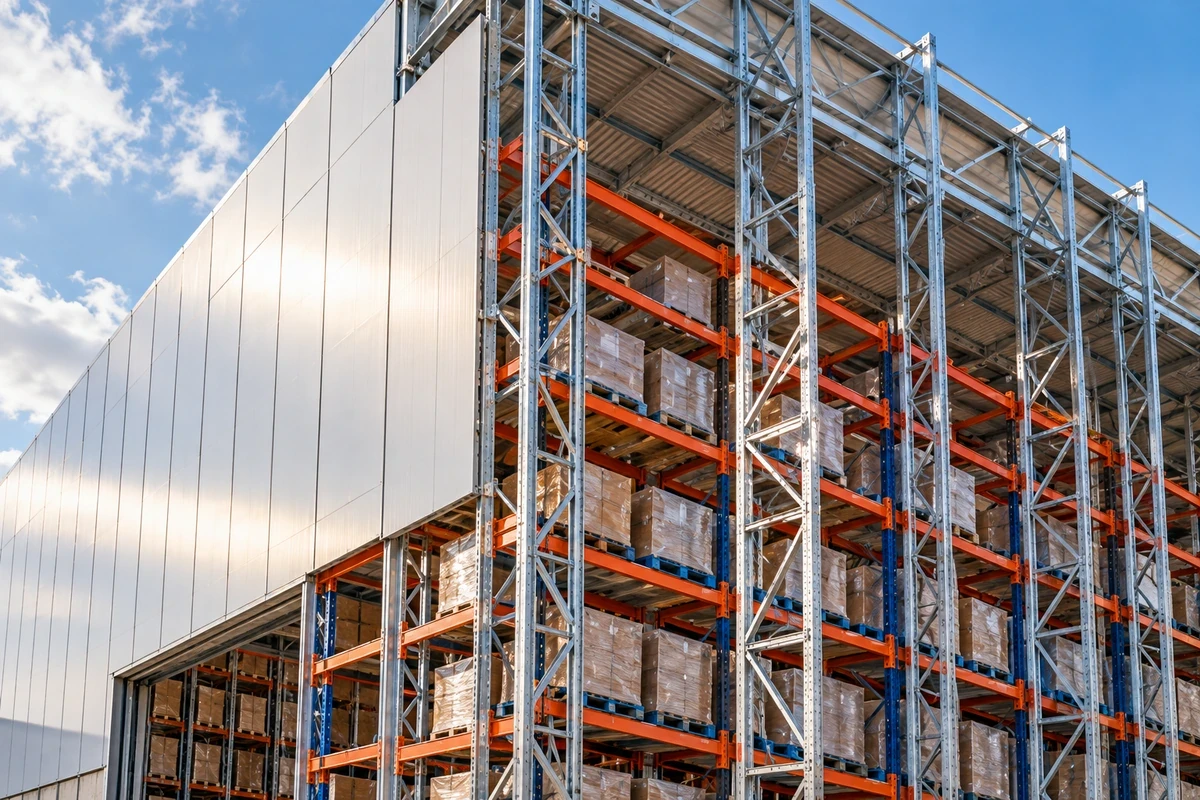
In some high-capacity warehouse projects, the rack system is not just equipment placed inside the warehouse afterward. In clad rack warehouse systems, the rack structure is planned as the main load-bearing element of the warehouse construction. After the rack system is installed, it is enclosed with roof and wall panels, and the structure becomes a warehouse. Thus, the rack system, the load-bearing structure, and the warehouse shell are resolved within the same project.
This approach provides significant advantages, especially for businesses that store palletized products and manage high-volume stock. This is because the warehouse structure is not modified afterward to adapt to the rack system; it is designed from the very beginning according to the storage needs.
How is a Steel Construction Warehouse Created with a Clad Rack System?
The first step in steel construction warehouses created with a clad rack system is the analysis of the products to be stored and the operational needs. Pallet dimensions, product weights, stock capacity, forklift usage, aisle widths, and dispatch flow are evaluated at the start of the project.
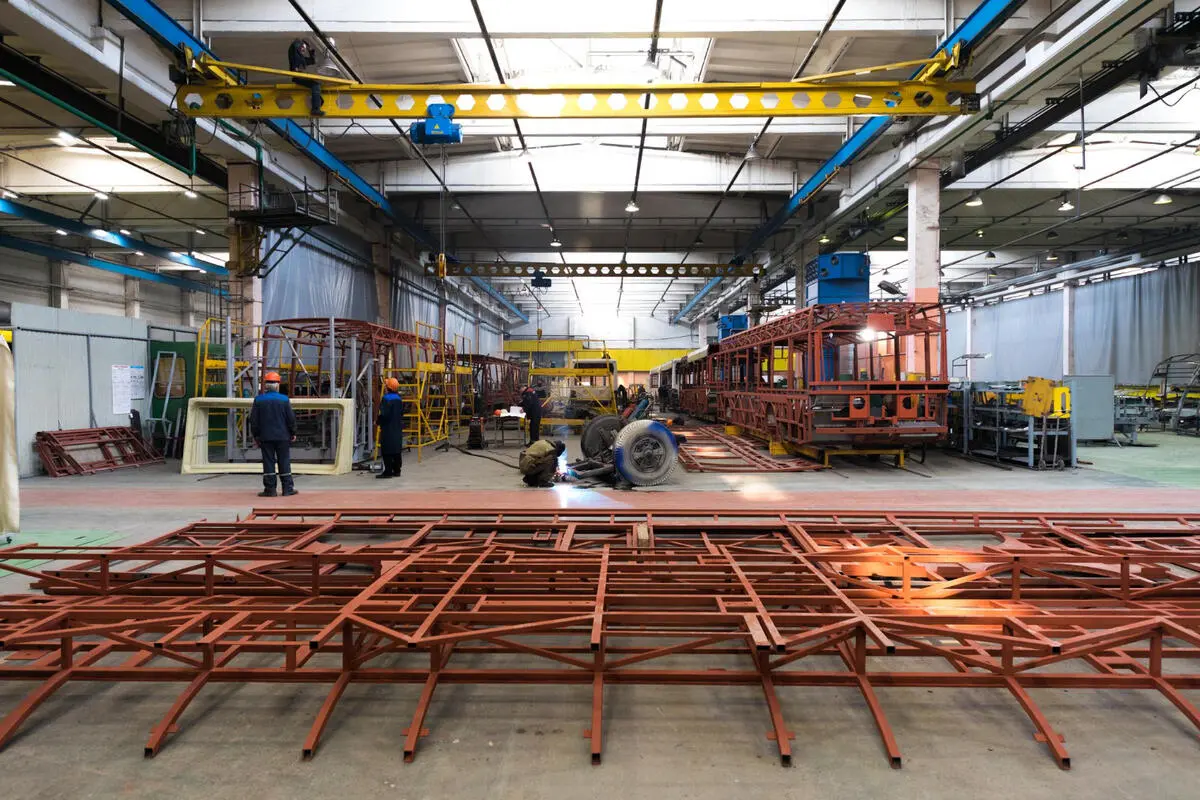
Based on these data, the rack system is designed as a load-bearing construction. Rack uprights, bracing, and load-bearing components are planned to support not only the product load but the system as a whole. Then, roof and wall panels are applied in harmony with this structure. Thus, the warehouse is formed by enclosing the rack construction.
This method is different from the classic warehouse approach. In classic structures, first the building is created, then the racks are placed inside. In clad rack warehouse systems, however, the rack system and the warehouse structure are considered together.
What are the Advantages of Steel Construction with a Clad Rack Warehouse?
Steel construction warehouses with clad rack systems help to use space more efficiently. Since the rack arrangement, load-bearing structure, roof, facade, and operational flow are planned together, the risk of capacity loss is reduced.
In these systems, vertical space can be utilized more effectively. The use of high ceilings provides a significant capacity advantage, especially for businesses storing palletized products. Warehouse capacity is related not only to square meters but also to usable volume.
The prominent advantages are as follows:
The rack system and the warehouse structure are designed together.
Storage capacity can be increased with the use of high ceilings.
Roof and wall applications progress in harmony with the rack construction.
Forklift and equipment traffic can be planned more efficiently.
Product receiving, stocking, and dispatch processes can be set up in a more orderly manner.
Earthquake, wind, snow, and product loads can be evaluated together.
Design, manufacturing, and assembly processes progress within a system integrity.
Why is the Rack System a Fundamental Element in Steel Construction Warehouses?
In steel construction warehouses, the rack system should not be seen merely as equipment where products are placed. Especially in clad rack warehouse systems, the rack structure becomes one of the fundamental load-bearing components of the warehouse structure.
Therefore, rack height, aisle width, floor durability, product weight, and equipment type must be evaluated from the start. If the rack system is not planned correctly, capacity loss, narrow transit areas, difficult forklift movements, and slowed dispatch processes can occur.
A correctly planned rack system, on the other hand, ensures a more controlled operational flow within the warehouse. Product receiving areas, stocking arrangement, forklift paths, and loading points become compatible with each other.
For Which Businesses Are Steel Construction Warehouses Suitable?
Steel construction warehouses are suitable for logistics, production, retail, e-commerce, industry, and distribution operations. They generate more value especially in businesses with high product volume, heavy dispatch traffic, and high palletized storage needs.
These warehouse solutions stand out for the following needs:
If high pallet capacity is targeted
If vertical storage space is to be used efficiently
If forklift and equipment traffic will be heavy
If the rack system and warehouse structure are to be planned together
If future capacity increase or growth is targeted
If a suitable space configuration is required for automation infrastructure
Depending on the product type and operational model, back-to-back rack systems, drive-in rack systems, narrow aisle rack systems, mezzanine systems, or automation-compatible solutions can be evaluated. The important thing is to address the rack system not as separate from the warehouse structure, but as the main element that determines warehouse efficiency.
What Should Be Considered in Steel Construction Warehouse Projecting?
For the advantages of steel construction warehouses to truly emerge, the projecting process must be managed correctly. In structures with clad rack systems, rack load capacity, floor durability, roof and facade applications, aisle width, and assembly quality must be evaluated together.
Technical Criterion | What Does It Affect? | Correct Approach |
Rack Carrying Capacity | Pallet and product safety | Must be calculated according to product loads |
Floor Durability | System stability | Must be evaluated together with rack, product, and equipment loads |
Ceiling Height | Vertical capacity | Must be determined according to equipment access and growth plan |
Aisle Width | Forklift movement | Must be planned according to the type of equipment to be used |
Roof and Facade Applications | Warehouse shell | Must be designed in compatibility with the rack system |
Earthquake and Environmental Loads | System safety | Must be calculated according to regional conditions |
Assembly Quality | Service life | Must progress in accordance with the technical project |
Correct load calculation, quality manufacturing, and a controlled assembly process are decisive for the long-term performance of steel construction warehouse systems.
When the need for storage space increases, the warehouse structure should not be evaluated merely as an enclosed area. Rack layout, carrier system, floor durability, product weights, forklift traffic, dispatch speed, and future growth needs must be considered within the same plan. At this point, steel construction warehouses are among the solutions that offer flexible, durable, and long-term usage advantages.
In some high-capacity warehouse projects, the rack system is not just equipment placed inside the warehouse afterward. In clad rack warehouse systems, the rack structure is planned as the main load-bearing element of the warehouse construction. After the rack system is installed, it is enclosed with roof and wall panels, and the structure becomes a warehouse. Thus, the rack system, the load-bearing structure, and the warehouse shell are resolved within the same project.
This approach provides significant advantages, especially for businesses that store palletized products and manage high-volume stock. This is because the warehouse structure is not modified afterward to adapt to the rack system; it is designed from the very beginning according to the storage needs.
How is a Steel Construction Warehouse Created with a Clad Rack System?
The first step in steel construction warehouses created with a clad rack system is the analysis of the products to be stored and the operational needs. Pallet dimensions, product weights, stock capacity, forklift usage, aisle widths, and dispatch flow are evaluated at the start of the project.
Based on these data, the rack system is designed as a load-bearing construction. Rack uprights, bracing, and load-bearing components are planned to support not only the product load but the system as a whole. Then, roof and wall panels are applied in harmony with this structure. Thus, the warehouse is formed by enclosing the rack construction.
This method is different from the classic warehouse approach. In classic structures, first the building is created, then the racks are placed inside. In clad rack warehouse systems, however, the rack system and the warehouse structure are considered together.
What are the Advantages of Steel Construction with a Clad Rack Warehouse?
Steel construction warehouses with clad rack systems help to use space more efficiently. Since the rack arrangement, load-bearing structure, roof, facade, and operational flow are planned together, the risk of capacity loss is reduced.
In these systems, vertical space can be utilized more effectively. The use of high ceilings provides a significant capacity advantage, especially for businesses storing palletized products. Warehouse capacity is related not only to square meters but also to usable volume.
The prominent advantages are as follows:
The rack system and the warehouse structure are designed together.
Storage capacity can be increased with the use of high ceilings.
Roof and wall applications progress in harmony with the rack construction.
Forklift and equipment traffic can be planned more efficiently.
Product receiving, stocking, and dispatch processes can be set up in a more orderly manner.
Earthquake, wind, snow, and product loads can be evaluated together.
Design, manufacturing, and assembly processes progress within a system integrity.
Why is the Rack System a Fundamental Element in Steel Construction Warehouses?
In steel construction warehouses, the rack system should not be seen merely as equipment where products are placed. Especially in clad rack warehouse systems, the rack structure becomes one of the fundamental load-bearing components of the warehouse structure.
Therefore, rack height, aisle width, floor durability, product weight, and equipment type must be evaluated from the start. If the rack system is not planned correctly, capacity loss, narrow transit areas, difficult forklift movements, and slowed dispatch processes can occur.
A correctly planned rack system, on the other hand, ensures a more controlled operational flow within the warehouse. Product receiving areas, stocking arrangement, forklift paths, and loading points become compatible with each other.
For Which Businesses Are Steel Construction Warehouses Suitable?
Steel construction warehouses are suitable for logistics, production, retail, e-commerce, industry, and distribution operations. They generate more value especially in businesses with high product volume, heavy dispatch traffic, and high palletized storage needs.
These warehouse solutions stand out for the following needs:
If high pallet capacity is targeted
If vertical storage space is to be used efficiently
If forklift and equipment traffic will be heavy
If the rack system and warehouse structure are to be planned together
If future capacity increase or growth is targeted
If a suitable space configuration is required for automation infrastructure
Depending on the product type and operational model, back-to-back rack systems, drive-in rack systems, narrow aisle rack systems, mezzanine systems, or automation-compatible solutions can be evaluated. The important thing is to address the rack system not as separate from the warehouse structure, but as the main element that determines warehouse efficiency.
What Should Be Considered in Steel Construction Warehouse Projecting?
For the advantages of steel construction warehouses to truly emerge, the projecting process must be managed correctly. In structures with clad rack systems, rack load capacity, floor durability, roof and facade applications, aisle width, and assembly quality must be evaluated together.
Technical Criterion | What Does It Affect? | Correct Approach |
Rack Carrying Capacity | Pallet and product safety | Must be calculated according to product loads |
Floor Durability | System stability | Must be evaluated together with rack, product, and equipment loads |
Ceiling Height | Vertical capacity | Must be determined according to equipment access and growth plan |
Aisle Width | Forklift movement | Must be planned according to the type of equipment to be used |
Roof and Facade Applications | Warehouse shell | Must be designed in compatibility with the rack system |
Earthquake and Environmental Loads | System safety | Must be calculated according to regional conditions |
Assembly Quality | Service life | Must progress in accordance with the technical project |
Correct load calculation, quality manufacturing, and a controlled assembly process are decisive for the long-term performance of steel construction warehouse systems.
Frequently Asked Questions (FAQ) About Steel Construction Warehouses
Frequently Asked Questions (FAQ) About Steel Construction Warehouses
Frequently Asked Questions (FAQ) About Steel Construction Warehouses
Is the clad rack warehouse system different from the standard rack system?
Yes. Standard rack systems are generally used within an existing warehouse. In clad rack warehouse systems, the rack structure is evaluated together with the load-bearing system and the warehouse shell.
How are roof and facade applications planned in steel construction warehouses?
Does high ceiling provide an advantage in steel construction warehouses?
How do forklift lanes affect the layout of a steel construction warehouse?
How is the steel construction warehouse capacity calculated?

Contact
Do you want to receive more information? We have expert and reliable contact persons available for any questions, issues, and suggestions.
Reta Engineering Warehouse Racking Systems Industry and Trade Inc.
Address
Muradiye Organized Industrial Zone, 10th St. No: 30 Yunusemre / Manisa
info@retamuhendislik.com.tr