
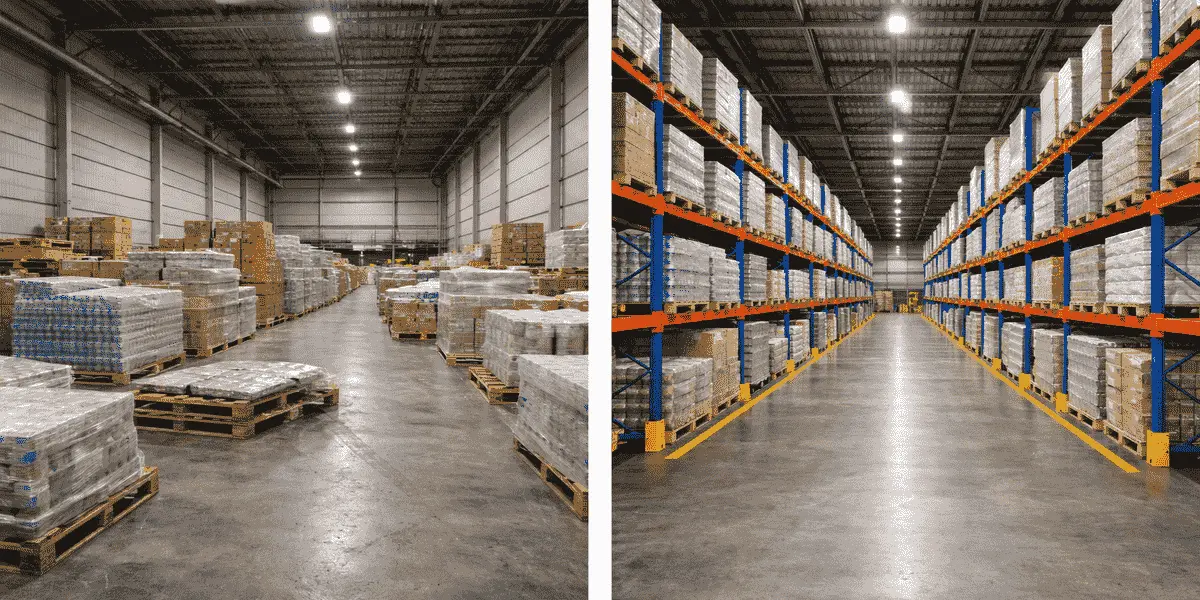
Build a Warehouse or Convert an Existing One?
Build a Warehouse or Convert an Existing One?
Build a Warehouse or Convert an Existing One?
Examine the differences between building a new warehouse and converting an existing warehouse in terms of cost, capacity, operations, and return on investment.
Examine the differences between building a new warehouse and converting an existing warehouse in terms of cost, capacity, operations, and return on investment.
As storage needs grow, many businesses face the same question: Should a new warehouse be built, or should the existing space be reconfigured to make it more efficient? This decision depends not only on square footage. Operating volume, pallet circulation, product structure, building suitability, investment budget, and growth targets must all be evaluated together.
For medium and large businesses operating in the logistics, manufacturing, and retail sectors, a wrong warehouse decision can lead not only to space loss but also to serious inefficiencies in time, labor, and shipment performance. The right decision can provide more capacity, better inventory visibility, and a more balanced return on investment within the same operation.
Therefore, there is no single correct answer to the question of “building a warehouse or transforming the existing one?” The right answer emerges from an evaluation that reads the business’s current bottlenecks and tomorrow’s growth plan together.
In Which Situations Is It Better to Build a New Warehouse?
For some businesses, improving the existing space may be enough. However, in some scenarios, a newly planned warehouse from scratch becomes a much more controlled and sustainable investment.
The situations in which new warehouse construction is more appropriate are generally as follows:
If the existing building is insufficient in terms of ceiling height, column layout, or floor load-bearing capacity
If forklift traffic, loading and unloading areas, and internal circulation are constantly creating bottlenecks
If the business expects a significant capacity increase within the next 3 to 5 years
If there are fire safety, ventilation, or regulatory compliance issues in the existing structure
If the product range has changed and the old warehouse layout can no longer meet the new operating model
The most important advantage of building a new warehouse is that the structure can be designed from scratch for the operation. In other words, not only the racks, but also the ramp location, shipment flow, goods receipt area, picking zone, returns area, and, if necessary, automation infrastructure are considered as part of the same plan.
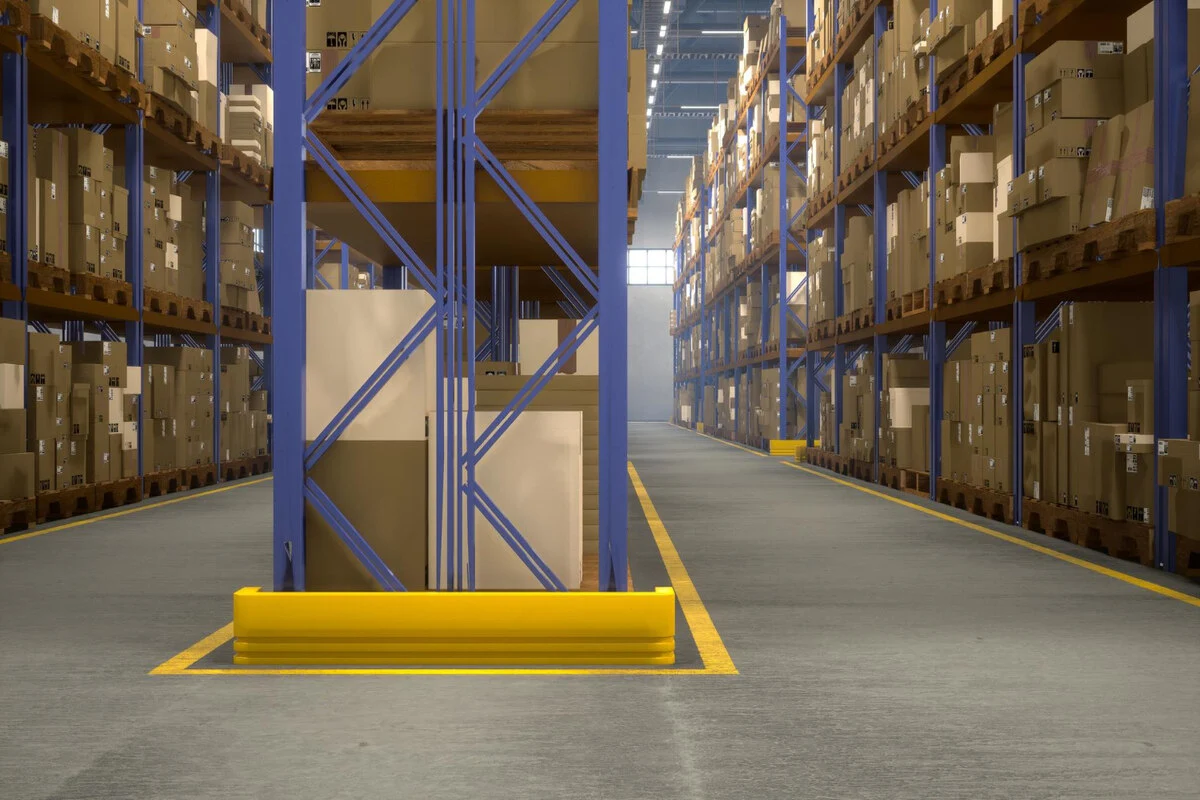
For example, in a business with high pallet density, it may be possible to plan an drive-in rack system according to the dimensions of the new building. This approach creates a capacity advantage, especially for businesses with limited SKU variety but high stock depth. Similarly, in operations that require greater selectivity and fast access, a narrow aisle rack system can provide more pallet positions within the same square footage.
A new warehouse investment requires a higher budget at the initial stage. However, considering the building and rack system as a whole allows the design, manufacturing, and installation process to proceed in a more controlled manner. This is an important long-term advantage in terms of operational quality.
In Which Situations Is Transforming the Existing Warehouse More Logical?
Not every capacity problem means a need for a new warehouse. In many businesses, the real problem is not a lack of space, but inefficient use of the space. Aisles may have been left wider than necessary, rack height may be underused relative to the building’s capacity, or order-picking areas may have been planned randomly.
Transforming the existing warehouse may be the better option because the investment progresses more controllably, improvements can be made without moving the entire operation to another location, and the payback period is often shorter.
The transformation option stands out in the following situations:
If the building structure is technically sound and can be improved
If the location advantage is to be preserved
If land, construction, and relocation costs make a new warehouse investment difficult
If the problem in the warehouse is caused more by the layout plan than by physical inadequacy
If there is still unused vertical volume inside the building even though the operating volume has grown
The critical issue here is not to see transformation as merely adding racks. A true warehouse transformation is a technical study that addresses flow analysis, stock classification, equipment compatibility, occupational safety, access structure, and growth scenarios together.
For example, if the existing warehouse floor and ceiling height are suitable, mezzanine systems or mezzanine racking systems can be considered for additional storage space. This approach can be especially effective for creating a second-level area for spare parts, boxed products, or light-to-medium loads. Similarly, in businesses with variable product density, a mobile racking system can increase space utilization by reducing the need for fixed aisles.
Why Is Looking Only at Square Footage Insufficient When Making a Decision?
Businesses often describe warehouse decisions with the phrase “there is not enough space.” However, warehouse efficiency is not measured only by total square footage. The real question is this: How efficiently is the existing space being used?
For the right decision, the following headings should be evaluated together:
The difference between net storage area and gross area
Utilization efficiency per pallet
Daily inbound and outbound volume
SKU count and product rotation
Forklift type and aisle requirements
The relationship between picking, packing, and shipping
Regulatory, fire, and occupational safety requirements
For example, a 3,000 m² warehouse may function like a 2,000 m² one because of a poor aisle plan and low rack height. In contrast, the same building, with the right rack system and a layout revision, can generate 20% to 40% additional capacity. At this point, the decision should start not with “new warehouse or transformation?” but with the question “Has the existing capacity really been exhausted?”
How Should the Comparison Between a New Warehouse and a Transformation Be Made?
The table below makes the differences between the two options clearer:
Criterion | Building a New Warehouse | Transforming the Existing Warehouse |
Initial Investment Cost | Generally higher | Generally more controlled |
Implementation Flexibility | High because it is planned from scratch | Dependent on the existing structure |
Commissioning Time | May be longer | Often shorter |
Maintaining Operations Without Interruption | Requires a relocation plan | Can be implemented in phases |
Long-Term Growth Potential | Higher | Depends on structural limitations |
Regulatory and Technical Compliance | Can be designed from scratch | May require revisions |
Return Speed | Medium to long term | Can be short to medium term |
This table alone is not enough; however, it is a good starting point for making the investment decision more concrete.
How Does the Operational Structure Affect Rack System Selection?
The decision to build or transform a warehouse is directly linked to the choice of rack system. Because every operational type is not suitable for the same storage system.
In structures with high stock density and limited SKU variety, a drive-in rack system may provide an advantage. In operations with many product items and a need for fast access, a narrow aisle rack system may deliver more balanced results. In projects where vertical volume must be actively used, mezzanine systems and mezzanine racking systems can create additional space. In structures where flexible space use and aisle optimization are desired, a mobile racking system may come to the fore.
Therefore, rack selection should not be made by looking at a catalog, but according to the rhythm of the operation. Product dimensions, weight distribution, inbound-outbound frequency, handling equipment, and growth expectations should all be evaluated together.
In a good design process, the following approach is followed:
First, product and movement analysis is performed
Then, site measurements and building suitability are evaluated
After that, rack layout, equipment traffic, and safety criteria are planned together
Finally, the manufacturing and installation process is organized in a sequence that will not disrupt operations
This approach is important not only for technical quality but also for investment security.
The correct answer to the question “Should we build a warehouse or transform the existing one?” depends on the balance between the technical limits of the existing space and the business’s growth target. A new warehouse offers higher scalability and a system designed from scratch. A transformation, when analyzed correctly, can become a faster, more controlled, and more efficient investment.
What matters is not viewing the problem only as a lack of space; it is to evaluate the operational flow, pallet structure, product variety, equipment usage, and long-term capacity needs within the same framework. When the right technical approach is adopted, both new construction and transformation can give the business a strong storage infrastructure.
Before finalizing your warehouse investment, evaluate the real capacity and transformation potential of the existing space in detail.
As storage needs grow, many businesses face the same question: Should a new warehouse be built, or should the existing space be reconfigured to make it more efficient? This decision depends not only on square footage. Operating volume, pallet circulation, product structure, building suitability, investment budget, and growth targets must all be evaluated together.
For medium and large businesses operating in the logistics, manufacturing, and retail sectors, a wrong warehouse decision can lead not only to space loss but also to serious inefficiencies in time, labor, and shipment performance. The right decision can provide more capacity, better inventory visibility, and a more balanced return on investment within the same operation.
Therefore, there is no single correct answer to the question of “building a warehouse or transforming the existing one?” The right answer emerges from an evaluation that reads the business’s current bottlenecks and tomorrow’s growth plan together.
In Which Situations Is It Better to Build a New Warehouse?
For some businesses, improving the existing space may be enough. However, in some scenarios, a newly planned warehouse from scratch becomes a much more controlled and sustainable investment.
The situations in which new warehouse construction is more appropriate are generally as follows:
If the existing building is insufficient in terms of ceiling height, column layout, or floor load-bearing capacity
If forklift traffic, loading and unloading areas, and internal circulation are constantly creating bottlenecks
If the business expects a significant capacity increase within the next 3 to 5 years
If there are fire safety, ventilation, or regulatory compliance issues in the existing structure
If the product range has changed and the old warehouse layout can no longer meet the new operating model
The most important advantage of building a new warehouse is that the structure can be designed from scratch for the operation. In other words, not only the racks, but also the ramp location, shipment flow, goods receipt area, picking zone, returns area, and, if necessary, automation infrastructure are considered as part of the same plan.
For example, in a business with high pallet density, it may be possible to plan an drive-in rack system according to the dimensions of the new building. This approach creates a capacity advantage, especially for businesses with limited SKU variety but high stock depth. Similarly, in operations that require greater selectivity and fast access, a narrow aisle rack system can provide more pallet positions within the same square footage.
A new warehouse investment requires a higher budget at the initial stage. However, considering the building and rack system as a whole allows the design, manufacturing, and installation process to proceed in a more controlled manner. This is an important long-term advantage in terms of operational quality.
In Which Situations Is Transforming the Existing Warehouse More Logical?
Not every capacity problem means a need for a new warehouse. In many businesses, the real problem is not a lack of space, but inefficient use of the space. Aisles may have been left wider than necessary, rack height may be underused relative to the building’s capacity, or order-picking areas may have been planned randomly.
Transforming the existing warehouse may be the better option because the investment progresses more controllably, improvements can be made without moving the entire operation to another location, and the payback period is often shorter.
The transformation option stands out in the following situations:
If the building structure is technically sound and can be improved
If the location advantage is to be preserved
If land, construction, and relocation costs make a new warehouse investment difficult
If the problem in the warehouse is caused more by the layout plan than by physical inadequacy
If there is still unused vertical volume inside the building even though the operating volume has grown
The critical issue here is not to see transformation as merely adding racks. A true warehouse transformation is a technical study that addresses flow analysis, stock classification, equipment compatibility, occupational safety, access structure, and growth scenarios together.
For example, if the existing warehouse floor and ceiling height are suitable, mezzanine systems or mezzanine racking systems can be considered for additional storage space. This approach can be especially effective for creating a second-level area for spare parts, boxed products, or light-to-medium loads. Similarly, in businesses with variable product density, a mobile racking system can increase space utilization by reducing the need for fixed aisles.
Why Is Looking Only at Square Footage Insufficient When Making a Decision?
Businesses often describe warehouse decisions with the phrase “there is not enough space.” However, warehouse efficiency is not measured only by total square footage. The real question is this: How efficiently is the existing space being used?
For the right decision, the following headings should be evaluated together:
The difference between net storage area and gross area
Utilization efficiency per pallet
Daily inbound and outbound volume
SKU count and product rotation
Forklift type and aisle requirements
The relationship between picking, packing, and shipping
Regulatory, fire, and occupational safety requirements
For example, a 3,000 m² warehouse may function like a 2,000 m² one because of a poor aisle plan and low rack height. In contrast, the same building, with the right rack system and a layout revision, can generate 20% to 40% additional capacity. At this point, the decision should start not with “new warehouse or transformation?” but with the question “Has the existing capacity really been exhausted?”
How Should the Comparison Between a New Warehouse and a Transformation Be Made?
The table below makes the differences between the two options clearer:
Criterion | Building a New Warehouse | Transforming the Existing Warehouse |
Initial Investment Cost | Generally higher | Generally more controlled |
Implementation Flexibility | High because it is planned from scratch | Dependent on the existing structure |
Commissioning Time | May be longer | Often shorter |
Maintaining Operations Without Interruption | Requires a relocation plan | Can be implemented in phases |
Long-Term Growth Potential | Higher | Depends on structural limitations |
Regulatory and Technical Compliance | Can be designed from scratch | May require revisions |
Return Speed | Medium to long term | Can be short to medium term |
This table alone is not enough; however, it is a good starting point for making the investment decision more concrete.
How Does the Operational Structure Affect Rack System Selection?
The decision to build or transform a warehouse is directly linked to the choice of rack system. Because every operational type is not suitable for the same storage system.
In structures with high stock density and limited SKU variety, a drive-in rack system may provide an advantage. In operations with many product items and a need for fast access, a narrow aisle rack system may deliver more balanced results. In projects where vertical volume must be actively used, mezzanine systems and mezzanine racking systems can create additional space. In structures where flexible space use and aisle optimization are desired, a mobile racking system may come to the fore.
Therefore, rack selection should not be made by looking at a catalog, but according to the rhythm of the operation. Product dimensions, weight distribution, inbound-outbound frequency, handling equipment, and growth expectations should all be evaluated together.
In a good design process, the following approach is followed:
First, product and movement analysis is performed
Then, site measurements and building suitability are evaluated
After that, rack layout, equipment traffic, and safety criteria are planned together
Finally, the manufacturing and installation process is organized in a sequence that will not disrupt operations
This approach is important not only for technical quality but also for investment security.
The correct answer to the question “Should we build a warehouse or transform the existing one?” depends on the balance between the technical limits of the existing space and the business’s growth target. A new warehouse offers higher scalability and a system designed from scratch. A transformation, when analyzed correctly, can become a faster, more controlled, and more efficient investment.
What matters is not viewing the problem only as a lack of space; it is to evaluate the operational flow, pallet structure, product variety, equipment usage, and long-term capacity needs within the same framework. When the right technical approach is adopted, both new construction and transformation can give the business a strong storage infrastructure.
Before finalizing your warehouse investment, evaluate the real capacity and transformation potential of the existing space in detail.
Frequently Asked Questions (FAQ) About Setting Up a Warehouse and Converting an Existing Warehouse
Frequently Asked Questions (FAQ) About Setting Up a Warehouse and Converting an Existing Warehouse
Frequently Asked Questions (FAQ) About Setting Up a Warehouse and Converting an Existing Warehouse
How to Choose a Warehouse Racking System?
The choice of warehouse racking system should be made according to product type, pallet density, number of SKUs, forklift structure, and access requirements. The right system choice affects operational speed as much as capacity.
How Is Warehouse Capacity Calculated?
What is the Most Critical Criterion in Logistics Warehouse Planning?
Which businesses are mezzanine systems suitable for?
Does the Warehouse Conversion Stop Operations?

Contact
Do you want to receive more information? We have expert and reliable contact persons available for any questions, issues, and suggestions.
Reta Engineering Warehouse Racking Systems Industry and Trade Inc.
Address
Muradiye Organized Industrial Zone, 10th St. No: 30 Yunusemre / Manisa
info@retamuhendislik.com.tr