
What is Earthquake Safety in Warehouse Racking Systems?
What is Earthquake Safety in Warehouse Racking Systems?
What is Earthquake Safety in Warehouse Racking Systems?
Earthquake safety in warehouse racking systems is ensured through proper engineering, suitable anchoring, durable material selection, and regular maintenance. In this content, you can find the technical criteria to consider in earthquake-resistant rack design and methods for reducing risk.
Discover earthquake safety, regulation-compliant design, earthquake-analysis racking solutions and periodic inspections in a single guide for warehouse racking systems.
Earthquake safety in warehouse racking systems is ensured through proper engineering, suitable anchoring, durable material selection, and regular maintenance. In this content, you can find the technical criteria to consider in earthquake-resistant rack design and methods for reducing risk.
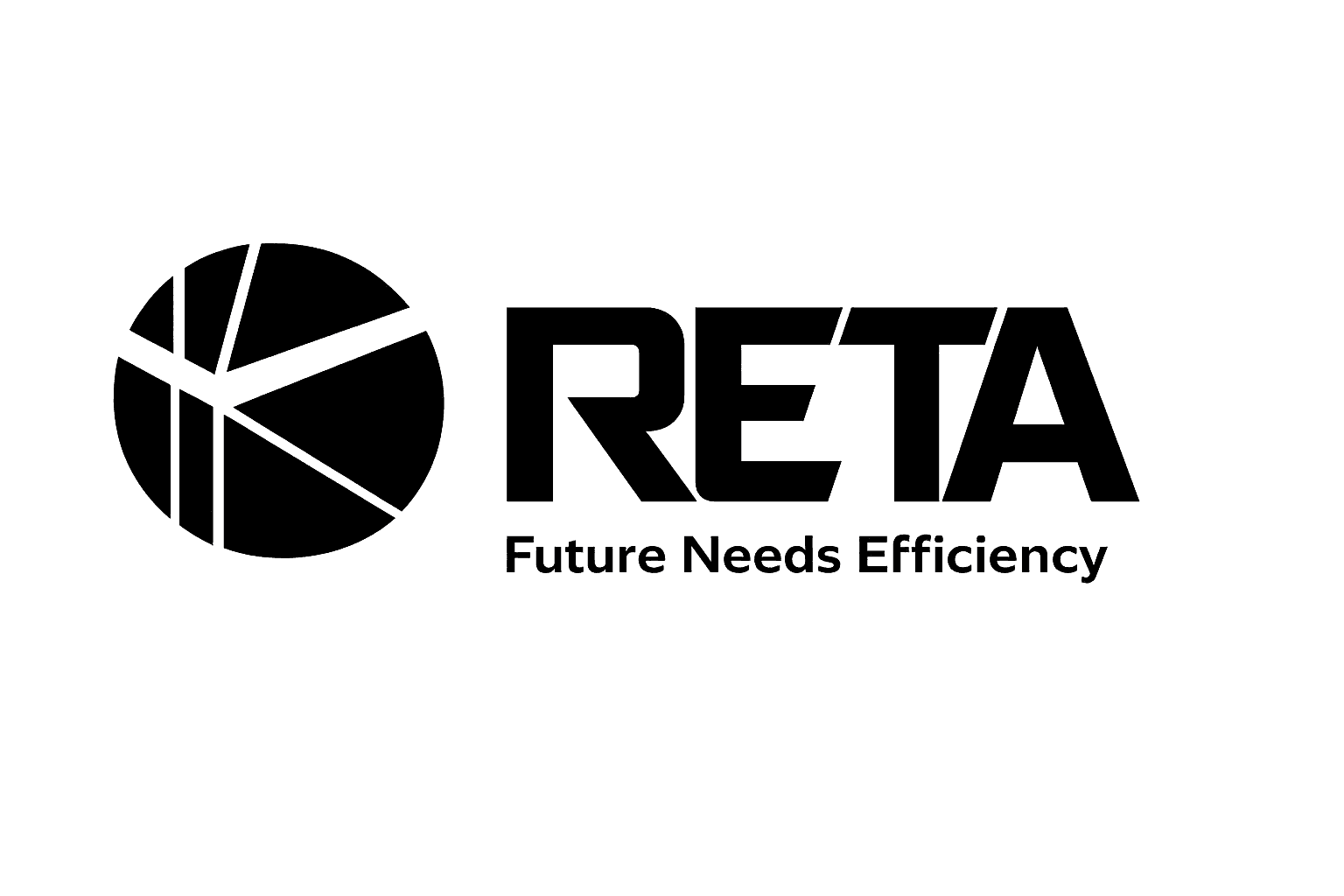
In warehouse racking systems, earthquake safety is a critical issue in terms of personal safety, business continuity, and brand reputation. It is possible to significantly reduce risks such as racks toppling over, damage to products, injuries to workers, or complete work stoppage with a properly designed and correctly used system.
When designing your warehouse, evaluating engineering projects prepared for pallet racking systems in conjunction with earthquake regulations helps limit potential future risks from the outset.
What is an Earthquake-Resistant Warehouse?
An earthquake-resistant warehouse is designed to protect human safety, limit structural damage, and be quickly reusable after an earthquake.
Not only the building's structural system, but all components within it are part of this definition: racking systems, mechanical lines, office partitions, emergency exit routes, and even the way equipment is fastened are all part of the concept of an earthquake-resistant warehouse.
When you think about your warehouse with this perspective, you start to clearly see that racks are actually extensions of the structure and not “just metal racks.”
The Importance of Establishing Earthquake-Resistant Warehouse and Racking Systems in Turkey
Turkey is a country with active fault lines, and this reality is directly reflected in warehouse projects. It's not enough for only the building to stand; the racking systems inside must also behave safely during an earthquake.
The main benefits of establishing earthquake-resistant warehouse and racking systems for you:
Protecting human safety
Reducing product and equipment losses
Preventing long-term work stoppages
Reducing risks of insurance, legal liability, and reputation loss
In Turkey's conditions, it has become mandatory to consider the question “how will these racks behave in an earthquake?” alongside “how can I fit more products?” when designing a warehouse.
Design of Warehouse Racking Systems in Compliance with Earthquake Regulations
The Turkey Building Earthquake Regulation emphasizes the safety of equipment and systems inside the building while defining the behavior of structures under the effects of earthquakes. Warehouse racking systems should also be considered within this scope.
For a racking system that complies with earthquake regulations:
Earthquake zone, soil class, and building usage purpose should be considered
Horizontal and vertical loads affecting the racking system should be included in the engineering calculations
Anchorage details of the racks should be designed to reduce the risk of toppling and sliding
The project should be documented with static/dynamic analyses and technical drawings
The critical point here is to accept that the racking system is not a “standard product” but an engineering solution that must be specifically designed. Compliance with the regulation cannot be achieved by simply selecting sizes from a catalog.
The Impact of Soil Survey and Foundation Selection on Warehouse Racking Systems
Warehouse racking systems become safe or risky depending on the behavior of the soil they are standing on. Weak, liquefaction-prone, and uneven settlement-prone soils pose additional risks to racks during an earthquake. When both horizontal and vertical storage is done with mezzanine racking systems, how load transfer between floors will behave during an earthquake must be analyzed, and accordingly, the details of carrier columns, beams, and slabs should be designed.
Therefore:
The soil survey conducted before the warehouse building should also be considered in rack planning
The type of foundation (raft foundation, continuous foundation, soil improvement, etc.) will affect the behavior of racks, so the rack manufacturer or project engineer should work with this information
Soil irregularities, level differences, and joints should be specially addressed in the rack layout plan
In conclusion, the better the warehouse's soil and foundation are planned, the more predictable and safer the earthquake performance of your racking system will be.
Material Selection and the Role of Supporting Systems in Warehouse Racking Systems
The resistance of warehouse racking systems under earthquake conditions largely depends on the materials used and the supporting system.
Key points to pay attention to:
The material quality, wall thickness, and sectional geometry of supporting profiles
Compatibility and certification of traverses, uprights, and connection elements
Use of corrosion-resistant coating (such as galvanization)
Compliance of bolts, nuts, anchors, and connection plates with standards
Racking systems claiming high carrying capacity yet having uncertain material quality can lead to unexpected collapses during an earthquake. Hence, material certificates, test results, and manufacturer references must always be questioned.
Regarding earthquake safety, you should establish loading schemes that will not exceed the carrying capacity for light and medium load racking systems and clearly share these rules with your on-site team.
Earthquake Precautions to be Taken in Warehouse Racking Systems
In addition to designing racks in accordance with earthquake regulations, practical precautions to be taken on site also play a significant role in earthquake safety. To summarize them:
Properly anchoring racks to the ground and, if necessary, to wall or roof supports
Balanced load distribution, using heaviest pallets at the lowest levels
Planning rack aisle widths to reduce the risk of toppling and collision. In projects where you need high stock density, while maximizing space usage with narrow aisle pallet racking systems, you should always include aisle widths in the engineering calculations to reduce the risk of toppling and collision during an earthquake.
Arranging forklift and pallet truck traffic to reduce the impact risk on racks
Ensuring proper placement of products on racks, avoiding overhanging and overloading
These measures help keep racks stable during earthquakes and strengthen general work safety beyond just seismic concerns.
What are Earthquake Braces in Warehouse Racking Systems?
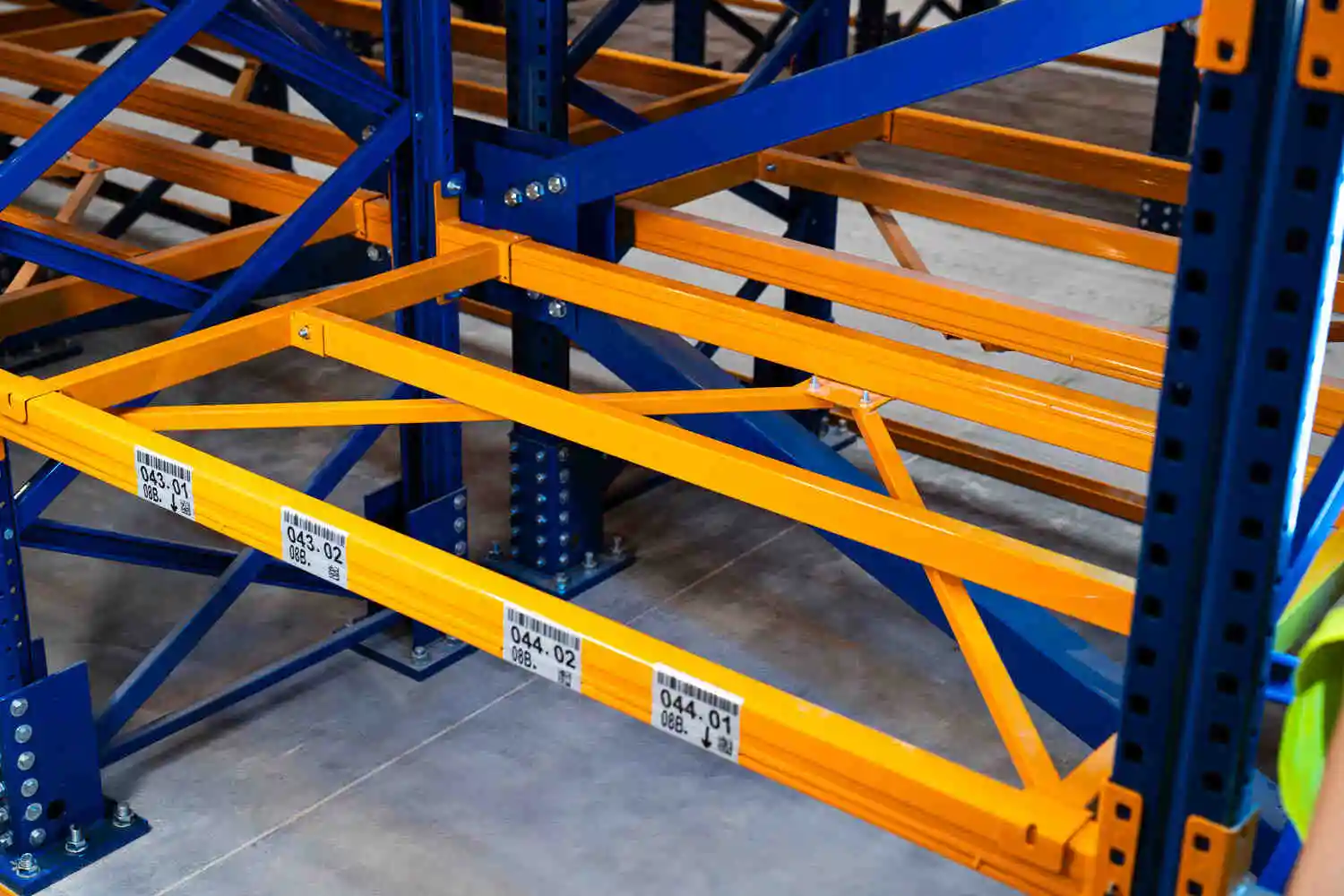
Earthquake braces are diagonal elements used to increase the rigidity of the racking system in the horizontal direction. They limit the sway and buckling of the rack under earthquake or lateral loads.
For earthquake braces to function properly:
They should be placed at the right points, with the correct section and in the number foreseen by the project
Their connections should be designed not to loosen or cause deformation over time
Used not randomly, but based on engineering calculations
Cross braces added randomly to make “the rack look sturdier” can, in some cases, disrupt load transfer and actually create more risk. Therefore, cross-brace usage must be done according to the project.
Proper Planning in Warehouse Racking Systems Against Earthquake Risk
The foundation of protecting racking systems against earthquake risk lies in proper planning. To achieve this:
The dimensions, weight, and loading scenarios of products to be stored in the warehouse should be clarified
The earthquake zone, soil class, and building characteristics should be at the project engineer's disposal
Every racking system should be modeled and calculated specifically according to these data
Projects should be documented with static and, if needed, dynamic analysis results
Instead of general expressions like “it carries this many tons,” calculations should be made based on specific usage scenarios, and loading instructions for these scenarios should be implemented at the site.
Warehouse Racking Systems with Earthquake Analysis and Static/Dynamic Load Analysis
Warehouse racking systems with earthquake analysis are systems where the effects of an earthquake are simulated in a computer environment, and rack behavior is predicted. Here, two main types of analysis come to the forefront: static and dynamic analyses.
In static analyses, the earthquake effect is applied to the racking system as a certain horizontal load, and the system's resistance is tested. In dynamic analyses, earthquake acceleration records or spectrums are used to examine the rack's behavior over time.
Thanks to these analyses:
Weak points, elements at risk of buckling, and insufficient connections are identified in advance
Carrier sections, connection details, and cross-bracing can be optimized
A balanced design in terms of both safety and cost is achieved
Ultimately, earthquake-analyzed racking systems are not just “strong-looking”; they offer solutions backed by numerical data and testing.
The Importance of Periodic Checks and Maintenance in Warehouse Racking Systems
Earthquake safety is not a topic that is completed and shelved on the installation day of the racks. Periodic checks and maintenance during usage are the only ways to keep the system safe.
During the periodic inspection process:
Whether there is bending, cracks, or deformation in the uprights, traverses, and braces
Whether there is loosening or breaking in the bolts, nuts, and anchors
Whether the damage from impacts to the racks has been repaired
Whether loading rules are followed
should be regularly checked. These checks can be done routinely by your trained staff, and professional inspection services can be obtained from expert companies at specific intervals.
Post-Earthquake Inspection and Emergency Intervention in Warehouse Racking Systems
Continuing to use racking systems as if nothing happened after an earthquake carries great risk. The earthquake may leave invisible damage, and this damage can lead to sudden collapses in the subsequent days.
The basic steps to be taken after an earthquake:
Not using racks at full capacity immediately but conducting a preliminary inspection
Identifying bent, buckled, or weakened elements
Unloading racks in a controlled manner where necessary
Conducting thorough inspections by expert engineers and rack manufacturers/installers
Replacing damaged elements and applying reinforcement according to the project if needed
Preplanning the emergency response process, or determining the answer to "what will we do if an earthquake occurs?" beforehand, allows for quick and correct decision-making during a crisis.
In conclusion, earthquake safety in warehouse racking systems requires all steps to work in harmony from the soil to the foundation, from materials to the project, and from installation to maintenance. When you pay attention to each of these steps while planning your warehouse, selecting, and using your racking systems, you make both your employees and your business much more resilient to the possible effects of an earthquake.
In warehouse racking systems, earthquake safety is a critical issue in terms of personal safety, business continuity, and brand reputation. It is possible to significantly reduce risks such as racks toppling over, damage to products, injuries to workers, or complete work stoppage with a properly designed and correctly used system.
When designing your warehouse, evaluating engineering projects prepared for pallet racking systems in conjunction with earthquake regulations helps limit potential future risks from the outset.
What is an Earthquake-Resistant Warehouse?
An earthquake-resistant warehouse is designed to protect human safety, limit structural damage, and be quickly reusable after an earthquake.
Not only the building's structural system, but all components within it are part of this definition: racking systems, mechanical lines, office partitions, emergency exit routes, and even the way equipment is fastened are all part of the concept of an earthquake-resistant warehouse.
When you think about your warehouse with this perspective, you start to clearly see that racks are actually extensions of the structure and not “just metal racks.”
The Importance of Establishing Earthquake-Resistant Warehouse and Racking Systems in Turkey
Turkey is a country with active fault lines, and this reality is directly reflected in warehouse projects. It's not enough for only the building to stand; the racking systems inside must also behave safely during an earthquake.
The main benefits of establishing earthquake-resistant warehouse and racking systems for you:
Protecting human safety
Reducing product and equipment losses
Preventing long-term work stoppages
Reducing risks of insurance, legal liability, and reputation loss
In Turkey's conditions, it has become mandatory to consider the question “how will these racks behave in an earthquake?” alongside “how can I fit more products?” when designing a warehouse.
Design of Warehouse Racking Systems in Compliance with Earthquake Regulations
The Turkey Building Earthquake Regulation emphasizes the safety of equipment and systems inside the building while defining the behavior of structures under the effects of earthquakes. Warehouse racking systems should also be considered within this scope.
For a racking system that complies with earthquake regulations:
Earthquake zone, soil class, and building usage purpose should be considered
Horizontal and vertical loads affecting the racking system should be included in the engineering calculations
Anchorage details of the racks should be designed to reduce the risk of toppling and sliding
The project should be documented with static/dynamic analyses and technical drawings
The critical point here is to accept that the racking system is not a “standard product” but an engineering solution that must be specifically designed. Compliance with the regulation cannot be achieved by simply selecting sizes from a catalog.
The Impact of Soil Survey and Foundation Selection on Warehouse Racking Systems
Warehouse racking systems become safe or risky depending on the behavior of the soil they are standing on. Weak, liquefaction-prone, and uneven settlement-prone soils pose additional risks to racks during an earthquake. When both horizontal and vertical storage is done with mezzanine racking systems, how load transfer between floors will behave during an earthquake must be analyzed, and accordingly, the details of carrier columns, beams, and slabs should be designed.
Therefore:
The soil survey conducted before the warehouse building should also be considered in rack planning
The type of foundation (raft foundation, continuous foundation, soil improvement, etc.) will affect the behavior of racks, so the rack manufacturer or project engineer should work with this information
Soil irregularities, level differences, and joints should be specially addressed in the rack layout plan
In conclusion, the better the warehouse's soil and foundation are planned, the more predictable and safer the earthquake performance of your racking system will be.
Material Selection and the Role of Supporting Systems in Warehouse Racking Systems
The resistance of warehouse racking systems under earthquake conditions largely depends on the materials used and the supporting system.
Key points to pay attention to:
The material quality, wall thickness, and sectional geometry of supporting profiles
Compatibility and certification of traverses, uprights, and connection elements
Use of corrosion-resistant coating (such as galvanization)
Compliance of bolts, nuts, anchors, and connection plates with standards
Racking systems claiming high carrying capacity yet having uncertain material quality can lead to unexpected collapses during an earthquake. Hence, material certificates, test results, and manufacturer references must always be questioned.
Regarding earthquake safety, you should establish loading schemes that will not exceed the carrying capacity for light and medium load racking systems and clearly share these rules with your on-site team.
Earthquake Precautions to be Taken in Warehouse Racking Systems
In addition to designing racks in accordance with earthquake regulations, practical precautions to be taken on site also play a significant role in earthquake safety. To summarize them:
Properly anchoring racks to the ground and, if necessary, to wall or roof supports
Balanced load distribution, using heaviest pallets at the lowest levels
Planning rack aisle widths to reduce the risk of toppling and collision. In projects where you need high stock density, while maximizing space usage with narrow aisle pallet racking systems, you should always include aisle widths in the engineering calculations to reduce the risk of toppling and collision during an earthquake.
Arranging forklift and pallet truck traffic to reduce the impact risk on racks
Ensuring proper placement of products on racks, avoiding overhanging and overloading
These measures help keep racks stable during earthquakes and strengthen general work safety beyond just seismic concerns.
What are Earthquake Braces in Warehouse Racking Systems?
Earthquake braces are diagonal elements used to increase the rigidity of the racking system in the horizontal direction. They limit the sway and buckling of the rack under earthquake or lateral loads.
For earthquake braces to function properly:
They should be placed at the right points, with the correct section and in the number foreseen by the project
Their connections should be designed not to loosen or cause deformation over time
Used not randomly, but based on engineering calculations
Cross braces added randomly to make “the rack look sturdier” can, in some cases, disrupt load transfer and actually create more risk. Therefore, cross-brace usage must be done according to the project.
Proper Planning in Warehouse Racking Systems Against Earthquake Risk
The foundation of protecting racking systems against earthquake risk lies in proper planning. To achieve this:
The dimensions, weight, and loading scenarios of products to be stored in the warehouse should be clarified
The earthquake zone, soil class, and building characteristics should be at the project engineer's disposal
Every racking system should be modeled and calculated specifically according to these data
Projects should be documented with static and, if needed, dynamic analysis results
Instead of general expressions like “it carries this many tons,” calculations should be made based on specific usage scenarios, and loading instructions for these scenarios should be implemented at the site.
Warehouse Racking Systems with Earthquake Analysis and Static/Dynamic Load Analysis
Warehouse racking systems with earthquake analysis are systems where the effects of an earthquake are simulated in a computer environment, and rack behavior is predicted. Here, two main types of analysis come to the forefront: static and dynamic analyses.
In static analyses, the earthquake effect is applied to the racking system as a certain horizontal load, and the system's resistance is tested. In dynamic analyses, earthquake acceleration records or spectrums are used to examine the rack's behavior over time.
Thanks to these analyses:
Weak points, elements at risk of buckling, and insufficient connections are identified in advance
Carrier sections, connection details, and cross-bracing can be optimized
A balanced design in terms of both safety and cost is achieved
Ultimately, earthquake-analyzed racking systems are not just “strong-looking”; they offer solutions backed by numerical data and testing.
The Importance of Periodic Checks and Maintenance in Warehouse Racking Systems
Earthquake safety is not a topic that is completed and shelved on the installation day of the racks. Periodic checks and maintenance during usage are the only ways to keep the system safe.
During the periodic inspection process:
Whether there is bending, cracks, or deformation in the uprights, traverses, and braces
Whether there is loosening or breaking in the bolts, nuts, and anchors
Whether the damage from impacts to the racks has been repaired
Whether loading rules are followed
should be regularly checked. These checks can be done routinely by your trained staff, and professional inspection services can be obtained from expert companies at specific intervals.
Post-Earthquake Inspection and Emergency Intervention in Warehouse Racking Systems
Continuing to use racking systems as if nothing happened after an earthquake carries great risk. The earthquake may leave invisible damage, and this damage can lead to sudden collapses in the subsequent days.
The basic steps to be taken after an earthquake:
Not using racks at full capacity immediately but conducting a preliminary inspection
Identifying bent, buckled, or weakened elements
Unloading racks in a controlled manner where necessary
Conducting thorough inspections by expert engineers and rack manufacturers/installers
Replacing damaged elements and applying reinforcement according to the project if needed
Preplanning the emergency response process, or determining the answer to "what will we do if an earthquake occurs?" beforehand, allows for quick and correct decision-making during a crisis.
In conclusion, earthquake safety in warehouse racking systems requires all steps to work in harmony from the soil to the foundation, from materials to the project, and from installation to maintenance. When you pay attention to each of these steps while planning your warehouse, selecting, and using your racking systems, you make both your employees and your business much more resilient to the possible effects of an earthquake.
Frequently Asked Questions (FAQ) About Earthquake Safety in Warehouse Racking Systems
Frequently Asked Questions (FAQ) About Earthquake Safety in Warehouse Racking Systems
Frequently Asked Questions (FAQ) About Earthquake Safety in Warehouse Racking Systems
How to Choose an Earthquake-Proof Warehouse Racking System?
The earthquake zone, ground structure, product weights, warehouse height, and usage intensity should be evaluated together, and static/dynamic analysis should be conducted accordingly. Certified systems that are projected based on these analyses should be preferred.
Are Earthquake Regulations Mandatory for Warehouse Racking Systems?
Should Earthquake Bracing Rack Systems Be Used in Every Warehouse?
When Should Warehouse Rack Inspection be Done After an Earthquake?
How Do Insurance Conditions for Warehouse Racking Systems Get Affected by Earthquakes?


Contact
Do you want to receive more information? We have expert and reliable contact persons available for any questions, issues, and suggestions.
Reta Engineering Warehouse Racking Systems Industry and Trade Inc.
Address
Muradiye Organized Industrial Zone, 10th St. No: 30 Yunusemre / Manisa
info@retamuhendislik.com.tr