
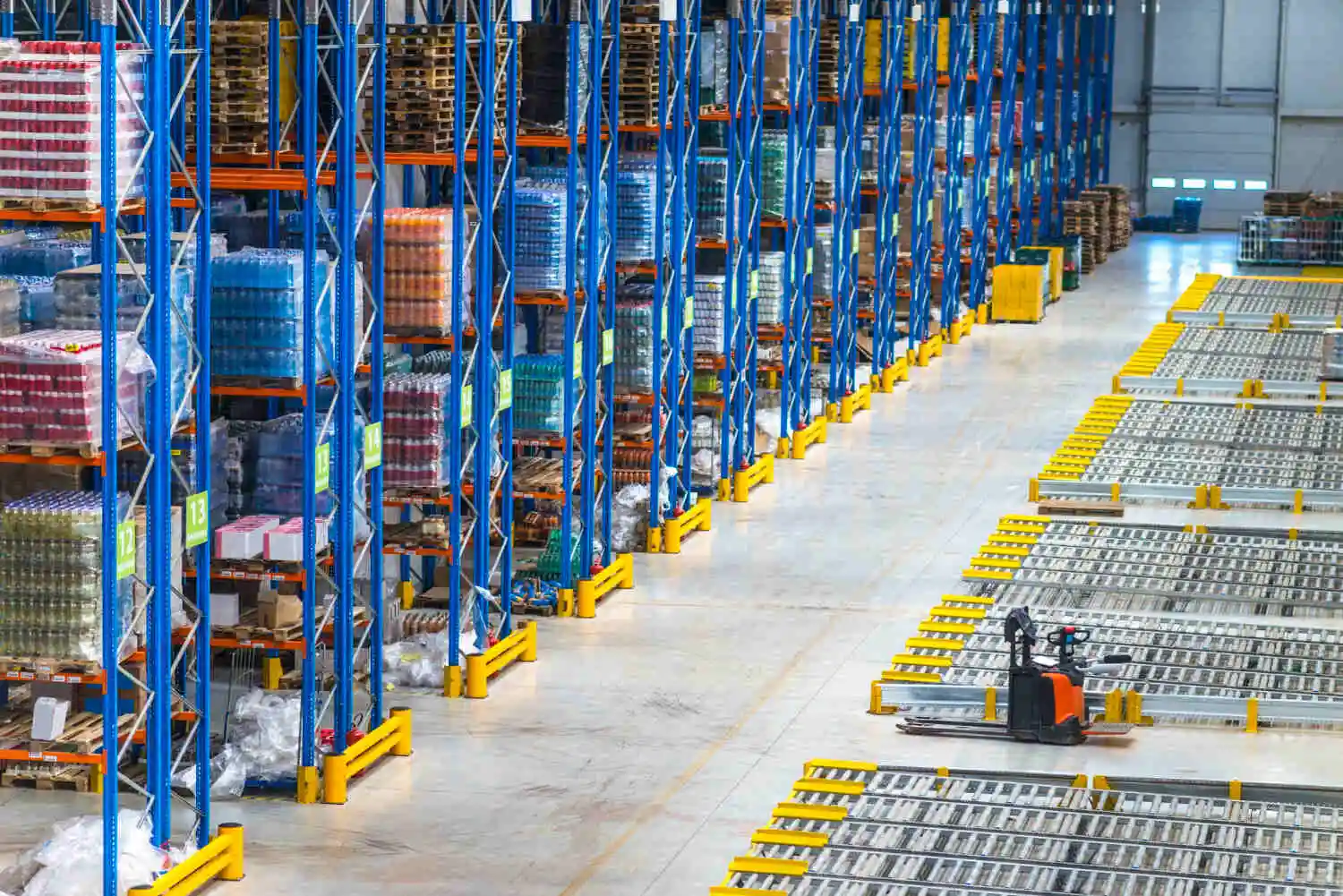
What Are the Types of Warehouses? Warehouse Types According to Your Business Model
What Are the Types of Warehouses? Warehouse Types According to Your Business Model
What Are the Types of Warehouses? Warehouse Types According to Your Business Model
Warehouse types vary according to product structure, operating model, automation level, and ownership structure. Choosing the right warehouse model for your business directly affects inventory accuracy, space efficiency, shipping speed, and supply chain performance.
Find answers to the question 'What are the types of warehouses?'. Explore warehouses based on purpose, product, building type, and automation level to choose the structure that best suits your business.
Warehouse types vary according to product structure, operating model, automation level, and ownership structure. Choosing the right warehouse model for your business directly affects inventory accuracy, space efficiency, shipping speed, and supply chain performance.
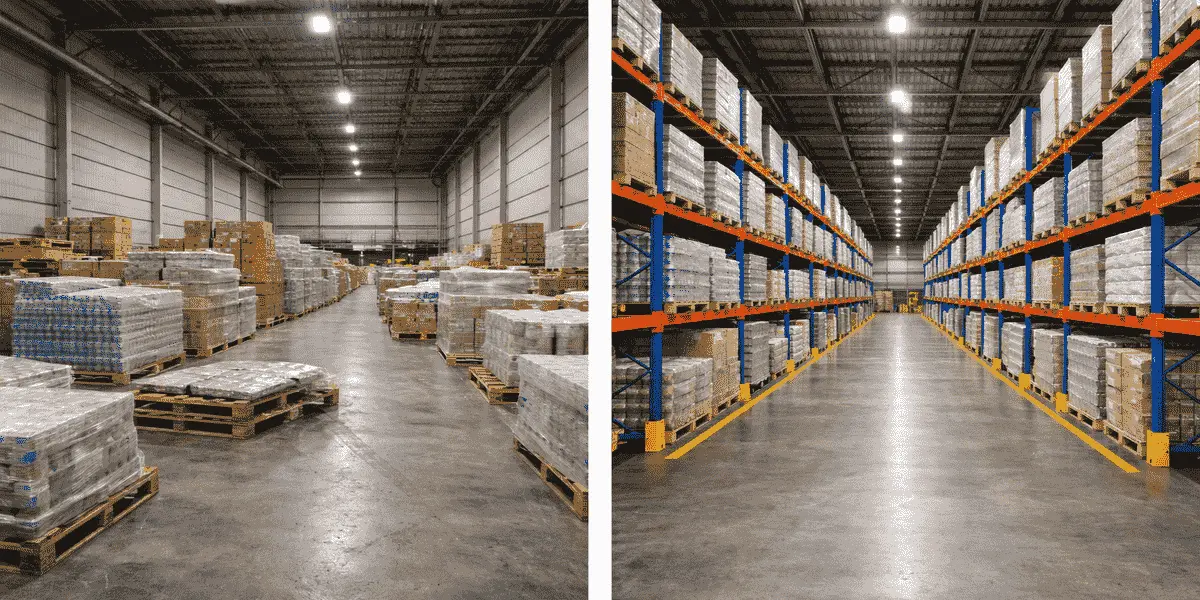
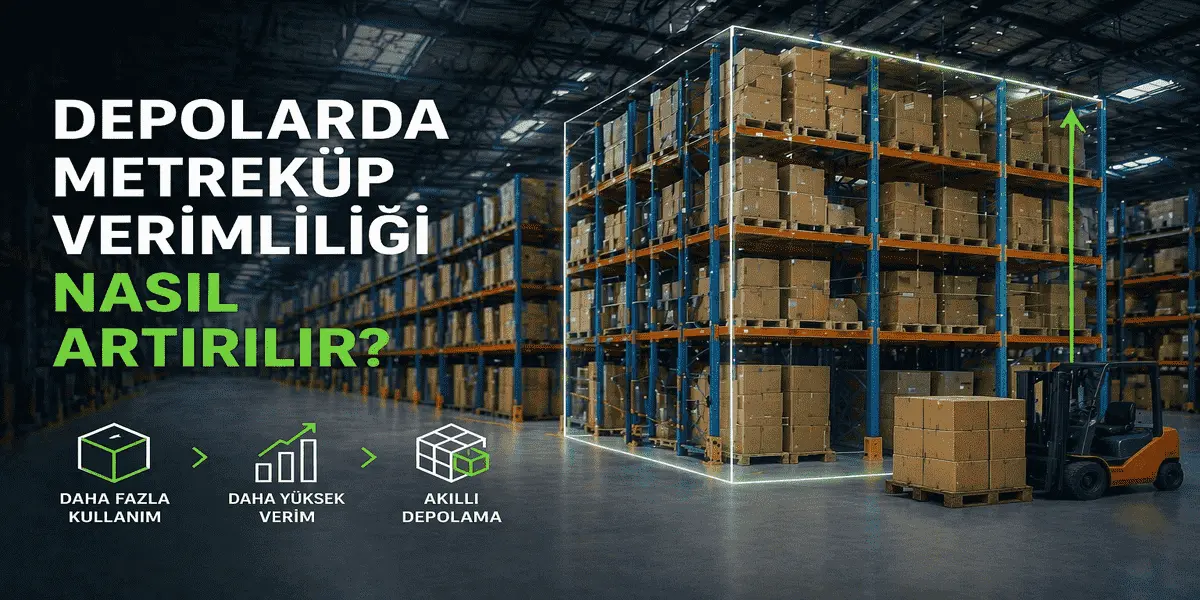
In most businesses, the warehouse is seen as nothing more than “the place where products are kept.” Yet a properly designed warehouse structure directly determines the speed of your supply chain, your costs, inventory accuracy, and customer satisfaction.
That is why the question “What are the types of warehouses?” is not just a theoretical one; it is a strategic issue you need to answer so you can choose the infrastructure that best fits your business model.
We will cover warehouses from different angles:
Warehouse types by purpose
Warehouse types by stored product
Warehouse types by physical structure and architecture
Warehouse types by automation level
Warehouse types by ownership and business model
How Are Warehouse Types Classified?
There is no single “correct” classification. The same warehouse can fall into different categories depending on the perspective you use. For example:
You may be storing finished goods (by purpose),
It may be operating as a dry warehouse (by product),
It may be a high-bay enclosed warehouse (physical structure),
It may be managed with manual processes (automation level),
It may be operating under your own ownership (ownership).
What matters is knowing each of these perspectives and being able to define your own warehouse correctly. That way, choosing both the right racking system and the right warehouse management infrastructure becomes much easier.
Warehouse Types by Purpose
Here, we separate warehouse types according to their role within the supply chain.
Raw Material Warehouse
These are warehouses where you store raw materials, auxiliary materials, and packaging that you will use in production.
The priority is to maintain stock at a level that will not interrupt production and to ensure the material reaches the production line at the right time. Inbound and outbound frequency is generally low, but stock continuity is critical.
Semi-Finished Goods Warehouse
These are warehouses where products that have passed a certain stage of processing but have not yet reached their final form are stored.
In these warehouses, cycle times are usually short. The goal is to keep production flow balanced and create a buffer between lines.
Finished Goods Warehouse
These are warehouses where completed products ready to be shipped to customers or dealers are stored.
Here:
Inventory accuracy
Order picking speed
Shipping quality
Distribution Warehouse
These are warehouses used for regional or national distribution, often located as close to the customer as possible.
Their role is to:
Reduce transportation costs and delivery times
Balance stock levels across different regions
Create a buffer area to handle demand fluctuations.
E-Commerce / Fulfillment Warehouse
These are structures that operate with a wide product range, multi-line orders, and high order volumes. In such setups, especially for small and medium-sized products, using carton and box handling shelving significantly increases picking speed and location accuracy.
Here:
Carton and box-based picking
Fast packing
Management of return processes
Warehouse Types by Stored Product
In warehouse design, the product’s physical and chemical characteristics are at least as decisive as the business model.
Dry Warehouses
These are standard warehouses used for products that do not require special temperature or humidity control.
Example product groups:
Textiles and apparel
Electronic products
Construction materials
Packaging materials
In these warehouses, space efficiency, addressing, and racking structure are at the forefront. Pallet racking and light- and medium-duty shelving systems are among the most commonly used solutions.
Cold Storage Warehouses
These are warehouses designed for products that must be kept within a specific temperature range.
Key features include:
Insulation and cooling equipment
Solutions that reduce temperature loss at door crossings
Choosing racks and equipment made from materials suitable for low temperatures
They are critically important for product groups such as food, certain chemicals, and pharmaceuticals.
Frozen Goods Warehouses
Used for products such as frozen food that must be stored well below 0°C.
Here:
Floor and door solutions
Equipment selection (cold-resistant forklift, pallet jack, etc.)
The durability of racking systems against both temperature and corrosion conditions must be carefully evaluated. In cases where you want to operate with FIFO or LIFO logic in limited spaces, using pallet flow racking allows you to use your cold room’s square meters efficiently while also managing product circulation in a controlled way.
Hazardous Material / Chemical Warehouses
These are specially designed warehouses for flammable, explosive, toxic, or environmentally harmful products.
In these warehouses:
Regulatory compliance
Ventilation, fire detection, and suppression systems
Additional protection against leaks and spills (secondary containment, etc.)
Storage areas separated according to product classes become mandatory. Rack and flooring material selection should also be addressed separately in terms of chemical resistance.
Valuable Goods and High-Security Warehouses
These are areas where products with high monetary value or security risk are stored (such as electronics, jewelry, and certain critical spare parts).
Security cameras, access control systems, alarm infrastructure, and controlled entry-exit procedures are indispensable components of this warehouse type.
Warehouse Types by Physical Structure and Architecture
The same business model can be implemented with different physical structure types. That is why building architecture is also a separate classification category.
Open Warehouses
These are field storage areas used mostly for bulky and durable products that are not greatly affected by weather conditions.
For example:
Construction steel, pipes, and similar materials
Large concrete elements
Stocks with high outdoor durability
Here, open area planning, floor durability, and security measures come to the forefront.
Enclosed Warehouses
This is the classic warehouse type you encounter most often. You store goods under controlled conditions within four walls and a roof.
A significant portion of dry warehouses falls into this category. Racking system selection, ceiling height, and aisle planning are critical decisions in this type.
High-Bay Warehouses
These are warehouses with high ceiling heights, where racks are designed accordingly as multi-tier and multi-level structures.
In these facilities:
Vertical space is used to the maximum
Special equipment (reach truck, narrow aisle forklift, etc.) may be required
Automated storage and WMS integration become more critical
They are ideal for businesses with high stock density and a moderate level of product variety. In such high structures, a narrow aisle racking system designed together with narrow aisle equipment allows you to store far more pallets in the same volume.
Silo-Type Warehouses
These are multi-tier or vertical silo structures designed especially for bulk products (grain, feed, powdered chemicals, etc.).
Here, the focus is more on the hopper and discharge system than on pallets. Flow control and preventing product mixing are among the main objectives.
Mezzanine Warehouses
These are structures where additional floors are created inside an existing enclosed warehouse to increase usable space vertically.
They provide significant advantages especially in:
E-commerce and carton-based operations
Small-part products
Operations with intensive manual picking. The design and load-bearing system of mezzanine structures should be considered together with the racking system and load distribution. Especially in e-commerce-focused operations, mezzanine systems make it easier to separate product groups by floor and simplify carton-based picking processes.
Urban Micro Warehouses / Dark Stores
These are small-square-meter warehouses used for fast delivery scenarios within the city, usually located close to the end user.
They are common in online grocery and q-commerce models. Here, speed, product placement, and order picking flow become even more critical than in traditional warehouses.
Warehouse Types by Automation Level
Here the focus is on how much of the physical work inside the warehouse is handled by machines and systems.
Manual Warehouses
These are warehouses where picking, put-away, and counting processes are largely carried out by human labor.
Handheld terminals may be used, but most of the physical movement is done by staff.
They are still common in small-scale and relatively low-volume operations.
With proper addressing and a simple WMS, even a manual warehouse can become highly efficient.
Mechanized Warehouses
Here, human labor is still present, but many steps rely on mechanical equipment:
Conveyor lines
Sorter systems
Narrow aisle equipment
Automatic doors, elevators
Mechanization significantly increases picking speed and handling capacity, especially in medium- and large-scale warehouses.
Automated Warehouses
These are warehouses with a high level of automation such as AS/RS, shuttle, and robotic picking solutions.
In these structures:
The product comes to the operator (goods-to-person)
Human movement is minimized
Integration of automation systems with the WMS becomes mandatory
The investment cost is high, but in the right business model, the payback period can be quite attractive.
Warehouse Types by Ownership and Business Model
A warehouse is not only a physical space; it is also a business model choice.
Your Own Warehouse (In-House)
The warehouse building and operations are entirely under your control.
Advantages:
Full control over operations
Flexibility in managing fixed costs in the long term
Disadvantages:
Investment and operating costs are entirely yours
If flexibility needs are high, scaling quickly becomes more difficult
3PL / Warehouses Owned by a Logistics Company
This is the model in which you obtain warehouse services from a logistics service provider.
Advantages:
Initial investment cost is lower
Flexibility and scaling are easier
You benefit from the logistics company’s expertise
Disadvantages:
Your direct control over the warehouse decreases
Dependence on the service provider increases
Shared / Common Warehouses
These are models where more than one company shares the same warehouse, used especially by small and medium-sized businesses.
They provide an advantage for sharing costs in structures where demand fluctuates and different customers use the same infrastructure.
Consignment and Customer Warehouses
These are warehouse arrangements used when stock is kept at the customer’s site but ownership remains with you.
They are often preferred especially in industry, for critical spare parts, and for materials consumed continuously.
How Do You Determine the Right Warehouse Type for Your Business?
All this information about warehouse types remains theoretical unless you adapt it to your business. There are a few key questions you need to clarify in your mind.
What Kind of Products Do You Store?
Are they large and heavy products, or small and light products?
Do they require temperature or humidity control?
Are there products subject to special regulations, such as chemicals or hazardous materials?
These questions shed light on whether you need a dry warehouse, a cold storage warehouse, or a chemical warehouse.
What Does Your Order and Flow Structure Look Like?
Do you ship few orders in high quantities?
Or do you ship many small and mixed orders?
If you mainly handle bulk shipments, more classic distribution warehouses and high-density storage structures stand out. If you have multi-line orders like in e-commerce or retail, warehouses designed with a fulfillment logic are more suitable for you.
What Is Your Space and Ceiling Height Situation?
Is horizontal space limited, or is ceiling height?
Do you have a large plot of land but limited building height?
These questions guide you when choosing between a high-bay warehouse, mezzanine solutions, or a more traditional structure.
What Is Your Growth Plan?
A warehouse setup that works for you today but will become restrictive in a year or two may force a second investment in a short time.
Will your product variety increase?
Will new sales channels (especially e-commerce) come into play?
Are you planning new warehouses in different cities or countries?
The answers to these questions will affect both the physical warehouse type and the architecture of the Warehouse Management System you use (such as standalone WMS, cloud WMS, or ERP/SCM-based systems).
“Warehouse Type” Is Not a Label, It Is a Strategic Choice
Knowing warehouse types offers a great opportunity to rethink your business model, product structure, customer base, and growth goals.
Classification by purpose clarifies your role within the supply chain.
Classification by product guides you toward the right decisions in security, quality, and compliance.
Classification by physical structure and automation level helps you balance investment and efficiency.
Classification by ownership model reveals your capital and flexibility preference.
Using this framework, once you first clarify where you are today and then where you want to go over the next few years, you can choose both the right warehouse type and the right warehouse management strategy on a much more solid foundation. In this way, your warehouse becomes not just a space where products are stored, but a strategic force that grows your business.
In most businesses, the warehouse is seen as nothing more than “the place where products are kept.” Yet a properly designed warehouse structure directly determines the speed of your supply chain, your costs, inventory accuracy, and customer satisfaction.
That is why the question “What are the types of warehouses?” is not just a theoretical one; it is a strategic issue you need to answer so you can choose the infrastructure that best fits your business model.
We will cover warehouses from different angles:
Warehouse types by purpose
Warehouse types by stored product
Warehouse types by physical structure and architecture
Warehouse types by automation level
Warehouse types by ownership and business model
How Are Warehouse Types Classified?
There is no single “correct” classification. The same warehouse can fall into different categories depending on the perspective you use. For example:
You may be storing finished goods (by purpose),
It may be operating as a dry warehouse (by product),
It may be a high-bay enclosed warehouse (physical structure),
It may be managed with manual processes (automation level),
It may be operating under your own ownership (ownership).
What matters is knowing each of these perspectives and being able to define your own warehouse correctly. That way, choosing both the right racking system and the right warehouse management infrastructure becomes much easier.
Warehouse Types by Purpose
Here, we separate warehouse types according to their role within the supply chain.
Raw Material Warehouse
These are warehouses where you store raw materials, auxiliary materials, and packaging that you will use in production.
The priority is to maintain stock at a level that will not interrupt production and to ensure the material reaches the production line at the right time. Inbound and outbound frequency is generally low, but stock continuity is critical.
Semi-Finished Goods Warehouse
These are warehouses where products that have passed a certain stage of processing but have not yet reached their final form are stored.
In these warehouses, cycle times are usually short. The goal is to keep production flow balanced and create a buffer between lines.
Finished Goods Warehouse
These are warehouses where completed products ready to be shipped to customers or dealers are stored.
Here:
Inventory accuracy
Order picking speed
Shipping quality
Distribution Warehouse
These are warehouses used for regional or national distribution, often located as close to the customer as possible.
Their role is to:
Reduce transportation costs and delivery times
Balance stock levels across different regions
Create a buffer area to handle demand fluctuations.
E-Commerce / Fulfillment Warehouse
These are structures that operate with a wide product range, multi-line orders, and high order volumes. In such setups, especially for small and medium-sized products, using carton and box handling shelving significantly increases picking speed and location accuracy.
Here:
Carton and box-based picking
Fast packing
Management of return processes
Warehouse Types by Stored Product
In warehouse design, the product’s physical and chemical characteristics are at least as decisive as the business model.
Dry Warehouses
These are standard warehouses used for products that do not require special temperature or humidity control.
Example product groups:
Textiles and apparel
Electronic products
Construction materials
Packaging materials
In these warehouses, space efficiency, addressing, and racking structure are at the forefront. Pallet racking and light- and medium-duty shelving systems are among the most commonly used solutions.
Cold Storage Warehouses
These are warehouses designed for products that must be kept within a specific temperature range.
Key features include:
Insulation and cooling equipment
Solutions that reduce temperature loss at door crossings
Choosing racks and equipment made from materials suitable for low temperatures
They are critically important for product groups such as food, certain chemicals, and pharmaceuticals.
Frozen Goods Warehouses
Used for products such as frozen food that must be stored well below 0°C.
Here:
Floor and door solutions
Equipment selection (cold-resistant forklift, pallet jack, etc.)
The durability of racking systems against both temperature and corrosion conditions must be carefully evaluated. In cases where you want to operate with FIFO or LIFO logic in limited spaces, using pallet flow racking allows you to use your cold room’s square meters efficiently while also managing product circulation in a controlled way.
Hazardous Material / Chemical Warehouses
These are specially designed warehouses for flammable, explosive, toxic, or environmentally harmful products.
In these warehouses:
Regulatory compliance
Ventilation, fire detection, and suppression systems
Additional protection against leaks and spills (secondary containment, etc.)
Storage areas separated according to product classes become mandatory. Rack and flooring material selection should also be addressed separately in terms of chemical resistance.
Valuable Goods and High-Security Warehouses
These are areas where products with high monetary value or security risk are stored (such as electronics, jewelry, and certain critical spare parts).
Security cameras, access control systems, alarm infrastructure, and controlled entry-exit procedures are indispensable components of this warehouse type.
Warehouse Types by Physical Structure and Architecture
The same business model can be implemented with different physical structure types. That is why building architecture is also a separate classification category.
Open Warehouses
These are field storage areas used mostly for bulky and durable products that are not greatly affected by weather conditions.
For example:
Construction steel, pipes, and similar materials
Large concrete elements
Stocks with high outdoor durability
Here, open area planning, floor durability, and security measures come to the forefront.
Enclosed Warehouses
This is the classic warehouse type you encounter most often. You store goods under controlled conditions within four walls and a roof.
A significant portion of dry warehouses falls into this category. Racking system selection, ceiling height, and aisle planning are critical decisions in this type.
High-Bay Warehouses
These are warehouses with high ceiling heights, where racks are designed accordingly as multi-tier and multi-level structures.
In these facilities:
Vertical space is used to the maximum
Special equipment (reach truck, narrow aisle forklift, etc.) may be required
Automated storage and WMS integration become more critical
They are ideal for businesses with high stock density and a moderate level of product variety. In such high structures, a narrow aisle racking system designed together with narrow aisle equipment allows you to store far more pallets in the same volume.
Silo-Type Warehouses
These are multi-tier or vertical silo structures designed especially for bulk products (grain, feed, powdered chemicals, etc.).
Here, the focus is more on the hopper and discharge system than on pallets. Flow control and preventing product mixing are among the main objectives.
Mezzanine Warehouses
These are structures where additional floors are created inside an existing enclosed warehouse to increase usable space vertically.
They provide significant advantages especially in:
E-commerce and carton-based operations
Small-part products
Operations with intensive manual picking. The design and load-bearing system of mezzanine structures should be considered together with the racking system and load distribution. Especially in e-commerce-focused operations, mezzanine systems make it easier to separate product groups by floor and simplify carton-based picking processes.
Urban Micro Warehouses / Dark Stores
These are small-square-meter warehouses used for fast delivery scenarios within the city, usually located close to the end user.
They are common in online grocery and q-commerce models. Here, speed, product placement, and order picking flow become even more critical than in traditional warehouses.
Warehouse Types by Automation Level
Here the focus is on how much of the physical work inside the warehouse is handled by machines and systems.
Manual Warehouses
These are warehouses where picking, put-away, and counting processes are largely carried out by human labor.
Handheld terminals may be used, but most of the physical movement is done by staff.
They are still common in small-scale and relatively low-volume operations.
With proper addressing and a simple WMS, even a manual warehouse can become highly efficient.
Mechanized Warehouses
Here, human labor is still present, but many steps rely on mechanical equipment:
Conveyor lines
Sorter systems
Narrow aisle equipment
Automatic doors, elevators
Mechanization significantly increases picking speed and handling capacity, especially in medium- and large-scale warehouses.
Automated Warehouses
These are warehouses with a high level of automation such as AS/RS, shuttle, and robotic picking solutions.
In these structures:
The product comes to the operator (goods-to-person)
Human movement is minimized
Integration of automation systems with the WMS becomes mandatory
The investment cost is high, but in the right business model, the payback period can be quite attractive.
Warehouse Types by Ownership and Business Model
A warehouse is not only a physical space; it is also a business model choice.
Your Own Warehouse (In-House)
The warehouse building and operations are entirely under your control.
Advantages:
Full control over operations
Flexibility in managing fixed costs in the long term
Disadvantages:
Investment and operating costs are entirely yours
If flexibility needs are high, scaling quickly becomes more difficult
3PL / Warehouses Owned by a Logistics Company
This is the model in which you obtain warehouse services from a logistics service provider.
Advantages:
Initial investment cost is lower
Flexibility and scaling are easier
You benefit from the logistics company’s expertise
Disadvantages:
Your direct control over the warehouse decreases
Dependence on the service provider increases
Shared / Common Warehouses
These are models where more than one company shares the same warehouse, used especially by small and medium-sized businesses.
They provide an advantage for sharing costs in structures where demand fluctuates and different customers use the same infrastructure.
Consignment and Customer Warehouses
These are warehouse arrangements used when stock is kept at the customer’s site but ownership remains with you.
They are often preferred especially in industry, for critical spare parts, and for materials consumed continuously.
How Do You Determine the Right Warehouse Type for Your Business?
All this information about warehouse types remains theoretical unless you adapt it to your business. There are a few key questions you need to clarify in your mind.
What Kind of Products Do You Store?
Are they large and heavy products, or small and light products?
Do they require temperature or humidity control?
Are there products subject to special regulations, such as chemicals or hazardous materials?
These questions shed light on whether you need a dry warehouse, a cold storage warehouse, or a chemical warehouse.
What Does Your Order and Flow Structure Look Like?
Do you ship few orders in high quantities?
Or do you ship many small and mixed orders?
If you mainly handle bulk shipments, more classic distribution warehouses and high-density storage structures stand out. If you have multi-line orders like in e-commerce or retail, warehouses designed with a fulfillment logic are more suitable for you.
What Is Your Space and Ceiling Height Situation?
Is horizontal space limited, or is ceiling height?
Do you have a large plot of land but limited building height?
These questions guide you when choosing between a high-bay warehouse, mezzanine solutions, or a more traditional structure.
What Is Your Growth Plan?
A warehouse setup that works for you today but will become restrictive in a year or two may force a second investment in a short time.
Will your product variety increase?
Will new sales channels (especially e-commerce) come into play?
Are you planning new warehouses in different cities or countries?
The answers to these questions will affect both the physical warehouse type and the architecture of the Warehouse Management System you use (such as standalone WMS, cloud WMS, or ERP/SCM-based systems).
“Warehouse Type” Is Not a Label, It Is a Strategic Choice
Knowing warehouse types offers a great opportunity to rethink your business model, product structure, customer base, and growth goals.
Classification by purpose clarifies your role within the supply chain.
Classification by product guides you toward the right decisions in security, quality, and compliance.
Classification by physical structure and automation level helps you balance investment and efficiency.
Classification by ownership model reveals your capital and flexibility preference.
Using this framework, once you first clarify where you are today and then where you want to go over the next few years, you can choose both the right warehouse type and the right warehouse management strategy on a much more solid foundation. In this way, your warehouse becomes not just a space where products are stored, but a strategic force that grows your business.
Frequently Asked Questions (FAQ) About Warehouse Types
Frequently Asked Questions (FAQ) About Warehouse Types
Frequently Asked Questions (FAQ) About Warehouse Types
What Are the Types of Warehouses?
Warehouse types are generally classified as raw material, semi-finished, finished product, distribution, e-commerce, cold storage, hazardous material, and high-security warehouses.
What Are the Types of Logistics Warehouses?
How Should an E-Commerce Warehouse Be?
Which Warehouse Type is Suitable for My Business - How Do I Understand?
What Should Be Considered When Setting Up a Cold Storage Facility?

Contact
Do you want to receive more information? We have expert and reliable contact persons available for any questions, issues, and suggestions.
Reta Engineering Warehouse Racking Systems Industry and Trade Inc.
Address
Muradiye Organized Industrial Zone, 10th St. No: 30 Yunusemre / Manisa
info@retamuhendislik.com.tr