
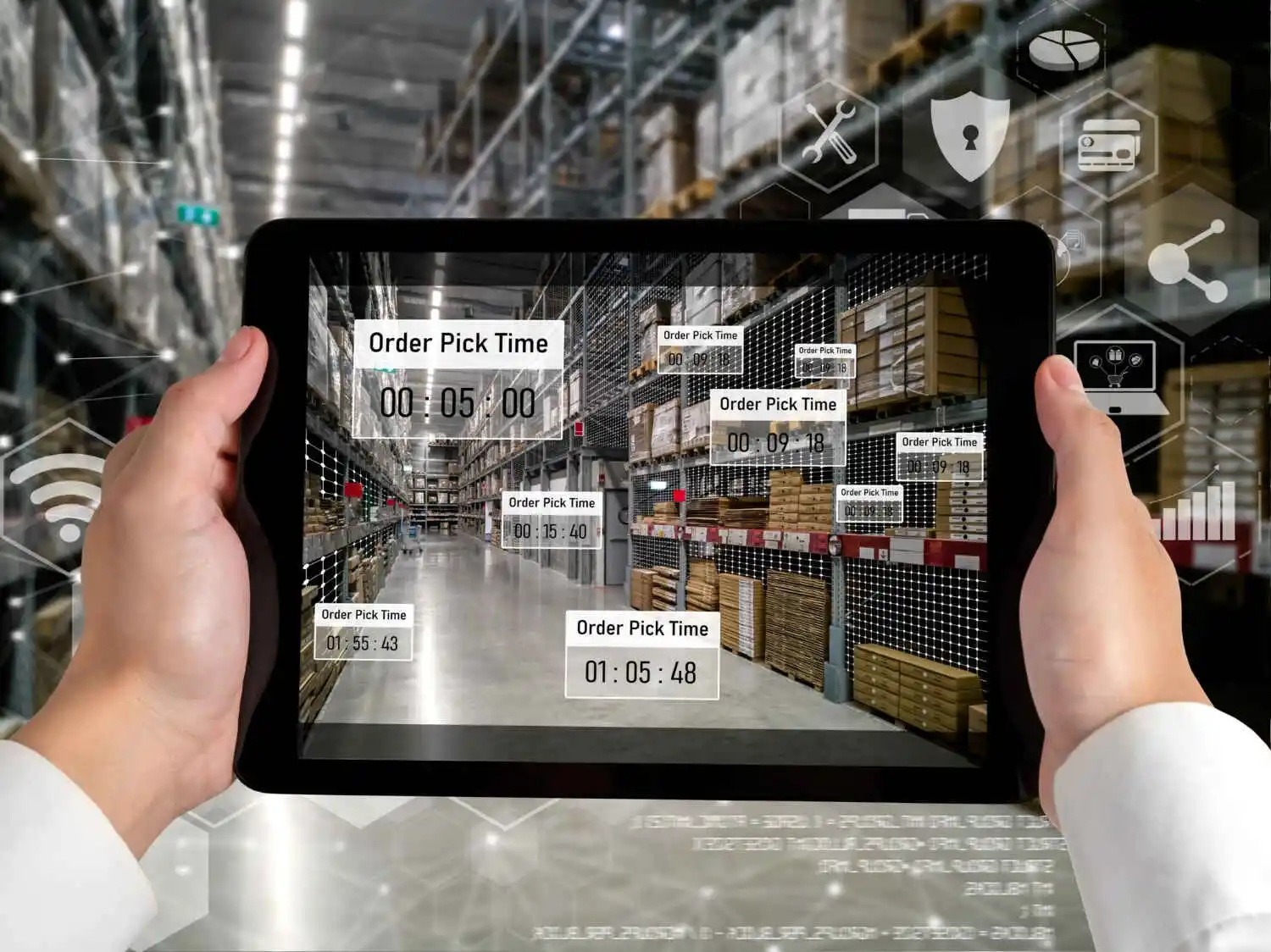
What are Warehouse Management Systems (WMS)?
What are Warehouse Management Systems (WMS)?
What are Warehouse Management Systems (WMS)?
Warehouse Management Systems (WMS) are software solutions that plan, manage, and optimize warehouse operations by tracking inventory movements in real time. In this content, you can find the functions, benefits, types, and key criteria for choosing the right system.
In today's competitive logistics and supply chain world, managing warehouse operations manually becomes both risky and costly.
Warehouse Management Systems (WMS) are software solutions that plan, manage, and optimize warehouse operations by tracking inventory movements in real time. In this content, you can find the functions, benefits, types, and key criteria for choosing the right system.
In today's competitive landscape of logistics and supply chain, managing warehouse operations through manual methods becomes both risky and costly. Problems such as incorrect inventory visibility, delayed shipments, and increased return rates directly affect both customer satisfaction and profitability.
This is where the Warehouse Management Systems (WMS) / Depo Yönetim Sistemleri (DYS) come into play. With a well-configured warehouse management system, you can track your inventory end-to-end, standardize your operations, and make decisions based on real-time data.
What is a Warehouse Management System?
A Warehouse Management System (WMS) is a software-based solution that plans, manages, and reports all material and product movements within a warehouse or distribution center.
Simply put, WMS;
Manages where each product is located in the warehouse,
Prepares which product will be processed for which order,
Schedules which personnel will perform which task at what time,
Tracks when each product enters and exits
through a central platform.
The warehouse management system can integrate with equipment like barcodes, RFID, handheld terminals, conveyor systems, and automated storage systems (AS/RS). This way, physical movements in the field reflect immediately in the digital space, and total visibility is achieved within the warehouse.
The warehouse management system turns inventory data from “estimated” to real-time and reliable. The system allows you to track product movements on pallet racks instantly, especially in high-volume warehouses.
What Do Warehouse Management Systems Do?
Warehouse Management Systems touch almost every step of warehouse operations. Not only do they track inventory, but they also standardize business processes, enable efficient use of workforce, and help respond quickly to customer expectations.
The primary functions can be summarized as follows:
Inventory Management: Shows in real-time which products are located where and in what quantity. Also tracks critical information like lot, serial number, expiration date.
Inbound Operations: Manages processes like goods receipt, quality control, addressing, and placement. It standardizes all steps from product acceptance to shelf placement in the warehouse.
Outbound Operations: Controls processes like order picking, packaging, shipment preparation, and loading. Ensures the right product reaches the right customer at the right time.
Location Management: Divides warehouse areas into addresses (shelf, slot, aisle) and determines the most suitable location for each product. This shortens pick distances and speeds up operations. With a well-configured addressing structure, collection processes are much more orderly and faster in warehouses using the back-to-back shelf system.
Inventory Counting: Plans and manages processes like cycle count and full-count. Increases stock accuracy without having to halt operations during counting.
Performance and Reporting: Reports metrics like order fulfillment speed, picking errors, personnel efficiency, warehouse occupancy rate. This helps obtain clear data for continuous improvement.
Integration: Helps unify data by working integrated with systems like ERP, e-commerce platforms, transport management systems (TMS), and supply chain management (SCM).
In conclusion, the warehouse management system makes your operations both controllable and scalable.
What Are Warehouse Management Systems?
There are many solutions available in the market with different architectures, licensing models, and integration levels for warehouse management. Generally, Warehouse Management Systems can be examined in three main groups:
Standalone Warehouse Management Systems
Cloud Warehouse Management Systems
Integrated ERP and SCM-based Warehouse Management Systems
Each structure has different advantages, limitations, and areas of use. When selecting the right solution, you should consider criteria such as your company’s size, business volume, existing IT infrastructure, and growth objectives.
Standalone Warehouse Management System
A Standalone Warehouse Management System is standalone software that focuses solely on warehouse operations. It generally has deep and advanced warehouse functions.
Highlighted features of Standalone WMS:
Specialized rule engines for warehouse operations,
Advanced addressing, slotting, and optimization capabilities,
Detailed picking strategies (wave picking, batch picking, zone picking, etc.),
Flexible configuration for complex warehouse structures (multi-story warehouses, cold storage, etc.). Particularly when used with narrow aisle racking systems in narrow areas and high-stock warehouses, operational efficiency significantly increases.
Advantages:
Offers high flexibility and detailed control in warehouse processes.
It is a strong solution for medium and large-scale companies with complex warehouse operations.
Generally has strong reporting and performance monitoring tools.
Points to consider:
Additional project and cost may be required for integration with ERP or other systems.
It's crucial that your IT team can manage maintenance and updates.
License and setup costs may be higher compared to simple solutions.
If your warehouse operations are at the heart of your business and need detailed process control, a standalone WMS might be the right option for you.
Cloud Warehouse Management System
A Cloud Warehouse Management System is an online-accessed, usually subscription-based (SaaS) warehouse management solution. It doesn't require physical server investment; it operates on the cloud infrastructure of the system provider.
Basic features of Cloud WMS:
Access from anywhere with an internet connection,
Quick deployment and shorter project duration,
Usually licensed per user or transaction volume,
Automatic updates and the maintenance burden lies with the service provider.
Advantages:
Initial investment (CAPEX) costs are low; operational expenses (OPEX) model is followed.
Offers a scalable structure especially for companies with multiple locations that are growing.
A practical and easily applicable solution for companies with limited IT teams.
Things to watch out for:
Dependency on internet connection; connection quality may impact operation performance.
Flexibility for some very special processes may not be as high as on-premise or standalone WMS.
You should carefully evaluate the security and privacy measures provided by the provider.
Cloud-based WMS is a very suitable option especially for rapidly growing, e-commerce heavy, or multi-location businesses.
Integrated ERP and SCM-Based Warehouse Management System
Some businesses prefer to use warehouse management not as a standalone system but directly as a module of ERP (Enterprise Resource Planning) or SCM (Supply Chain Management) solutions. In this approach, warehouse management becomes part of a broader enterprise system.
Basic features:
Warehouse data is combined in a single platform with purchasing, sales, finance, accounting, production, and supply chain processes.
Stock movements automatically reflect in accounting and finance records.
Processes are managed through single product, customer, and supplier cards.
Advantages:
Provides data integrity and single record management.
Reduces integration costs and complexity between different systems. Fully integrated AS/RS storage racks transmit product entries and exits to ERP and SCM systems in real-time, making the process traceable end-to-end.
Provides end-to-end visibility in reporting and analysis (e.g., you can track the entire process from order to collection via a single ecosystem).
Things to consider:
The functional depth of the warehouse module in your ERP/SCM system may not be as advanced as a standalone WMS.
Standard modules may not be sufficient in companies with complex warehouse operations, and intensive customization may be required.
ERP projects are generally extensive; transformation involves not just the warehouse but all processes.
Integrated ERP and SCM-based warehouse management is a suitable choice for companies that want to consolidate their processes into a single corporate platform and whose warehouse operations are relatively more standard.
Benefits of a Warehouse Management System
A well-configured and properly selected Warehouse Management System produces tangible results in a short time. It impacts not only operational efficiency but also customer satisfaction and profitability.
The main benefits can be summarized as follows:
Increase in Inventory Accuracy
As inventory accuracy rates rise, customer complaints stemming from incorrect shipments and missing products decrease significantly. You work with actual stock levels, not estimates.Operational Efficiency and Speed
Optimized picking routes, correct addressing, and automatic job assignments allow you to manage the same workload with less workforce. The system's contribution becomes apparent, especially during peak periods (campaigns, seasons).Reduction of Costs
Hidden costs such as incorrect shipments, returns, excess stock, losses, and breakages decrease. By using warehouse space more efficiently, you can manage more products in the same area.Improvement in Customer Satisfaction
When the right product is delivered at the right time and in the right amount, customer trust increases. As your delivery performance improves (On-Time In-Full – OTIF), long-term partnerships strengthen.Traceability and Historical Records
Seeing which product was shipped when and with which lot or serial number is of critical importance, especially in regulated sectors like food, pharmaceuticals, and chemicals.Decision Support and Strategic Planning
Real-time and correct data enables healthier analyses for capacity planning, shift scheduling, investment decisions (new warehouse, automation, etc.).Growth-Ready Infrastructure
A warehouse management system offers an adaptable structure as your business grows. It helps you make growth steps like new warehouse openings and expansion to different cities or countries more controlled.
A well-designed Warehouse Management System not only streamlines today's operations but also provides a solid infrastructure for your future growth targets.
How Do You Select the Most Suitable Warehouse Management System for Your Business?
Selecting a Warehouse Management System is not just a software choice; it is a strategic decision that directly affects your operational efficiency, cost structure, and customer satisfaction. Therefore, while choosing a WMS, you need to evaluate both your current needs and long-term objectives.
1. Analyze Your Business Model and Operational Structure
First, you need to clearly answer the question, “What kind of warehouse operation do we have?”:
Does your business volume fluctuate greatly seasonally?
Are you focused on e-commerce, retail, manufacturing, or distribution?
Do you have many orders but few products per line item, or vice versa?
Are you operating in a single warehouse or in a multi-location setup?
If you're working with small-sized and high-quantity items, you should pay particular attention to designing processes compatible with carton box handling racks when choosing a WMS.
In complex and high-volume operations, standalone WMS solutions provide more detailed control, while ERP/SCM-based warehouse management systems may suffice for more standard and integrated processes. In rapidly growing and multi-location setups, cloud-based WMSs stand out in terms of flexibility.
2. Determine Your Current and Future Integration Needs
It is often not enough for a Warehouse Management System to work alone. You should clarify what kind of integration you need with the following systems:
ERP system
E-commerce platforms and marketplaces
Transport Management System (TMS)
Production systems (MES, etc.)
Customer or supplier portals
If you want to manage all processes on a single platform, integrated ERP/SCM solutions can come to the fore. On the other hand, if you have integration with numerous different systems, a standalone WMS with a high integration capability may be a better choice.
3. Clarify Your Functional Needs
Not every WMS offers the same depth of function. Therefore, determining which functions you truly need is a critical step:
Batch/lot and serial number tracking
Tracking expiration dates, production dates
Different warehouse types (cold storage, hazardous material, high rack, etc.)
Advanced picking scenarios (zone, wave, batch picking)
Integration with automation systems (conveyor, sorter, AS/RS, etc.)
Use of mobile devices and handheld terminals
Cycle counting, count tolerance management
By adding the processes you plan to implement in the future to this list, you can evaluate how well the system aligns with your growth plans.
4. Make Budget and Total Cost of Ownership (TCO) Calculations
When evaluating the investment in a Warehouse Management System, focusing solely on the license cost can often be misleading. You should consider the following when calculating the total cost of ownership:
License or subscription fees
Installation, consulting, and integration costs
Hardware and infrastructure investments (server, network, handheld terminal, etc.)
Maintenance, support, and annual update costs
Internal resource (IT team, project team) time cost
Cloud-based WMS solutions generally stand out with lower upfront costs, while on-premise or standalone WMS solutions may have higher initial investments but the unit costs may vary in the long term. What’s important is clearly seeing how soon the investment will pay off.
5. Evaluate Flexibility and Scalability Levels
As your business grows, needs like opening new warehouses, operating in different cities or countries, and new sales channels may emerge. It's important that the WMS you choose is flexible in these areas:
Adding new warehouses and managing a multi-warehouse setup
Configuration capability for new product groups and workflows
Resilience to an increase in the number of users and transaction volume
An open architectural structure for new integrations
Systems that aren't flexible or require heavy development might force you to undertake a second project in the medium term. Therefore, you should seriously evaluate scalability during initial selection.
6. Don't Ignore Usability and Field Acceptance
Even the system with the most powerful functions won't deliver the expected benefit if it's not embraced by the field team. Therefore:
Ensure that interfaces are user-friendly
Operators, warehouse supervisors, and managers can easily learn the system
The training process can be completed in reasonable timeframes
Turkish language support, compliance with local regulations and business culture
are critical for project success. No matter how well-defined processes are, if the system is
In today's competitive landscape of logistics and supply chain, managing warehouse operations through manual methods becomes both risky and costly. Problems such as incorrect inventory visibility, delayed shipments, and increased return rates directly affect both customer satisfaction and profitability.
This is where the Warehouse Management Systems (WMS) / Depo Yönetim Sistemleri (DYS) come into play. With a well-configured warehouse management system, you can track your inventory end-to-end, standardize your operations, and make decisions based on real-time data.
What is a Warehouse Management System?
A Warehouse Management System (WMS) is a software-based solution that plans, manages, and reports all material and product movements within a warehouse or distribution center.
Simply put, WMS;
Manages where each product is located in the warehouse,
Prepares which product will be processed for which order,
Schedules which personnel will perform which task at what time,
Tracks when each product enters and exits
through a central platform.
The warehouse management system can integrate with equipment like barcodes, RFID, handheld terminals, conveyor systems, and automated storage systems (AS/RS). This way, physical movements in the field reflect immediately in the digital space, and total visibility is achieved within the warehouse.
The warehouse management system turns inventory data from “estimated” to real-time and reliable. The system allows you to track product movements on pallet racks instantly, especially in high-volume warehouses.
What Do Warehouse Management Systems Do?
Warehouse Management Systems touch almost every step of warehouse operations. Not only do they track inventory, but they also standardize business processes, enable efficient use of workforce, and help respond quickly to customer expectations.
The primary functions can be summarized as follows:
Inventory Management: Shows in real-time which products are located where and in what quantity. Also tracks critical information like lot, serial number, expiration date.
Inbound Operations: Manages processes like goods receipt, quality control, addressing, and placement. It standardizes all steps from product acceptance to shelf placement in the warehouse.
Outbound Operations: Controls processes like order picking, packaging, shipment preparation, and loading. Ensures the right product reaches the right customer at the right time.
Location Management: Divides warehouse areas into addresses (shelf, slot, aisle) and determines the most suitable location for each product. This shortens pick distances and speeds up operations. With a well-configured addressing structure, collection processes are much more orderly and faster in warehouses using the back-to-back shelf system.
Inventory Counting: Plans and manages processes like cycle count and full-count. Increases stock accuracy without having to halt operations during counting.
Performance and Reporting: Reports metrics like order fulfillment speed, picking errors, personnel efficiency, warehouse occupancy rate. This helps obtain clear data for continuous improvement.
Integration: Helps unify data by working integrated with systems like ERP, e-commerce platforms, transport management systems (TMS), and supply chain management (SCM).
In conclusion, the warehouse management system makes your operations both controllable and scalable.
What Are Warehouse Management Systems?
There are many solutions available in the market with different architectures, licensing models, and integration levels for warehouse management. Generally, Warehouse Management Systems can be examined in three main groups:
Standalone Warehouse Management Systems
Cloud Warehouse Management Systems
Integrated ERP and SCM-based Warehouse Management Systems
Each structure has different advantages, limitations, and areas of use. When selecting the right solution, you should consider criteria such as your company’s size, business volume, existing IT infrastructure, and growth objectives.
Standalone Warehouse Management System
A Standalone Warehouse Management System is standalone software that focuses solely on warehouse operations. It generally has deep and advanced warehouse functions.
Highlighted features of Standalone WMS:
Specialized rule engines for warehouse operations,
Advanced addressing, slotting, and optimization capabilities,
Detailed picking strategies (wave picking, batch picking, zone picking, etc.),
Flexible configuration for complex warehouse structures (multi-story warehouses, cold storage, etc.). Particularly when used with narrow aisle racking systems in narrow areas and high-stock warehouses, operational efficiency significantly increases.
Advantages:
Offers high flexibility and detailed control in warehouse processes.
It is a strong solution for medium and large-scale companies with complex warehouse operations.
Generally has strong reporting and performance monitoring tools.
Points to consider:
Additional project and cost may be required for integration with ERP or other systems.
It's crucial that your IT team can manage maintenance and updates.
License and setup costs may be higher compared to simple solutions.
If your warehouse operations are at the heart of your business and need detailed process control, a standalone WMS might be the right option for you.
Cloud Warehouse Management System
A Cloud Warehouse Management System is an online-accessed, usually subscription-based (SaaS) warehouse management solution. It doesn't require physical server investment; it operates on the cloud infrastructure of the system provider.
Basic features of Cloud WMS:
Access from anywhere with an internet connection,
Quick deployment and shorter project duration,
Usually licensed per user or transaction volume,
Automatic updates and the maintenance burden lies with the service provider.
Advantages:
Initial investment (CAPEX) costs are low; operational expenses (OPEX) model is followed.
Offers a scalable structure especially for companies with multiple locations that are growing.
A practical and easily applicable solution for companies with limited IT teams.
Things to watch out for:
Dependency on internet connection; connection quality may impact operation performance.
Flexibility for some very special processes may not be as high as on-premise or standalone WMS.
You should carefully evaluate the security and privacy measures provided by the provider.
Cloud-based WMS is a very suitable option especially for rapidly growing, e-commerce heavy, or multi-location businesses.
Integrated ERP and SCM-Based Warehouse Management System
Some businesses prefer to use warehouse management not as a standalone system but directly as a module of ERP (Enterprise Resource Planning) or SCM (Supply Chain Management) solutions. In this approach, warehouse management becomes part of a broader enterprise system.
Basic features:
Warehouse data is combined in a single platform with purchasing, sales, finance, accounting, production, and supply chain processes.
Stock movements automatically reflect in accounting and finance records.
Processes are managed through single product, customer, and supplier cards.
Advantages:
Provides data integrity and single record management.
Reduces integration costs and complexity between different systems. Fully integrated AS/RS storage racks transmit product entries and exits to ERP and SCM systems in real-time, making the process traceable end-to-end.
Provides end-to-end visibility in reporting and analysis (e.g., you can track the entire process from order to collection via a single ecosystem).
Things to consider:
The functional depth of the warehouse module in your ERP/SCM system may not be as advanced as a standalone WMS.
Standard modules may not be sufficient in companies with complex warehouse operations, and intensive customization may be required.
ERP projects are generally extensive; transformation involves not just the warehouse but all processes.
Integrated ERP and SCM-based warehouse management is a suitable choice for companies that want to consolidate their processes into a single corporate platform and whose warehouse operations are relatively more standard.
Benefits of a Warehouse Management System
A well-configured and properly selected Warehouse Management System produces tangible results in a short time. It impacts not only operational efficiency but also customer satisfaction and profitability.
The main benefits can be summarized as follows:
Increase in Inventory Accuracy
As inventory accuracy rates rise, customer complaints stemming from incorrect shipments and missing products decrease significantly. You work with actual stock levels, not estimates.Operational Efficiency and Speed
Optimized picking routes, correct addressing, and automatic job assignments allow you to manage the same workload with less workforce. The system's contribution becomes apparent, especially during peak periods (campaigns, seasons).Reduction of Costs
Hidden costs such as incorrect shipments, returns, excess stock, losses, and breakages decrease. By using warehouse space more efficiently, you can manage more products in the same area.Improvement in Customer Satisfaction
When the right product is delivered at the right time and in the right amount, customer trust increases. As your delivery performance improves (On-Time In-Full – OTIF), long-term partnerships strengthen.Traceability and Historical Records
Seeing which product was shipped when and with which lot or serial number is of critical importance, especially in regulated sectors like food, pharmaceuticals, and chemicals.Decision Support and Strategic Planning
Real-time and correct data enables healthier analyses for capacity planning, shift scheduling, investment decisions (new warehouse, automation, etc.).Growth-Ready Infrastructure
A warehouse management system offers an adaptable structure as your business grows. It helps you make growth steps like new warehouse openings and expansion to different cities or countries more controlled.
A well-designed Warehouse Management System not only streamlines today's operations but also provides a solid infrastructure for your future growth targets.
How Do You Select the Most Suitable Warehouse Management System for Your Business?
Selecting a Warehouse Management System is not just a software choice; it is a strategic decision that directly affects your operational efficiency, cost structure, and customer satisfaction. Therefore, while choosing a WMS, you need to evaluate both your current needs and long-term objectives.
1. Analyze Your Business Model and Operational Structure
First, you need to clearly answer the question, “What kind of warehouse operation do we have?”:
Does your business volume fluctuate greatly seasonally?
Are you focused on e-commerce, retail, manufacturing, or distribution?
Do you have many orders but few products per line item, or vice versa?
Are you operating in a single warehouse or in a multi-location setup?
If you're working with small-sized and high-quantity items, you should pay particular attention to designing processes compatible with carton box handling racks when choosing a WMS.
In complex and high-volume operations, standalone WMS solutions provide more detailed control, while ERP/SCM-based warehouse management systems may suffice for more standard and integrated processes. In rapidly growing and multi-location setups, cloud-based WMSs stand out in terms of flexibility.
2. Determine Your Current and Future Integration Needs
It is often not enough for a Warehouse Management System to work alone. You should clarify what kind of integration you need with the following systems:
ERP system
E-commerce platforms and marketplaces
Transport Management System (TMS)
Production systems (MES, etc.)
Customer or supplier portals
If you want to manage all processes on a single platform, integrated ERP/SCM solutions can come to the fore. On the other hand, if you have integration with numerous different systems, a standalone WMS with a high integration capability may be a better choice.
3. Clarify Your Functional Needs
Not every WMS offers the same depth of function. Therefore, determining which functions you truly need is a critical step:
Batch/lot and serial number tracking
Tracking expiration dates, production dates
Different warehouse types (cold storage, hazardous material, high rack, etc.)
Advanced picking scenarios (zone, wave, batch picking)
Integration with automation systems (conveyor, sorter, AS/RS, etc.)
Use of mobile devices and handheld terminals
Cycle counting, count tolerance management
By adding the processes you plan to implement in the future to this list, you can evaluate how well the system aligns with your growth plans.
4. Make Budget and Total Cost of Ownership (TCO) Calculations
When evaluating the investment in a Warehouse Management System, focusing solely on the license cost can often be misleading. You should consider the following when calculating the total cost of ownership:
License or subscription fees
Installation, consulting, and integration costs
Hardware and infrastructure investments (server, network, handheld terminal, etc.)
Maintenance, support, and annual update costs
Internal resource (IT team, project team) time cost
Cloud-based WMS solutions generally stand out with lower upfront costs, while on-premise or standalone WMS solutions may have higher initial investments but the unit costs may vary in the long term. What’s important is clearly seeing how soon the investment will pay off.
5. Evaluate Flexibility and Scalability Levels
As your business grows, needs like opening new warehouses, operating in different cities or countries, and new sales channels may emerge. It's important that the WMS you choose is flexible in these areas:
Adding new warehouses and managing a multi-warehouse setup
Configuration capability for new product groups and workflows
Resilience to an increase in the number of users and transaction volume
An open architectural structure for new integrations
Systems that aren't flexible or require heavy development might force you to undertake a second project in the medium term. Therefore, you should seriously evaluate scalability during initial selection.
6. Don't Ignore Usability and Field Acceptance
Even the system with the most powerful functions won't deliver the expected benefit if it's not embraced by the field team. Therefore:
Ensure that interfaces are user-friendly
Operators, warehouse supervisors, and managers can easily learn the system
The training process can be completed in reasonable timeframes
Turkish language support, compliance with local regulations and business culture
are critical for project success. No matter how well-defined processes are, if the system is
Frequently Asked Questions (FAQ) About Warehouse Management Systems
Frequently Asked Questions (FAQ) About Warehouse Management Systems
Frequently Asked Questions (FAQ) About Warehouse Management Systems
How Much Are Warehouse Management System Prices?
Warehouse management system prices vary according to the number of users, modules, integration needs, and cloud or on-premise preferences. They are usually priced with a monthly license (SaaS) or a one-time license + maintenance model, and you need to get a customized offer for an exact amount.
Which Businesses Are Suitable For Warehouse Management Systems?
How Long Does It Take to Set Up a Warehouse Management System?
What is the Difference Between WMS and ERP?
Is the Cloud Warehouse Management System Secure?




Contact
Do you want to receive more information? We have expert and reliable contact persons available for any questions, issues, and suggestions.
Reta Engineering Warehouse Racking Systems Industry and Trade Inc.
Address
Muradiye Organized Industrial Zone, 10th St. No: 30 Yunusemre / Manisa
info@retamuhendislik.com.tr