
What is a Forklift?
What is a Forklift?
What is a Forklift?
A forklift is a construction machine that lifts, carries, and stacks loads with its pronged mechanism. Counterbalance truck, reach truck, narrow aisle forklift, pallet jack, and stacker are its main types. The fuel type directly determines the working environment, while the lifting height directly determines the aisle width and the rack project.
What is a forklift, what is it used for, and what are its types? Forklift types by fuel, the difference between a reach truck and a narrow aisle truck, and selection criteria.
A forklift is a construction machine that lifts, carries, and stacks loads with its pronged mechanism. Counterbalance truck, reach truck, narrow aisle forklift, pallet jack, and stacker are its main types. The fuel type directly determines the working environment, while the lifting height directly determines the aisle width and the rack project.
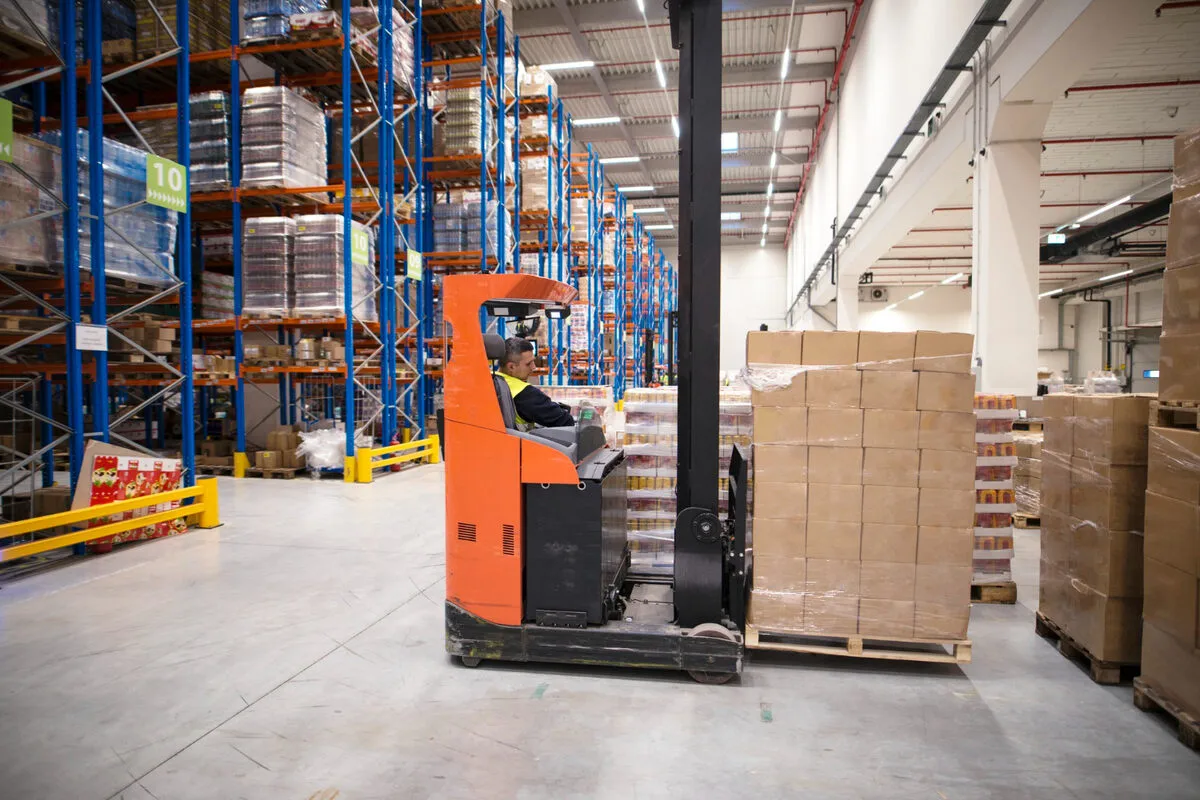
A forklift is a motorized piece of industrial machinery that lifts, transports, and stacks loads using a two-pronged mechanism called a fork. It takes its name from this fork mechanism.
The feature that distinguishes it from other transport vehicles is its ability to move the load both horizontally and vertically. A pallet can be picked up from the door and placed at rack level with the same vehicle.
Its area of use is wide. Warehouses, production facilities, ports, supermarkets, and construction sites are common working environments.
There is no single standard vehicle. As the working environment and rack height change, different forklift types come into play.
What Does a Forklift Do and How Does It Work?
A forklift combines many seemingly separate warehouse tasks into a single vehicle. Truck unloading, rack stacking, line feeding, block stacking, and order picking are its most common tasks.
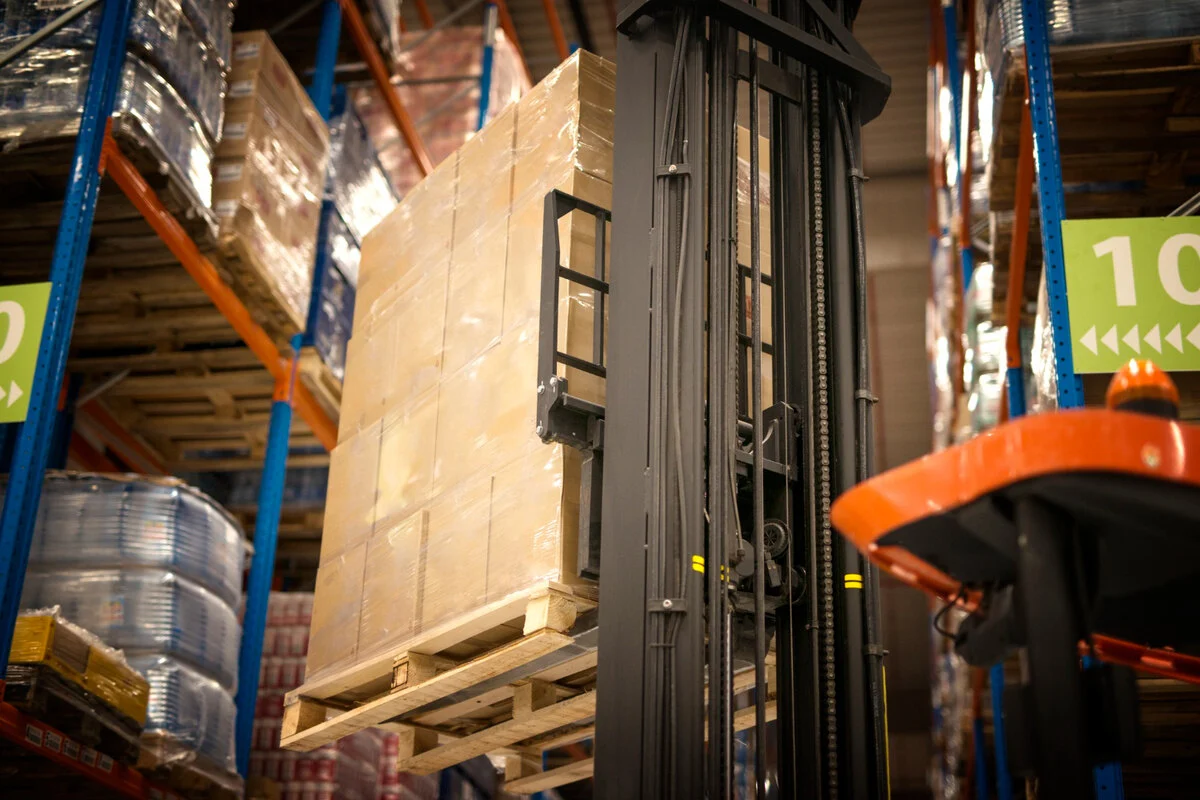
The body of the vehicle consists of three main parts. The chassis and counterweight establish balance, the mast moves the load vertically, and the forks make direct contact with the load.
The lifting process is carried out by a hydraulic cylinder and chain mechanism. As the cylinder pushes the mast up, the chain raises the fork carriage at twice the speed.
Balance is based on the lever principle. The front axle acts as a fulcrum, and the counterweight at the rear balances the load in front.
For this reason, the weight that can be carried is not a fixed number. As the load center moves away from the fork back, the capacity decreases, and each vehicle has a separate capacity chart.
What Are the Types of Forklifts?
Forklift types diverge on three axes: working environment, energy source, and lifting height. Six groups stand out in warehouse and field operations.
Forklift type | Working area | Outstanding feature |
|---|---|---|
Counterbalanced truck | Ramp, outdoor area, wide aisle | Balance with rear weight, high load capacity |
Reach truck | In-warehouse rack aisles | Fork extends forward, stacks at medium height |
Very narrow aisle truck | High-bay warehouses | Guided driving, cabin rises with the load |
Stacker | Short distance and low racks | Narrow body, stand-on or pedestrian control |
Pallet jack | Horizontal transport and truck unloading | Lifts the pallet a few centimeters off the ground |
Rough terrain forklift | Construction site and open storage | Large tires, working on uneven ground |
These groups can work together in the same facility. In a common setup, outdoor and ramp works are left to the counterbalanced truck, while rack aisles are left to indoor warehouse vehicles.
What Are the Types of Forklifts According to Fuel Type?
Fuel type is the first criterion that determines where the vehicle can operate. Four power options are commonly used.
Diesel: Offers high torque and long operating times. Not preferred in closed areas due to exhaust gases.
LPG: Burns cleaner than diesel and can be used indoors to a limited extent. Ventilation is still required.
Electric: Does not produce exhaust gases and runs quietly. It is the standard solution for indoor warehouse operations.
Hybrid: Combines an internal combustion engine with electric drive. It reduces fuel consumption, but the investment cost is high.
The decisive factor in electric vehicles is the charging infrastructure. In multi-shift operations, a spare battery set or a fast charging line is planned.
Battery technology also affects the result. Lithium batteries allow intermediate charging, while lead-acid batteries require full charge and cooling time.
What Is the Difference Between Reach Truck, Narrow Aisle Forklift, and Stacker?
All three vehicles operate inside the warehouse, but they differ in terms of aisle requirement and lifting height. Reach trucks are used at medium heights, narrow aisle trucks are used in high racks, and stackers are used for short distances.
Comparison | Reach truck | Narrow aisle truck | Stacker |
|---|---|---|---|
Aisle requirement | 2.7 - 3.2 meters | 1.6 - 2.0 meters | 2.3 - 2.8 meters |
Lifting height | Up to 10 meters | Up to 16 meters | 5 - 6 meters |
Operator position | Side-seated cabin | Cabin rises with the load | Stand-on or pedestrian |
Typical load range | 1,000 - 2,500 kg | 1,000 - 1,500 kg | 1,000 - 1,600 kg |
Guidance | Free driving | Rail or wire guide | Free driving |
A narrow aisle truck only makes sense with its own setup. These vehicles, in which the cabin rises with the operator, work within a narrow aisle racking system equipped with a guidance system.
How Does the Forklift Type Determine the Rack Aisle Width?
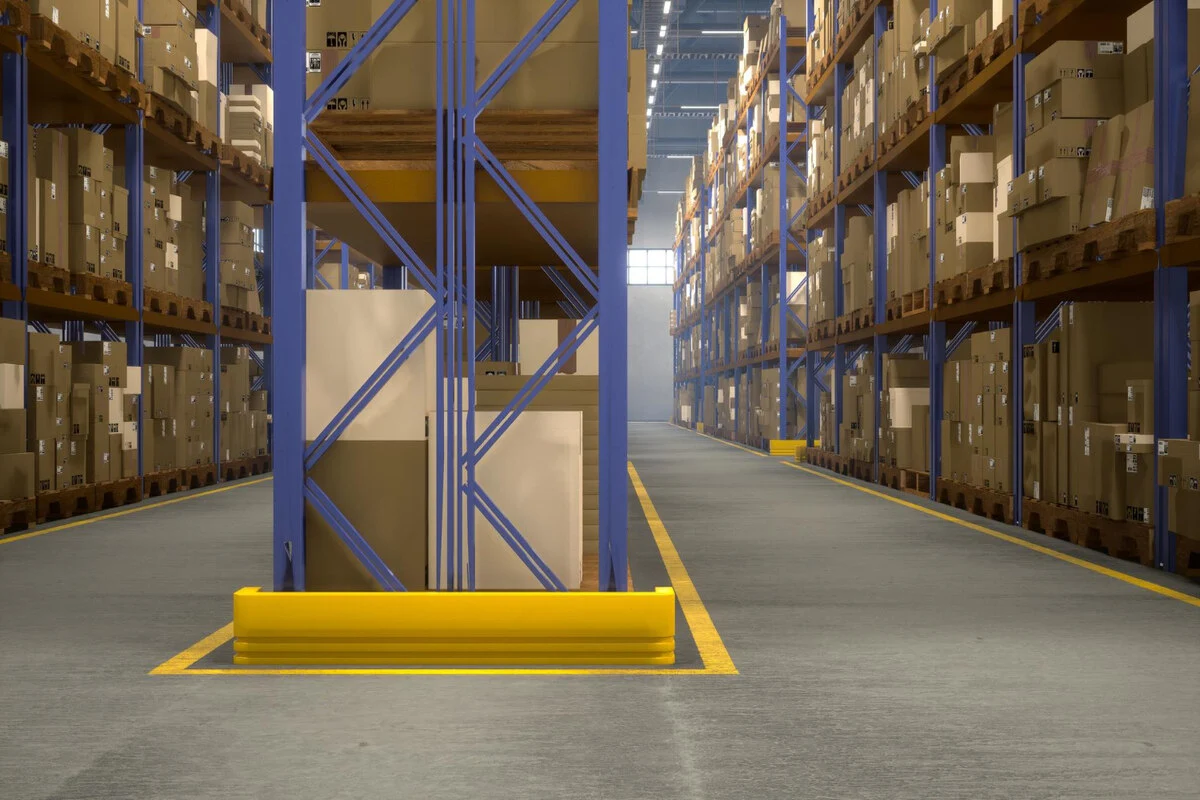
Aisle width is the smallest dimension in which the vehicle can turn and place the pallet on the rack. This value varies depending on the vehicle type, and the rack layout is built upon this dimension.
The calculation consists of three components. The minimum aisle is found by adding the turning radius of the vehicle, the pallet depth, and the safety margin.
The safety margin is generally taken as ten centimeters on both sides. When this margin is reduced, the risk of hitting the rack uprights rises rapidly.
As the aisle narrows, the warehouse capacity increases. More rack rows are set up in the same area; in return, the vehicle investment increases.
In some layouts, the vehicle does not move in the aisle but inside the rack. The drive in racking system, where pallet lanes are entered directly, is set up with this logic and minimizes the number of aisles.
How to Choose the Right Forklift for the Warehouse?
The choice starts from the constraints of the warehouse, not the features of the vehicle. The process is completed in five steps.
Load Profile is Drafted: The heaviest pallet, average pallet weight, and pallet dimensions are recorded.
Working Environment is Defined: A distinction is made between indoor, outdoor, and cold storage. The environment determines the fuel type.
Height and Aisle are Measured: The highest rack level and the existing aisle width are evaluated together.
Usage Intensity is Calculated: Daily working hours and number of shifts are extracted. Intensity affects the choice of energy.
Floor and Infrastructure are Checked: Floor flatness, load-bearing capacity, and charging point availability are examined.
Without these five outputs, a sound comparison between forklift models cannot be made. The resulting table is evaluated together with the racking project.
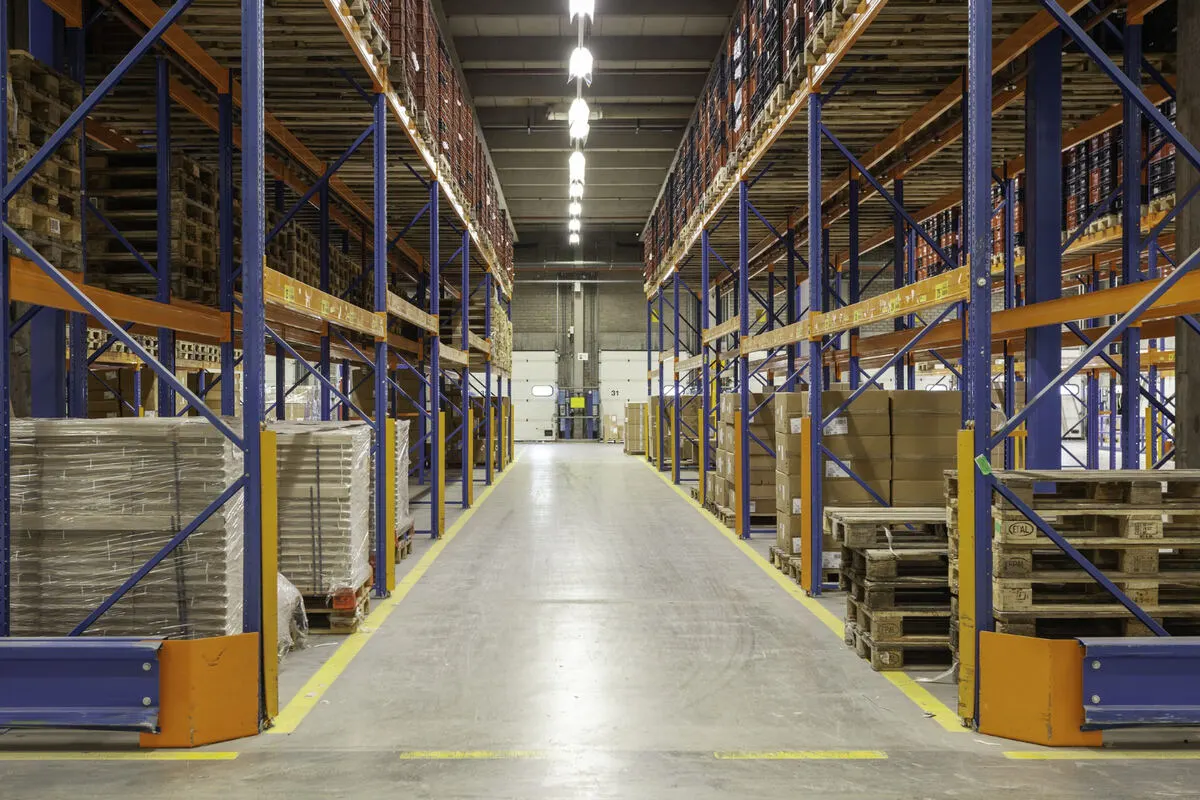
Operating with standard aisle widths, pallet racking systems are brought to the table as the first option in most warehouses. In structures with height advantages, narrower aisle configurations are evaluated.
What Are the Occupational Safety Rules in Forklift Use?
Most forklift-related accidents are grouped under the headings of tipping over, pedestrian collision, and falling loads. These three risks are significantly reduced with basic rules.
Daily Pre-Check: Brakes, horn, hydraulic hoses, and tire condition are inspected at the start of the shift.
Seat Belt: It is the only element that keeps the operator inside the cabin in the event of a rollover.
Compliance with the Capacity Chart: Balance is lost when load center and height values are exceeded.
Pedestrian and Vehicle Separation: Walkways are separated by lines, and mirrors are placed at intersection points.
Reversing When Visibility is Restricted: When the load blocks the view, the vehicle is moved in the reverse direction.
Ramp Rule: On inclined surfaces, the load is always carried facing uphill.
Driving is not allowed while the load is lifted. The forks are kept approximately fifteen centimeters above the ground and the mast is tilted slightly back.
Choosing the right vehicle alone does not bring efficiency. Results are obtained when aisle dimension, rack height, and operator competence are configured together in the same project. When the vehicle and the rack are not chosen in relation to each other, the warehouse loses either its capacity or its safety.
A forklift is a motorized piece of industrial machinery that lifts, transports, and stacks loads using a two-pronged mechanism called a fork. It takes its name from this fork mechanism.
The feature that distinguishes it from other transport vehicles is its ability to move the load both horizontally and vertically. A pallet can be picked up from the door and placed at rack level with the same vehicle.
Its area of use is wide. Warehouses, production facilities, ports, supermarkets, and construction sites are common working environments.
There is no single standard vehicle. As the working environment and rack height change, different forklift types come into play.
What Does a Forklift Do and How Does It Work?
A forklift combines many seemingly separate warehouse tasks into a single vehicle. Truck unloading, rack stacking, line feeding, block stacking, and order picking are its most common tasks.
The body of the vehicle consists of three main parts. The chassis and counterweight establish balance, the mast moves the load vertically, and the forks make direct contact with the load.
The lifting process is carried out by a hydraulic cylinder and chain mechanism. As the cylinder pushes the mast up, the chain raises the fork carriage at twice the speed.
Balance is based on the lever principle. The front axle acts as a fulcrum, and the counterweight at the rear balances the load in front.
For this reason, the weight that can be carried is not a fixed number. As the load center moves away from the fork back, the capacity decreases, and each vehicle has a separate capacity chart.
What Are the Types of Forklifts?
Forklift types diverge on three axes: working environment, energy source, and lifting height. Six groups stand out in warehouse and field operations.
Forklift type | Working area | Outstanding feature |
|---|---|---|
Counterbalanced truck | Ramp, outdoor area, wide aisle | Balance with rear weight, high load capacity |
Reach truck | In-warehouse rack aisles | Fork extends forward, stacks at medium height |
Very narrow aisle truck | High-bay warehouses | Guided driving, cabin rises with the load |
Stacker | Short distance and low racks | Narrow body, stand-on or pedestrian control |
Pallet jack | Horizontal transport and truck unloading | Lifts the pallet a few centimeters off the ground |
Rough terrain forklift | Construction site and open storage | Large tires, working on uneven ground |
These groups can work together in the same facility. In a common setup, outdoor and ramp works are left to the counterbalanced truck, while rack aisles are left to indoor warehouse vehicles.
What Are the Types of Forklifts According to Fuel Type?
Fuel type is the first criterion that determines where the vehicle can operate. Four power options are commonly used.
Diesel: Offers high torque and long operating times. Not preferred in closed areas due to exhaust gases.
LPG: Burns cleaner than diesel and can be used indoors to a limited extent. Ventilation is still required.
Electric: Does not produce exhaust gases and runs quietly. It is the standard solution for indoor warehouse operations.
Hybrid: Combines an internal combustion engine with electric drive. It reduces fuel consumption, but the investment cost is high.
The decisive factor in electric vehicles is the charging infrastructure. In multi-shift operations, a spare battery set or a fast charging line is planned.
Battery technology also affects the result. Lithium batteries allow intermediate charging, while lead-acid batteries require full charge and cooling time.
What Is the Difference Between Reach Truck, Narrow Aisle Forklift, and Stacker?
All three vehicles operate inside the warehouse, but they differ in terms of aisle requirement and lifting height. Reach trucks are used at medium heights, narrow aisle trucks are used in high racks, and stackers are used for short distances.
Comparison | Reach truck | Narrow aisle truck | Stacker |
|---|---|---|---|
Aisle requirement | 2.7 - 3.2 meters | 1.6 - 2.0 meters | 2.3 - 2.8 meters |
Lifting height | Up to 10 meters | Up to 16 meters | 5 - 6 meters |
Operator position | Side-seated cabin | Cabin rises with the load | Stand-on or pedestrian |
Typical load range | 1,000 - 2,500 kg | 1,000 - 1,500 kg | 1,000 - 1,600 kg |
Guidance | Free driving | Rail or wire guide | Free driving |
A narrow aisle truck only makes sense with its own setup. These vehicles, in which the cabin rises with the operator, work within a narrow aisle racking system equipped with a guidance system.
How Does the Forklift Type Determine the Rack Aisle Width?
Aisle width is the smallest dimension in which the vehicle can turn and place the pallet on the rack. This value varies depending on the vehicle type, and the rack layout is built upon this dimension.
The calculation consists of three components. The minimum aisle is found by adding the turning radius of the vehicle, the pallet depth, and the safety margin.
The safety margin is generally taken as ten centimeters on both sides. When this margin is reduced, the risk of hitting the rack uprights rises rapidly.
As the aisle narrows, the warehouse capacity increases. More rack rows are set up in the same area; in return, the vehicle investment increases.
In some layouts, the vehicle does not move in the aisle but inside the rack. The drive in racking system, where pallet lanes are entered directly, is set up with this logic and minimizes the number of aisles.
How to Choose the Right Forklift for the Warehouse?
The choice starts from the constraints of the warehouse, not the features of the vehicle. The process is completed in five steps.
Load Profile is Drafted: The heaviest pallet, average pallet weight, and pallet dimensions are recorded.
Working Environment is Defined: A distinction is made between indoor, outdoor, and cold storage. The environment determines the fuel type.
Height and Aisle are Measured: The highest rack level and the existing aisle width are evaluated together.
Usage Intensity is Calculated: Daily working hours and number of shifts are extracted. Intensity affects the choice of energy.
Floor and Infrastructure are Checked: Floor flatness, load-bearing capacity, and charging point availability are examined.
Without these five outputs, a sound comparison between forklift models cannot be made. The resulting table is evaluated together with the racking project.
Operating with standard aisle widths, pallet racking systems are brought to the table as the first option in most warehouses. In structures with height advantages, narrower aisle configurations are evaluated.
What Are the Occupational Safety Rules in Forklift Use?
Most forklift-related accidents are grouped under the headings of tipping over, pedestrian collision, and falling loads. These three risks are significantly reduced with basic rules.
Daily Pre-Check: Brakes, horn, hydraulic hoses, and tire condition are inspected at the start of the shift.
Seat Belt: It is the only element that keeps the operator inside the cabin in the event of a rollover.
Compliance with the Capacity Chart: Balance is lost when load center and height values are exceeded.
Pedestrian and Vehicle Separation: Walkways are separated by lines, and mirrors are placed at intersection points.
Reversing When Visibility is Restricted: When the load blocks the view, the vehicle is moved in the reverse direction.
Ramp Rule: On inclined surfaces, the load is always carried facing uphill.
Driving is not allowed while the load is lifted. The forks are kept approximately fifteen centimeters above the ground and the mast is tilted slightly back.
Choosing the right vehicle alone does not bring efficiency. Results are obtained when aisle dimension, rack height, and operator competence are configured together in the same project. When the vehicle and the rack are not chosen in relation to each other, the warehouse loses either its capacity or its safety.
Frequently Asked Questions (FAQ) About Forklifts
Frequently Asked Questions (FAQ) About Forklifts
Frequently Asked Questions (FAQ) About Forklifts
How is the forklift lifting capacity determined?
Capacity is defined by the weight that can be carried at a standard load center distance and a specific height. This distance is generally accepted as six hundred millimeters from the back of the fork. When the load shifts further or is raised higher, the weight that can be carried decreases. The actual value is read from the capacity plate on the vehicle.
Can an electric forklift be used in cold storage?
Which document is required for a forklift operator?
How does the maximum lifting height of the forklift limit the shelf height?
At what intervals is forklift maintenance performed?

Contact
Do you want to receive more information? We have expert and reliable contact persons available for any questions, issues, and suggestions.
Reta Engineering Warehouse Racking Systems Industry and Trade Inc.
Address
Muradiye Organized Industrial Zone, 10th St. No: 30 Yunusemre / Manisa
info@retamuhendislik.com.tr