
Fire and Leak Risks in Chemical Warehouses
Fire and Leak Risks in Chemical Warehouses
Fire and Leak Risks in Chemical Warehouses
The risk of fire and leakage in chemical warehouses is directly related to product class, packaging structure, ventilation, zoning, and operational discipline. Proper warehouse design and an intervention plan reduce potential risks to manageable levels.
Learn about fire and leakage risks in chemical warehouses, their root causes, critical design decisions, and the questions that need to be asked for safe installation.
The risk of fire and leakage in chemical warehouses is directly related to product class, packaging structure, ventilation, zoning, and operational discipline. Proper warehouse design and an intervention plan reduce potential risks to manageable levels.
Fire and leak risks in chemical warehouses require higher technical sensitivity than standard warehouses. The reason is not only the presence of flammable products. The chemical class, packaging structure, storage conditions, ventilation level, and operational discipline together determine the level of risk.
Therefore, when you plan a storage investment, you should focus not only on rack capacity but also on fire and leak scenarios at the same time. When proper planning is not done, a small leak can turn into personnel exposure, environmental spread, operational downtime, and high cleanup costs. When proper planning is done, the risks may not be completely eliminated, but they can be reduced to a manageable level.
The effects of chemical leaks have especially critical consequences for human health and the environment. Scenarios such as exposure through inhalation, skin contact, eye contact, vapor accumulation in an enclosed area, and the leak reaching the drainage line can increase the scale of the incident within minutes. Therefore, chemical warehouse design and operation should be considered together.
The Most Common Fire and Leak Causes in Chemical Warehouses
Fire and leak incidents in chemical warehouses often stem not from a single major mistake, but from a series of small accumulated mistakes. Especially when nonstandard practices increase during high-shipment periods, the risk grows unnoticed.
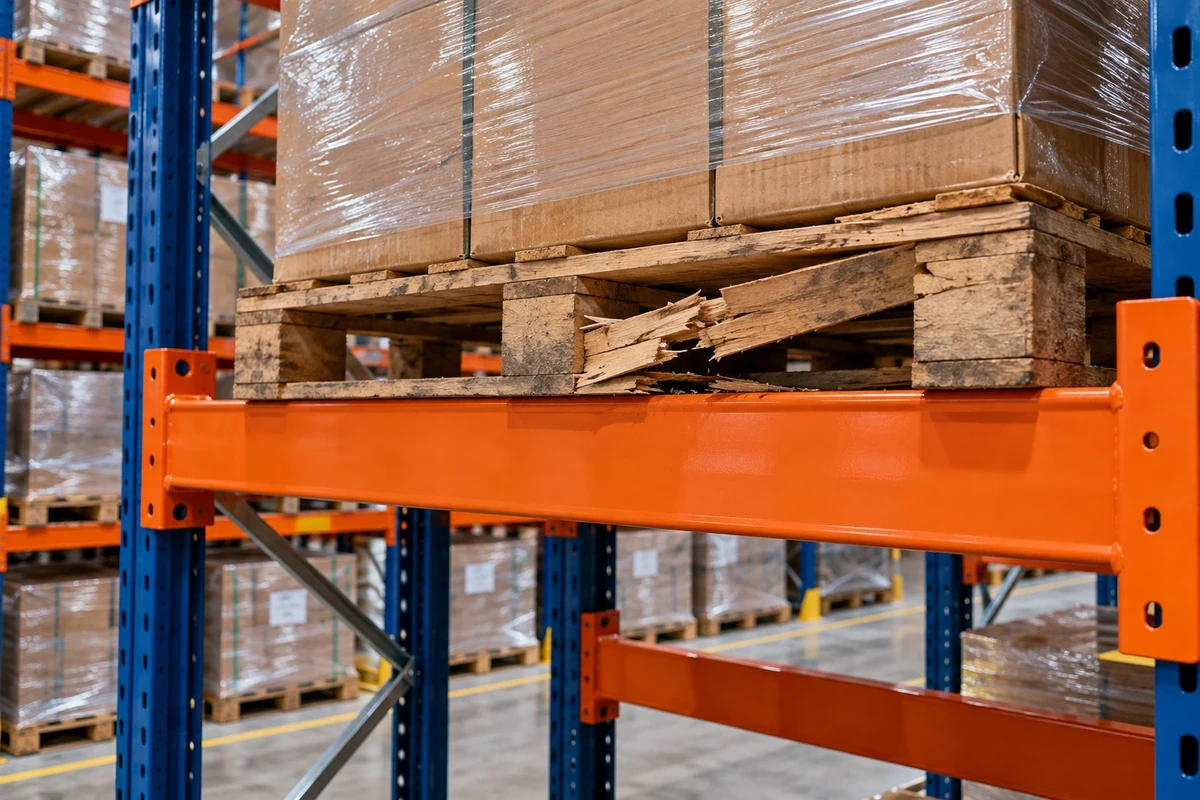
One of the most common causes is improper storage conditions. When the recommended temperature range, ventilation requirement, or packaging position of the chemical is not maintained, packaging durability can weaken. Over time, this situation leads to leakage, and leakage creates the basis for fire risk under suitable conditions.
Placing incompatible chemicals close to one another is also a critical mistake. Placements made only because there is empty space in the warehouse can increase the risk of reaction in the event of a leak. In addition, forklift impacts, unsuitable transfer containers, and labeling errors are among the frequently encountered causes in the field.
The following points are the most common triggers:
packaging damage, loose cap, or valve failure
forklift impact and improper handling
insufficient temperature and ventilation control
close storage of incompatible products
lack of maintenance and periodic inspection
off-procedure product transfer
failure to record leak signals
Here, the choice of storage infrastructure is also important. For example, in some areas the use of light-duty shelving can facilitate operations, but if the chemical class, packaging type, and load safety are not suitable, it can increase the risk instead of reducing it.
Criteria That Reduce Fire and Leak Risk in Storage Area Design
The strongest step in reducing risk in chemical warehouses is proper area design carried out before installation. Corrections made after the warehouse is established are possible, but they are usually more costly and slower. Therefore, the technical criteria need to be clarified during the planning phase.
The first criterion is area zoning. Chemicals should be separated according to risk class, frequency of use, and type of operation. In this way, if an incident occurs, the affected area is limited and access for response teams becomes easier. This approach also reduces confusion in stock management.
The second criterion is flooring and leak control. Proper planning of an impermeable floor, controlled slope, and drainage connections prevents leaks from spreading to other areas. The uncontrolled transfer of chemicals to the channel line multiplies environmental and operational risk.
The third criterion is ventilation. Especially for products with evaporation potential, ventilation design is not a matter of comfort, but of safety. Insufficient airflow can increase both exposure risk and ignition risk.
The fourth criterion is rack layout and access planning. Aisle width, equipment turning space, and emergency response access should be evaluated together. Overly tight layouts made for the sake of space efficiency can delay response in the event of an incident. Therefore, if solutions such as narrow aisle racking system are to be used, the choice should be made not only according to capacity but also according to safe access and compatibility with operational equipment.
Practical Measures to Reduce Fire and Leak Risk
This heading is important to clarify the on-site implementation of design decisions. Good design cannot reach the expected safety level unless supported by proper operational discipline.
The following measures bridge the gap between design and operations:
make storage rules visible on site according to the chemical class
standardize packaging integrity checks at product receiving
plan a secondary containment approach in areas with leak potential
regularly verify ventilation, drainage, and access routes
record small leaks and conduct root cause analysis
do not turn exceeding capacity limits into an operational habit
regularly check the location and accessibility of emergency response equipment
Some businesses evaluate solutions such as mezzanine systems or mobile racking systems for space savings. These solutions can provide efficiency with proper engineering. However, if selected without considering chemical class, response access, and floor safety, the goal of risk reduction weakens.
How Should Early Warning, Monitoring, and Response Processes Be Planned?
The success of risk management in chemical warehouses depends on detecting the incident before it starts and making the right decisions in the first minutes of the event. Many warehouses invest in equipment, but time is lost because the response flow is not clearly defined.
An early warning approach does not mean only installing alarm devices. Who will provide information after the alarm, who will isolate the area, who will manage the evacuation decision, and who will communicate with external teams should all be defined in advance. If you do not clarify this flow, the presence of equipment alone will not be enough.
Especially within the first 10 minutes, having a clear decision flow makes a critical difference. Any delay during this period can increase the spread area of the leak and personnel exposure.
A short response flow can be planned as follows:
detection of the incident and rapid containment of the area
decision to evacuate or isolate based on personnel exposure risk
activation of the first response equipment appropriate to the incident type
starting internal reporting and external emergency team coordination
verification of area safety after the incident and controlled return to operation
The warehouse layout also affects response speed in these processes. For example, if a carton flow rack system is used in high-carton-density areas, the access layout and response corridors must be planned to suit leak scenarios.
How Do Operational Errors Increase Risk in Chemical Warehouses?
Even in a properly designed warehouse, if operational errors are not controlled, the risk of fire and leak remains high. Especially in shift-based operations, when procedural standards are not maintained, small deviations can quickly turn into systemic problems.
One of the common mistakes is failing to read labeling information carefully or mixing products with similar packaging. This increases the risk of placing items in the wrong area, improper handling, or incorrect response. In chemical warehouses, classification information as well as the product name determines the operational decision.
Another mistake is allowing temporary solutions to become permanent. Taking products to an unsuitable area temporarily because of congestion can gradually come to be accepted as normal. This approach reduces traceability within the warehouse and increases risky proximity.
When information transfer is lacking during shift changes, the risk grows even more. If a small sign of leakage noticed in the previous shift is not passed on, the next shift may detect the incident too late. Therefore, recording, handover, and control discipline are as important as technical equipment.
Why Does the Risk Level Change According to the Chemical Class?
Using a single storage setup for all products in chemical warehouses is not correct. Because flammable, corrosive, toxic, oxidizing, or reactive chemicals behave differently in terms of risk. An arrangement that is sufficient for one product may be inadequate for another.
For example, in flammable liquids, vapor formation and ignition source management come to the fore. In corrosive chemicals, packaging durability, contact exposure, and leak control are more decisive. In oxidizing products, the risk of interaction with other substances can increase the severity of the incident.
The physical state of the chemical also changes the risk. Liquids spread on the floor, gases can be carried to a wider area by air movement, and some powder-form substances may show different ignition behavior. Therefore, when you make a warehouse plan, you should decide not only according to the number of products but according to product behavior.
This approach also applies to rack and area selection. Choices made without clarifying chemical class suitability may require revision.
The Most Common Mistakes in Risk Assessment
The most common mistake when conducting risk assessments in chemical warehouses is leaving the assessment only at the document level. A technical report is prepared, but the site layout and daily operations are not managed with the same level of sensitivity. In this case, the correct approach on paper does not translate into practice.
Another mistake is focusing only on the fire scenario and putting the leak risk in the background. Yet in many incidents, a leak can be the start of a larger exposure or fire scenario. When leak management is not addressed as a separate topic, the risk analysis remains incomplete.
Treating small leaks as insignificant is also a serious mistake. Repeated small incidents may be a sign of a systematic problem originating from packaging, equipment, or procedure. If these incidents are not recorded, the opportunity for early warning is missed.
It is also common to continue with the old layout assumptions even as the warehouse grows. As product variety and stock density increase, the original setup may become inadequate. For this reason, risk assessment should not be a one-time activity, but an updated process.
Critical Questions to Ask Before Setting Up a Chemical Warehouse
Asking the right questions at the very beginning of a chemical warehouse setup prevents a significant portion of later revisions. This approach strengthens both the investment schedule and operational safety. The goal here is not only to meet today’s need, but to plan according to the highest-risk usage scenario.
The key questions that need to be clarified before installation are as follows:
Which chemical classes will be stored, and will product variety increase in the near future?
What will the maximum stock quantity and peak-period loading be?
In the event of a leak or fire, who will make the decision in the first minutes, and how will each area be isolated?
How will the evacuation process be managed, and through whom will communication with external teams be carried out?
Are the floor, drainage, ventilation, and access routes suitable for chemical storage?
Are the operational equipment to be used compatible with the warehouse layout and safety plan?
How will the training and inspection plan be defined before installation?
A safe warehouse is sustainable not only with installation quality, but with operational discipline.
A Storage Approach That Makes Risks Manageable
Fire and leak risks in chemical warehouses cannot be completely eliminated. However, with proper engineering, the right storage system selection, a clear response flow, and disciplined operational management, these risks can be reduced to a manageable level.
The key difference here is not treating safety as a separate issue outside of operations. Safety should be part of the layout plan, stock flow, handling, maintenance, training, and inspection processes. When you establish this holistic approach, both human and environmental risk decrease and operational continuity is strengthened.
For detailed information, you can plan using a technical risk assessment framework suitable for your warehouse scope.
Fire and leak risks in chemical warehouses require higher technical sensitivity than standard warehouses. The reason is not only the presence of flammable products. The chemical class, packaging structure, storage conditions, ventilation level, and operational discipline together determine the level of risk.
Therefore, when you plan a storage investment, you should focus not only on rack capacity but also on fire and leak scenarios at the same time. When proper planning is not done, a small leak can turn into personnel exposure, environmental spread, operational downtime, and high cleanup costs. When proper planning is done, the risks may not be completely eliminated, but they can be reduced to a manageable level.
The effects of chemical leaks have especially critical consequences for human health and the environment. Scenarios such as exposure through inhalation, skin contact, eye contact, vapor accumulation in an enclosed area, and the leak reaching the drainage line can increase the scale of the incident within minutes. Therefore, chemical warehouse design and operation should be considered together.
The Most Common Fire and Leak Causes in Chemical Warehouses
Fire and leak incidents in chemical warehouses often stem not from a single major mistake, but from a series of small accumulated mistakes. Especially when nonstandard practices increase during high-shipment periods, the risk grows unnoticed.
One of the most common causes is improper storage conditions. When the recommended temperature range, ventilation requirement, or packaging position of the chemical is not maintained, packaging durability can weaken. Over time, this situation leads to leakage, and leakage creates the basis for fire risk under suitable conditions.
Placing incompatible chemicals close to one another is also a critical mistake. Placements made only because there is empty space in the warehouse can increase the risk of reaction in the event of a leak. In addition, forklift impacts, unsuitable transfer containers, and labeling errors are among the frequently encountered causes in the field.
The following points are the most common triggers:
packaging damage, loose cap, or valve failure
forklift impact and improper handling
insufficient temperature and ventilation control
close storage of incompatible products
lack of maintenance and periodic inspection
off-procedure product transfer
failure to record leak signals
Here, the choice of storage infrastructure is also important. For example, in some areas the use of light-duty shelving can facilitate operations, but if the chemical class, packaging type, and load safety are not suitable, it can increase the risk instead of reducing it.
Criteria That Reduce Fire and Leak Risk in Storage Area Design
The strongest step in reducing risk in chemical warehouses is proper area design carried out before installation. Corrections made after the warehouse is established are possible, but they are usually more costly and slower. Therefore, the technical criteria need to be clarified during the planning phase.
The first criterion is area zoning. Chemicals should be separated according to risk class, frequency of use, and type of operation. In this way, if an incident occurs, the affected area is limited and access for response teams becomes easier. This approach also reduces confusion in stock management.
The second criterion is flooring and leak control. Proper planning of an impermeable floor, controlled slope, and drainage connections prevents leaks from spreading to other areas. The uncontrolled transfer of chemicals to the channel line multiplies environmental and operational risk.
The third criterion is ventilation. Especially for products with evaporation potential, ventilation design is not a matter of comfort, but of safety. Insufficient airflow can increase both exposure risk and ignition risk.
The fourth criterion is rack layout and access planning. Aisle width, equipment turning space, and emergency response access should be evaluated together. Overly tight layouts made for the sake of space efficiency can delay response in the event of an incident. Therefore, if solutions such as narrow aisle racking system are to be used, the choice should be made not only according to capacity but also according to safe access and compatibility with operational equipment.
Practical Measures to Reduce Fire and Leak Risk
This heading is important to clarify the on-site implementation of design decisions. Good design cannot reach the expected safety level unless supported by proper operational discipline.
The following measures bridge the gap between design and operations:
make storage rules visible on site according to the chemical class
standardize packaging integrity checks at product receiving
plan a secondary containment approach in areas with leak potential
regularly verify ventilation, drainage, and access routes
record small leaks and conduct root cause analysis
do not turn exceeding capacity limits into an operational habit
regularly check the location and accessibility of emergency response equipment
Some businesses evaluate solutions such as mezzanine systems or mobile racking systems for space savings. These solutions can provide efficiency with proper engineering. However, if selected without considering chemical class, response access, and floor safety, the goal of risk reduction weakens.
How Should Early Warning, Monitoring, and Response Processes Be Planned?
The success of risk management in chemical warehouses depends on detecting the incident before it starts and making the right decisions in the first minutes of the event. Many warehouses invest in equipment, but time is lost because the response flow is not clearly defined.
An early warning approach does not mean only installing alarm devices. Who will provide information after the alarm, who will isolate the area, who will manage the evacuation decision, and who will communicate with external teams should all be defined in advance. If you do not clarify this flow, the presence of equipment alone will not be enough.
Especially within the first 10 minutes, having a clear decision flow makes a critical difference. Any delay during this period can increase the spread area of the leak and personnel exposure.
A short response flow can be planned as follows:
detection of the incident and rapid containment of the area
decision to evacuate or isolate based on personnel exposure risk
activation of the first response equipment appropriate to the incident type
starting internal reporting and external emergency team coordination
verification of area safety after the incident and controlled return to operation
The warehouse layout also affects response speed in these processes. For example, if a carton flow rack system is used in high-carton-density areas, the access layout and response corridors must be planned to suit leak scenarios.
How Do Operational Errors Increase Risk in Chemical Warehouses?
Even in a properly designed warehouse, if operational errors are not controlled, the risk of fire and leak remains high. Especially in shift-based operations, when procedural standards are not maintained, small deviations can quickly turn into systemic problems.
One of the common mistakes is failing to read labeling information carefully or mixing products with similar packaging. This increases the risk of placing items in the wrong area, improper handling, or incorrect response. In chemical warehouses, classification information as well as the product name determines the operational decision.
Another mistake is allowing temporary solutions to become permanent. Taking products to an unsuitable area temporarily because of congestion can gradually come to be accepted as normal. This approach reduces traceability within the warehouse and increases risky proximity.
When information transfer is lacking during shift changes, the risk grows even more. If a small sign of leakage noticed in the previous shift is not passed on, the next shift may detect the incident too late. Therefore, recording, handover, and control discipline are as important as technical equipment.
Why Does the Risk Level Change According to the Chemical Class?
Using a single storage setup for all products in chemical warehouses is not correct. Because flammable, corrosive, toxic, oxidizing, or reactive chemicals behave differently in terms of risk. An arrangement that is sufficient for one product may be inadequate for another.
For example, in flammable liquids, vapor formation and ignition source management come to the fore. In corrosive chemicals, packaging durability, contact exposure, and leak control are more decisive. In oxidizing products, the risk of interaction with other substances can increase the severity of the incident.
The physical state of the chemical also changes the risk. Liquids spread on the floor, gases can be carried to a wider area by air movement, and some powder-form substances may show different ignition behavior. Therefore, when you make a warehouse plan, you should decide not only according to the number of products but according to product behavior.
This approach also applies to rack and area selection. Choices made without clarifying chemical class suitability may require revision.
The Most Common Mistakes in Risk Assessment
The most common mistake when conducting risk assessments in chemical warehouses is leaving the assessment only at the document level. A technical report is prepared, but the site layout and daily operations are not managed with the same level of sensitivity. In this case, the correct approach on paper does not translate into practice.
Another mistake is focusing only on the fire scenario and putting the leak risk in the background. Yet in many incidents, a leak can be the start of a larger exposure or fire scenario. When leak management is not addressed as a separate topic, the risk analysis remains incomplete.
Treating small leaks as insignificant is also a serious mistake. Repeated small incidents may be a sign of a systematic problem originating from packaging, equipment, or procedure. If these incidents are not recorded, the opportunity for early warning is missed.
It is also common to continue with the old layout assumptions even as the warehouse grows. As product variety and stock density increase, the original setup may become inadequate. For this reason, risk assessment should not be a one-time activity, but an updated process.
Critical Questions to Ask Before Setting Up a Chemical Warehouse
Asking the right questions at the very beginning of a chemical warehouse setup prevents a significant portion of later revisions. This approach strengthens both the investment schedule and operational safety. The goal here is not only to meet today’s need, but to plan according to the highest-risk usage scenario.
The key questions that need to be clarified before installation are as follows:
Which chemical classes will be stored, and will product variety increase in the near future?
What will the maximum stock quantity and peak-period loading be?
In the event of a leak or fire, who will make the decision in the first minutes, and how will each area be isolated?
How will the evacuation process be managed, and through whom will communication with external teams be carried out?
Are the floor, drainage, ventilation, and access routes suitable for chemical storage?
Are the operational equipment to be used compatible with the warehouse layout and safety plan?
How will the training and inspection plan be defined before installation?
A safe warehouse is sustainable not only with installation quality, but with operational discipline.
A Storage Approach That Makes Risks Manageable
Fire and leak risks in chemical warehouses cannot be completely eliminated. However, with proper engineering, the right storage system selection, a clear response flow, and disciplined operational management, these risks can be reduced to a manageable level.
The key difference here is not treating safety as a separate issue outside of operations. Safety should be part of the layout plan, stock flow, handling, maintenance, training, and inspection processes. When you establish this holistic approach, both human and environmental risk decrease and operational continuity is strengthened.
For detailed information, you can plan using a technical risk assessment framework suitable for your warehouse scope.
Frequently Asked Questions (FAQ) About Fire and Leakage Risks in Chemical Warehouses
Frequently Asked Questions (FAQ) About Fire and Leakage Risks in Chemical Warehouses
Frequently Asked Questions (FAQ) About Fire and Leakage Risks in Chemical Warehouses
Why Is Ventilation So Critical in Chemical Warehouses?
Ventilation reduces vapor buildup and the risk of personnel exposure. It is also directly effective in preventing the escalation of fire risk with some chemicals.
Can the area be reopened for use immediately after a chemical spill?
Can different chemicals be stored in the same area in chemical warehouses?
Why Should Small Leaks Be Recorded?
When setting up a chemical warehouse, should the first priority be capacity or safety?

Contact
Do you want to receive more information? We have expert and reliable contact persons available for any questions, issues, and suggestions.
Reta Engineering Warehouse Racking Systems Industry and Trade Inc.
Address
Muradiye Organized Industrial Zone, 10th St. No: 30 Yunusemre / Manisa
info@retamuhendislik.com.tr