
What is Logistics Storage? What are its Types?
What is Logistics Storage? What are its Types?
What is Logistics Storage? What are its Types?
Logistics storage is the planned management of all processes, from product receiving and inventory tracking to order picking and shipping. The right warehouse type and racking layout increase space efficiency, speed up operations, and make the supply chain more controlled.
Learn why types of logistics warehouses are important for businesses. Discover how you can increase your operational efficiency with warehouse management.
Logistics storage is the planned management of all processes, from product receiving and inventory tracking to order picking and shipping. The right warehouse type and racking layout increase space efficiency, speed up operations, and make the supply chain more controlled.
Producing or sourcing your products alone is not enough. The real issue is being able to deliver those products at the right time, to the right customer, in the right way. This is where logistics warehousing comes into play.
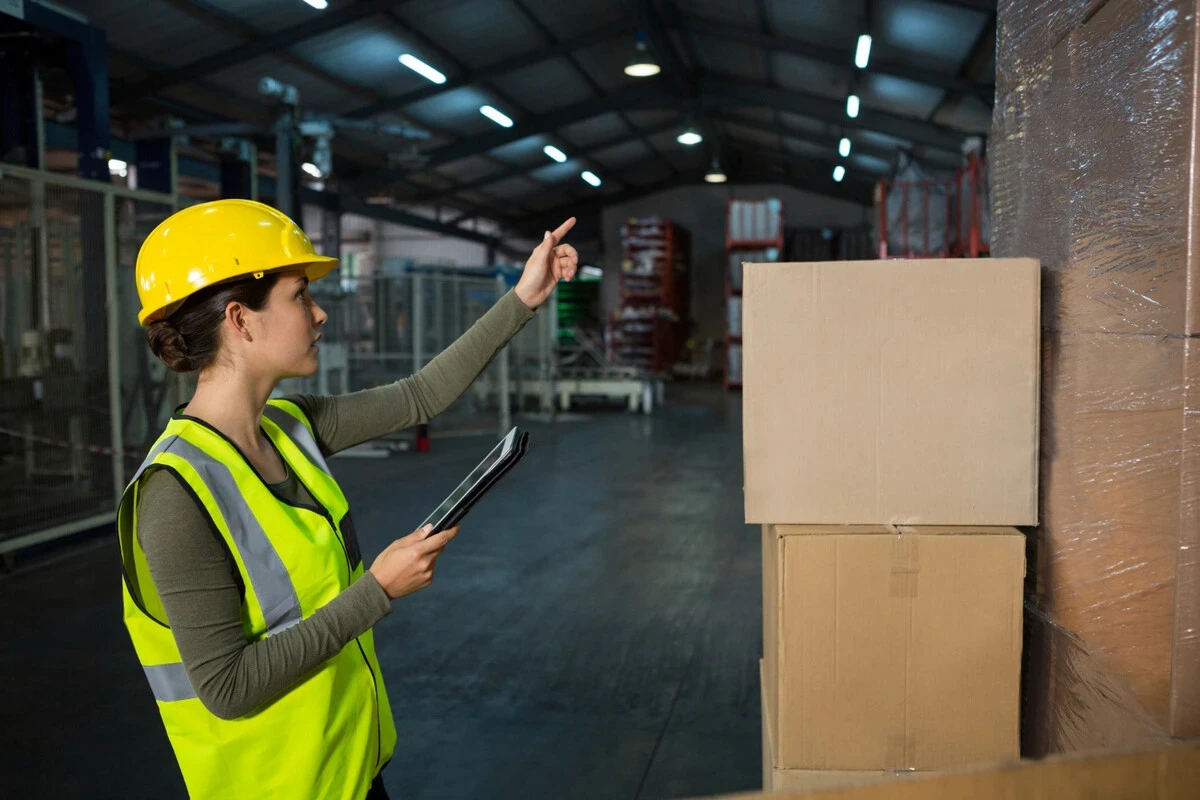
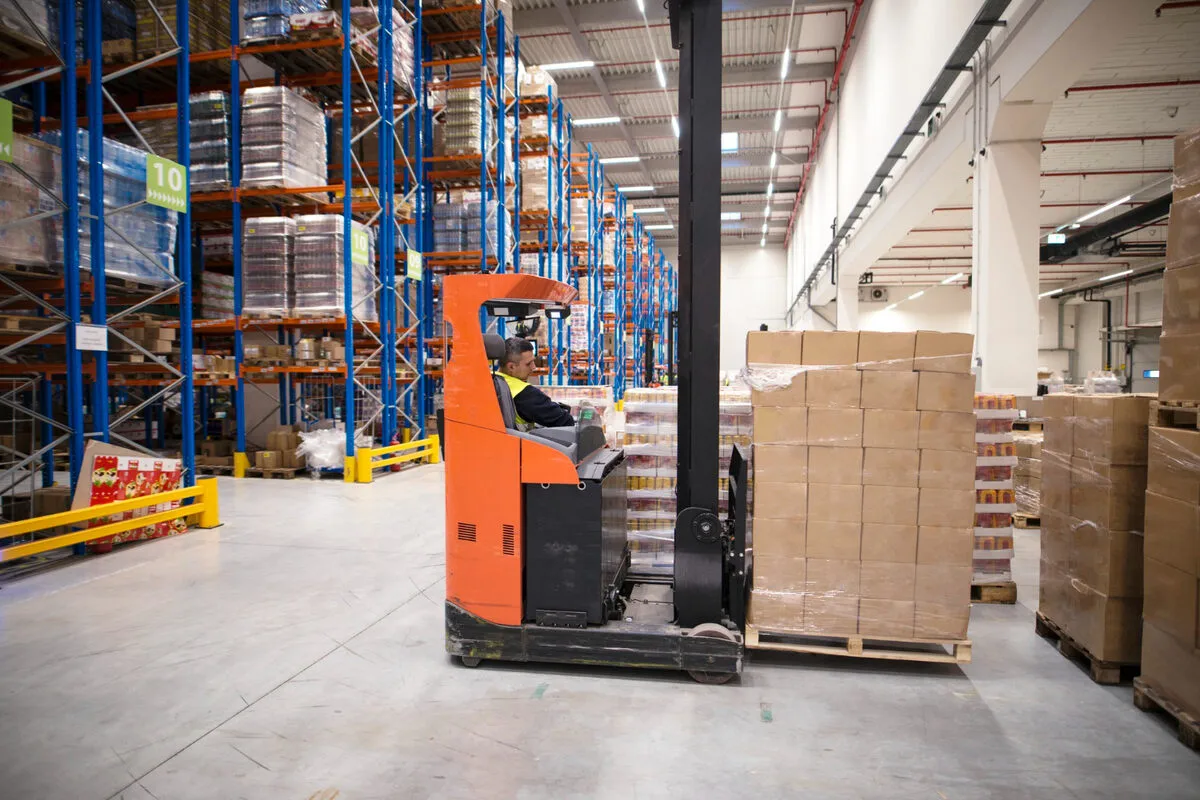
Logistics warehousing is the planned and controlled execution of the entire process from the acceptance of products into the warehouse to stock tracking, preparation for order, and shipment. This means managing every step with a specific system from the moment the product enters the warehouse until it reaches the customer.
What happens in the warehouse?
Products are received, counted, and processed into the system.
Placed in the appropriate area.
When an order arrives, they are accessed and gathered in the shortest way.
Packed, labeled, and handed over to the carrier.
Returns are managed in the same order.
Here, warehouse order and racking structure sit at the heart of the matter. Because in a poorly planned warehouse layout, personnel walk unnecessarily more, it's harder to find products, the margin of error increases, and you cannot fully utilize your capacity.
The Difference Between Logistics Warehousing and Traditional Warehousing
In traditional warehousing, you often only rent a space. You need to solve issues such as warehouse layout, addressing, picking method, and equipment selection.
In logistics warehousing, however, it goes beyond just offering space and incorporates process design. The warehouse plan is thought out from the beginning to increase product flow, stock visibility, and order speed. Correctly designed racking systems transform the warehouse into an efficient workspace.
The Role of Logistics Warehousing in the Supply Chain
Simplifying the supply chain:
Supplier → Production or sourcing → Logistics warehouse → Distribution → Customer
In this chain, the warehouse is the center that balances the flow. Any slowdown in the warehouse directly impacts the customer, which is the last link in the chain. Deliveries may be delayed, wrong products may be sent, or a product that seems available may not actually exist in stock.
A correctly planned warehouse order minimizes these risks through product addressing, walking routes, and racking arrangement, making the supply chain more predictable.
Types of Logistics Warehouses
Since every business's product structure and order model is different, a single type of warehouse concept rarely works. Logistics warehouses can be categorized under several main headings based on product characteristics and usage purpose.
Standard Dry Logistics Warehouses
These are areas where non-food products that do not require temperature or special conditions are stored. This type of warehouse is used in many sectors such as textiles, electronics, and building materials.
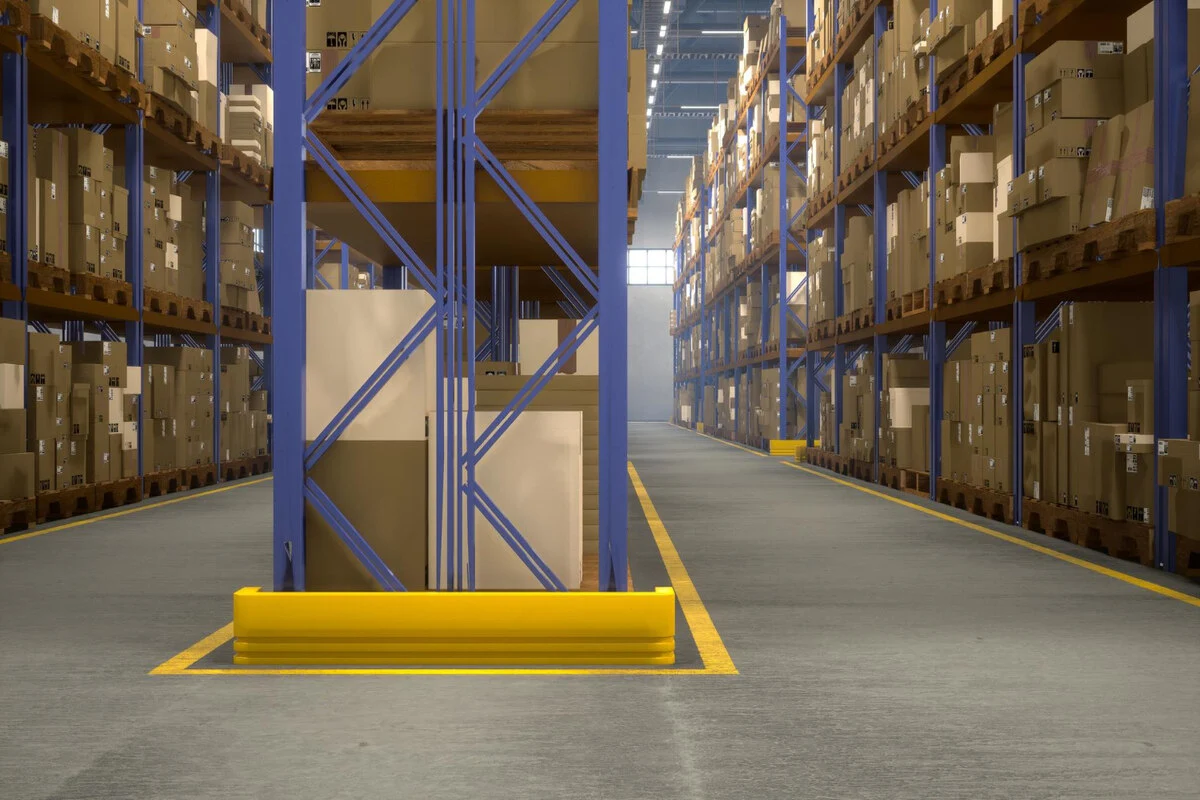
The goal in these warehouses is to position products both in an orderly manner and for easy accessibility. In businesses operating with pallets, it is possible to efficiently use height and keep stocks organized, especially with pallet racking systems.
High-Density Warehouses
In some businesses, the most critical issue is storing as many products as possible in the same area. In other words, the amount of stock per square meter comes to the fore.
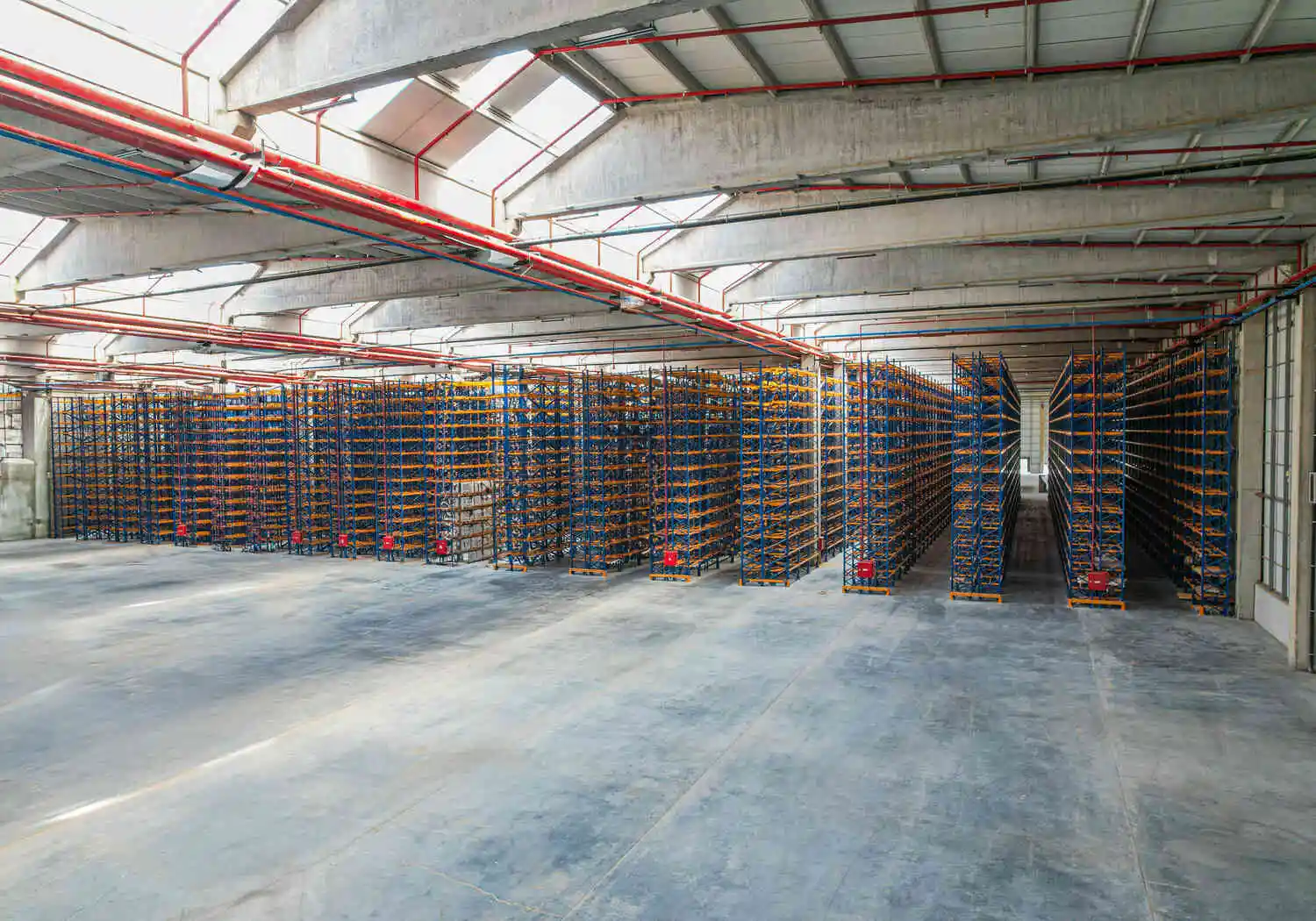
In these scenarios, solutions that allow for dense storage are preferred. Particularly in structures with low product diversity and high quantities, systems like the drive-in racking system which reduce the number of aisles provide a significant advantage. Thus, unused spaces in the warehouse are minimized.
E-Commerce and Parcel-Based Logistics Warehouses
In businesses that frequently receive orders and work with a wide variety of products, especially those focused on e-commerce, the warehouse structure is a bit different. Here, parcel and box movement is more prominent than pallets.
In these types of warehouses, lightweight racking systems are very functional in areas where hand picking is intense. By grouping products according to category, brand, or order frequency, you can significantly shorten picking time.
Likewise, when you want to use the space more efficiently, it is possible to expand the warehouse upwards with multi-level solutions like mezzanine systems. This provides significant flexibility, especially for businesses that want to increase capacity without leasing new warehouse space.
How to Choose the Right Logistics Warehouse Type and Racking Structure for Your Business?
Knowing the types of warehouses is important but not enough. What matters is establishing the structure suited to your product structure and growth plans. You can start with a few basic questions for this.
Size and Variety of Products
Are your products big and heavy, or small and light? Do you have few or many variations?
If there is a high density of palletized and heavy products, pallet-based structures will be more suitable for you.
If you are dealing with many small products, a structure that focuses on parcel and box arrangement on addressed racks will be more efficient.
Your Order Structure
Are you making a few but high-volume shipments during the day, or are there many small orders going out?
If you have bulk shipments of single-type products, you can focus on high-density warehousing.
If, like in e-commerce, you have multi-line orders with different product combinations, rack arrangements that facilitate manual access will come to the fore.
Warehouse Space and Ceiling Height
It is important to realistically evaluate your available space and ceiling height. In some warehouses, the space issue can be resolved vertically rather than horizontally.
If vertical capacity permits, you can store more products in the same area by increasing rack height and with upper floor solutions. Thus, without searching for a new warehouse, you gain more efficiency from your current space.
Growth Plan
Just as important as your current operation is your goal within a year or two.
If it's possible that your stocks will increase, your product diversity will expand, or the e-commerce side will grow in the future, planning the warehouse and racking layout accordingly from the start will save you a significant cost. Starting with modular solutions allows the system to be easily expanded later.
Logistics warehousing is not a matter to be glossed over with "we'll put the product in the warehouse and take it out when the time comes." A correctly designed logistics warehouse means organized stock, fast order preparation, few mistakes, and high space efficiency.
When choosing your warehouse type, you need to consider your products, order structure, space, and growth goals together. When you build a plan supported by racking systems that meet your needs on top of this, logistics warehousing processes transform from a burdensome obligation into a strong advantage that sets you ahead in competition.
If you wish, in the next step, we can address product types and warehouse space with more concrete examples, and clarify by saying "this warehouse structure and this racking layout is closer to your scenario." This way, we can bring this general guide even closer to your brand's actual usage scenario.
Producing or sourcing your products alone is not enough. The real issue is being able to deliver those products at the right time, to the right customer, in the right way. This is where logistics warehousing comes into play.
Logistics warehousing is the planned and controlled execution of the entire process from the acceptance of products into the warehouse to stock tracking, preparation for order, and shipment. This means managing every step with a specific system from the moment the product enters the warehouse until it reaches the customer.
What happens in the warehouse?
Products are received, counted, and processed into the system.
Placed in the appropriate area.
When an order arrives, they are accessed and gathered in the shortest way.
Packed, labeled, and handed over to the carrier.
Returns are managed in the same order.
Here, warehouse order and racking structure sit at the heart of the matter. Because in a poorly planned warehouse layout, personnel walk unnecessarily more, it's harder to find products, the margin of error increases, and you cannot fully utilize your capacity.
The Difference Between Logistics Warehousing and Traditional Warehousing
In traditional warehousing, you often only rent a space. You need to solve issues such as warehouse layout, addressing, picking method, and equipment selection.
In logistics warehousing, however, it goes beyond just offering space and incorporates process design. The warehouse plan is thought out from the beginning to increase product flow, stock visibility, and order speed. Correctly designed racking systems transform the warehouse into an efficient workspace.
The Role of Logistics Warehousing in the Supply Chain
Simplifying the supply chain:
Supplier → Production or sourcing → Logistics warehouse → Distribution → Customer
In this chain, the warehouse is the center that balances the flow. Any slowdown in the warehouse directly impacts the customer, which is the last link in the chain. Deliveries may be delayed, wrong products may be sent, or a product that seems available may not actually exist in stock.
A correctly planned warehouse order minimizes these risks through product addressing, walking routes, and racking arrangement, making the supply chain more predictable.
Types of Logistics Warehouses
Since every business's product structure and order model is different, a single type of warehouse concept rarely works. Logistics warehouses can be categorized under several main headings based on product characteristics and usage purpose.
Standard Dry Logistics Warehouses
These are areas where non-food products that do not require temperature or special conditions are stored. This type of warehouse is used in many sectors such as textiles, electronics, and building materials.
The goal in these warehouses is to position products both in an orderly manner and for easy accessibility. In businesses operating with pallets, it is possible to efficiently use height and keep stocks organized, especially with pallet racking systems.
High-Density Warehouses
In some businesses, the most critical issue is storing as many products as possible in the same area. In other words, the amount of stock per square meter comes to the fore.
In these scenarios, solutions that allow for dense storage are preferred. Particularly in structures with low product diversity and high quantities, systems like the drive-in racking system which reduce the number of aisles provide a significant advantage. Thus, unused spaces in the warehouse are minimized.
E-Commerce and Parcel-Based Logistics Warehouses
In businesses that frequently receive orders and work with a wide variety of products, especially those focused on e-commerce, the warehouse structure is a bit different. Here, parcel and box movement is more prominent than pallets.
In these types of warehouses, lightweight racking systems are very functional in areas where hand picking is intense. By grouping products according to category, brand, or order frequency, you can significantly shorten picking time.
Likewise, when you want to use the space more efficiently, it is possible to expand the warehouse upwards with multi-level solutions like mezzanine systems. This provides significant flexibility, especially for businesses that want to increase capacity without leasing new warehouse space.
How to Choose the Right Logistics Warehouse Type and Racking Structure for Your Business?
Knowing the types of warehouses is important but not enough. What matters is establishing the structure suited to your product structure and growth plans. You can start with a few basic questions for this.
Size and Variety of Products
Are your products big and heavy, or small and light? Do you have few or many variations?
If there is a high density of palletized and heavy products, pallet-based structures will be more suitable for you.
If you are dealing with many small products, a structure that focuses on parcel and box arrangement on addressed racks will be more efficient.
Your Order Structure
Are you making a few but high-volume shipments during the day, or are there many small orders going out?
If you have bulk shipments of single-type products, you can focus on high-density warehousing.
If, like in e-commerce, you have multi-line orders with different product combinations, rack arrangements that facilitate manual access will come to the fore.
Warehouse Space and Ceiling Height
It is important to realistically evaluate your available space and ceiling height. In some warehouses, the space issue can be resolved vertically rather than horizontally.
If vertical capacity permits, you can store more products in the same area by increasing rack height and with upper floor solutions. Thus, without searching for a new warehouse, you gain more efficiency from your current space.
Growth Plan
Just as important as your current operation is your goal within a year or two.
If it's possible that your stocks will increase, your product diversity will expand, or the e-commerce side will grow in the future, planning the warehouse and racking layout accordingly from the start will save you a significant cost. Starting with modular solutions allows the system to be easily expanded later.
Logistics warehousing is not a matter to be glossed over with "we'll put the product in the warehouse and take it out when the time comes." A correctly designed logistics warehouse means organized stock, fast order preparation, few mistakes, and high space efficiency.
When choosing your warehouse type, you need to consider your products, order structure, space, and growth goals together. When you build a plan supported by racking systems that meet your needs on top of this, logistics warehousing processes transform from a burdensome obligation into a strong advantage that sets you ahead in competition.
If you wish, in the next step, we can address product types and warehouse space with more concrete examples, and clarify by saying "this warehouse structure and this racking layout is closer to your scenario." This way, we can bring this general guide even closer to your brand's actual usage scenario.
Frequently Asked Questions (FAQ) About Logistic Storage
Frequently Asked Questions (FAQ) About Logistic Storage
Frequently Asked Questions (FAQ) About Logistic Storage
How to Calculate Logistics Storage Costs?
Logistics storage cost is generally calculated based on the total of the used space or pallet location, additional services such as handling and packaging, software infrastructure, and shipment frequency; the more efficient the warehouse layout and racking system, the lower the unit product cost becomes.
How Long Does It Take to Set Up a Logistics Warehouse?
How to Choose the Right RETA Racking System in a Logistics Warehouse?
Why is Logistics Warehouse Planning Important?
Is Logistic Storage Service or My Own Warehouse More Sensible?

Contact
Do you want to receive more information? We have expert and reliable contact persons available for any questions, issues, and suggestions.
Reta Engineering Warehouse Racking Systems Industry and Trade Inc.
Address
Muradiye Organized Industrial Zone, 10th St. No: 30 Yunusemre / Manisa
info@retamuhendislik.com.tr