
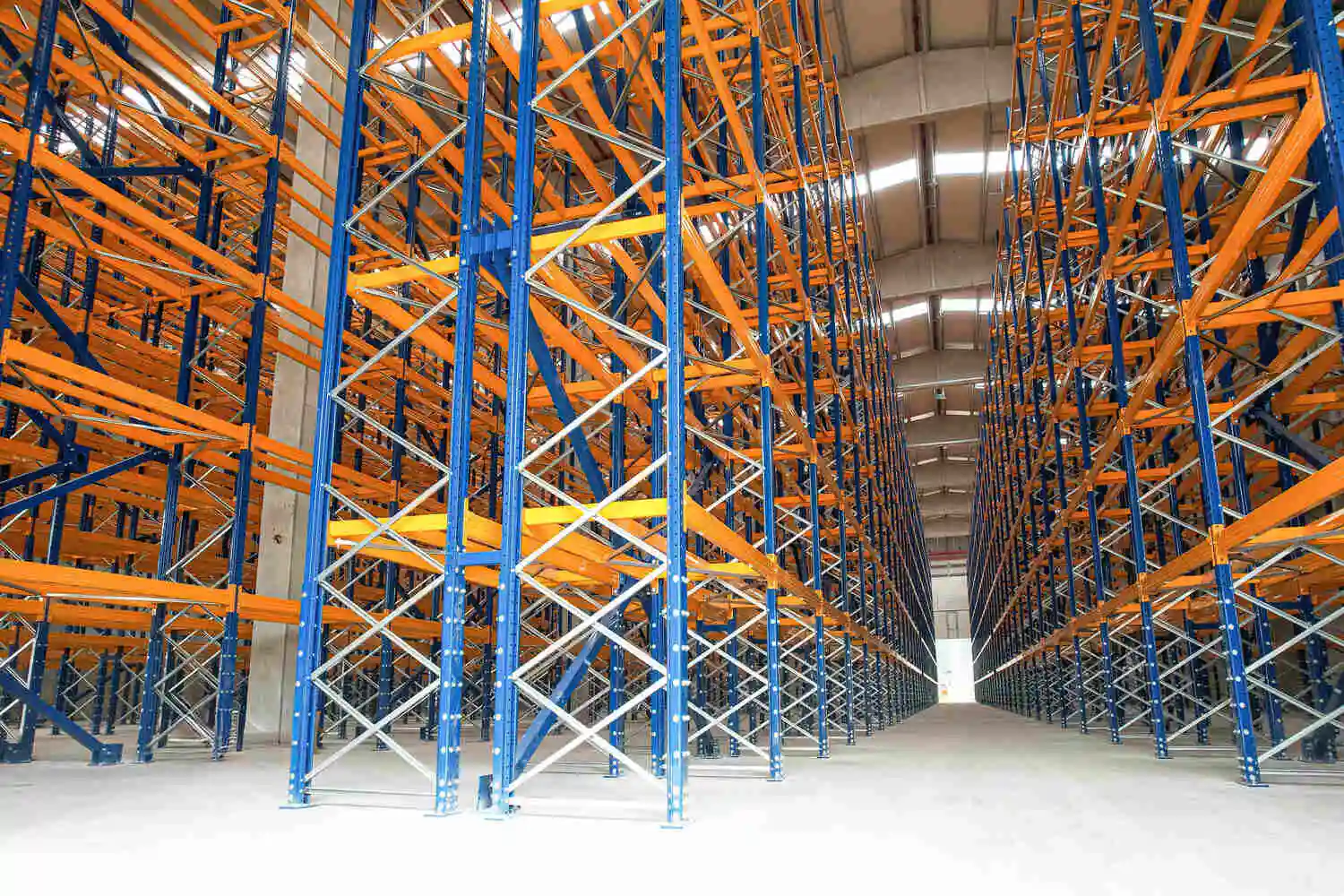
Static and Dynamic Load Difference in Racking Systems
Static and Dynamic Load Difference in Racking Systems
Static and Dynamic Load Difference in Racking Systems
Safety in racking systems is ensured not only by load capacity, but by correctly assessing the difference between static and dynamic loads. In this content, you can find the effects of movement, impact, and operational pace on rack durability, as well as the points to consider when selecting the right system.
What is the difference between static and dynamic loads in warehouse racking systems? Considerations for load capacity, risks, and choosing the right racking.
Safety in racking systems is ensured not only by load capacity, but by correctly assessing the difference between static and dynamic loads. In this content, you can find the effects of movement, impact, and operational pace on rack durability, as well as the points to consider when selecting the right system.

In warehouse setup, the first question usually asked is “How much weight can the rack hold?”. This is a valid question but not sufficient on its own. Because a warehouse rack system doesn’t just hold the load; it also withstands impacts, vibrations, accelerations, and incorrect placements during loading-unloading. It's crucial to understand the distinction between static and dynamic loads correctly for the rack to work efficiently and safely over time.
In this document, we will discuss what static and dynamic loads are, the differences between them, the risks that are prominent in different warehouse types, and what to pay attention to when evaluating proposals, in a clear flow.
What is Static Load?
Static load is the weight of the load (pallet, box, product, equipment) standing on the rack. It expresses the force that the rack carries when the load is not moving. The values often seen in manufacturers’ catalogs, such as “kg/eye” or “kg/level”, mostly refer to static carrying capacity.
When evaluating static load, three points are especially important:
Unit of capacity: It can be given in different forms like kg/eye, kg/level, kg/column, or kg/module. Incorrect reading means directly wrong choice.
Load distribution: “Evenly distributed load” does not appear the same as a load piled on one side.
Scenario of fullness: The scenario with the bottom level full and the top level empty differs in the force carried by the rack compared to the scenario where all levels are full.
Example: If it says “2,000 kg/eye,” this usually holds true under the assumption that the load is evenly distributed across the beam. Even if the weight of the pallet remains the same, if the load gathers at one point, the beam will deflect (bend) and the connections will get strained more.
What is Dynamic Load?
Dynamic load is the additional impact on the rack system arising from movement. Even if the load is
In warehouse setup, the first question usually asked is “How much weight can the rack hold?”. This is a valid question but not sufficient on its own. Because a warehouse rack system doesn’t just hold the load; it also withstands impacts, vibrations, accelerations, and incorrect placements during loading-unloading. It's crucial to understand the distinction between static and dynamic loads correctly for the rack to work efficiently and safely over time.
In this document, we will discuss what static and dynamic loads are, the differences between them, the risks that are prominent in different warehouse types, and what to pay attention to when evaluating proposals, in a clear flow.
What is Static Load?
Static load is the weight of the load (pallet, box, product, equipment) standing on the rack. It expresses the force that the rack carries when the load is not moving. The values often seen in manufacturers’ catalogs, such as “kg/eye” or “kg/level”, mostly refer to static carrying capacity.
When evaluating static load, three points are especially important:
Unit of capacity: It can be given in different forms like kg/eye, kg/level, kg/column, or kg/module. Incorrect reading means directly wrong choice.
Load distribution: “Evenly distributed load” does not appear the same as a load piled on one side.
Scenario of fullness: The scenario with the bottom level full and the top level empty differs in the force carried by the rack compared to the scenario where all levels are full.
Example: If it says “2,000 kg/eye,” this usually holds true under the assumption that the load is evenly distributed across the beam. Even if the weight of the pallet remains the same, if the load gathers at one point, the beam will deflect (bend) and the connections will get strained more.
What is Dynamic Load?
Dynamic load is the additional impact on the rack system arising from movement. Even if the load is
Frequently Asked Questions (FAQ) About Static and Dynamic Load Differences in RETA Racking Systems
Frequently Asked Questions (FAQ) About Static and Dynamic Load Differences in RETA Racking Systems
Frequently Asked Questions (FAQ) About Static and Dynamic Load Differences in RETA Racking Systems
How to Read Warehouse Racking System Load Capacity?
Clarify whether the capacity is given as kg per bay or kg per level. Ask the manufacturer under which load distribution assumption the capacity is provided. Remember that the same rack will be stressed differently under different loading scenarios.
Is Sagging Normal in Racking Systems?
How Much Does a Forklift Collision Affect the Racking System?
Why is Dynamic Load More Dangerous in Warehouse Racking Systems?
How Does Warehouse Scale Change When Choosing a Racking System?



Contact
Do you want to receive more information? We have expert and reliable contact persons available for any questions, issues, and suggestions.
Reta Engineering Warehouse Racking Systems Industry and Trade Inc.
Address
Muradiye Organized Industrial Zone, 10th St. No: 30 Yunusemre / Manisa
info@retamuhendislik.com.tr