

What is Inventory Management?
What is Inventory Management?
What is Inventory Management?
Inventory management is the process of maintaining the correct stock level by planning the quantity, location, and movement of products and materials. It is carried out using methods such as FIFO, FEFO, ABC, and min-max. With barcodes, RFID, WMS, and appropriate shelving systems, stock accuracy, operational speed, and warehouse efficiency are increased.
What is stock management, which methods are used, and what is its difference from inventory management? Basic elements, technology, and rack system selection in a single article.
Inventory management is the process of maintaining the correct stock level by planning the quantity, location, and movement of products and materials. It is carried out using methods such as FIFO, FEFO, ABC, and min-max. With barcodes, RFID, WMS, and appropriate shelving systems, stock accuracy, operational speed, and warehouse efficiency are increased.
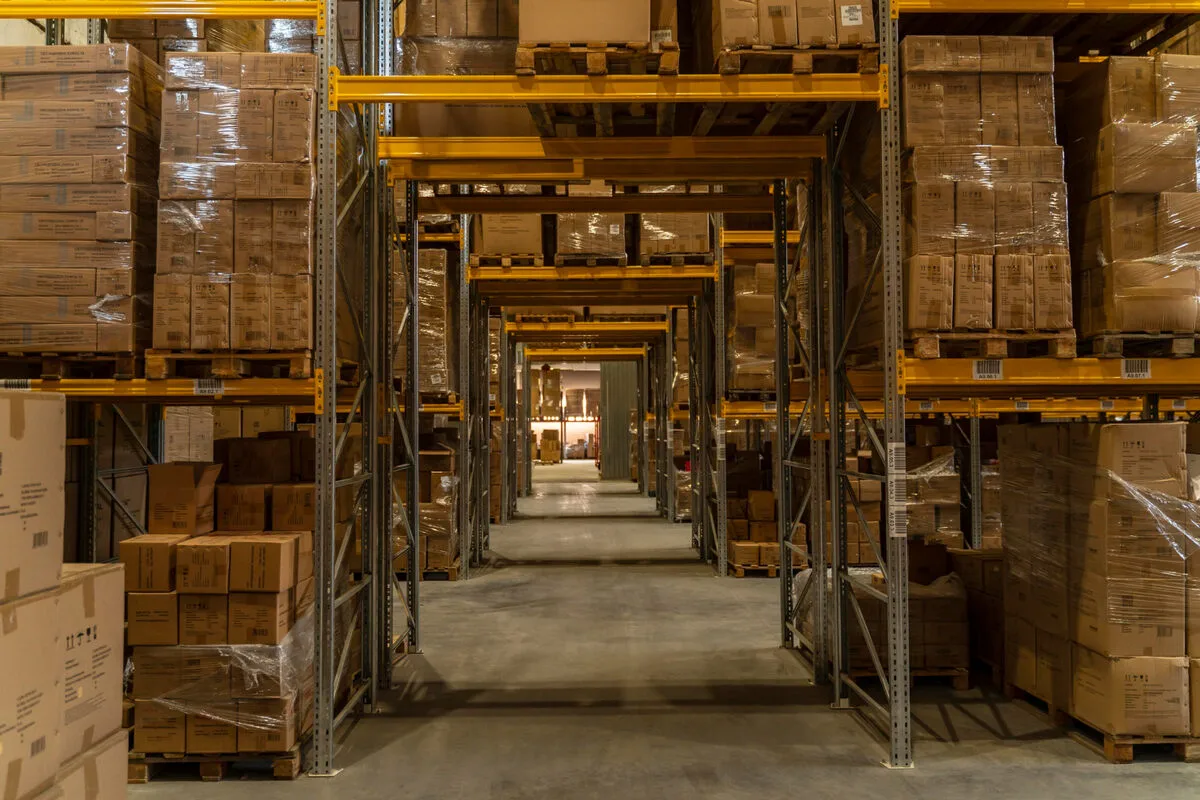
Inventory management is the process of planning and controlling the quantity, location, and movement of products and materials in a business in a structured manner. It covers all steps from the entry of raw materials into the warehouse to the shipment of the product.
The process does not consist solely of counting products. How much of which product to keep, at what level to reorder, and where the inventory will be positioned in the warehouse are also within this scope.
A poorly structured inventory system has two typical consequences. Either shelves empty before the scheduled time and sales are missed, or the warehouse is overfilled and capital remains tied up in the product.
What are the Core Elements of Inventory Management?
The core elements of inventory management are stock levels, order timing, warehouse layout, and record accuracy. These four elements nourish each other; when one is lacking, the efficiency obtained from the others also drops.
For example, even if order timing is calculated correctly, if record accuracy is at 90%, the system generates decisions based on inventory that does not actually exist. The difference between physical reality on the ground and data on the screen disrupts the entire planning.
Each of these elements corresponds to a concrete metric:
Safety Stock: The reserve quantity held against demand fluctuation and supply delays.
Reorder Point: Shows the critical level at which a new order must be placed.
Inventory Turnover Rate: Expresses how many times a product is depleted and replenished within a specific period.
Record Accuracy: The rate at which the data in the system matches the physical quantity on the ground.
Warehouse Layout: Position of products on shelves according to their frequency of movement.
Product Classification: Grouping of items based on their contribution to revenue and turnover rate.
When these metrics are monitored regularly, inventory decisions are based on data rather than estimation. When not monitored, order quantities are mostly determined according to past habit.
What are the Inventory Management Methods?
Inventory management methods consist of rules that determine the order in which products will leave the warehouse and when they will be ordered. The choice of method varies according to the shelf life of the product, the demand pattern, and the lead time.
In the FIFO method, the first product to enter the warehouse is the first to leave. This flow is almost mandatory for products with an expiration date, such as food, medicine, and cosmetics. In the LIFO method, the last product to enter is shipped first; it is preferred for homogeneous loads that do not carry a risk of spoilage.
The FEFO method prioritizes the product with the nearest expiration date. It produces a more protective result than FIFO when there are batches of the same product with different dates.
On the demand side, two primary approaches stand out. In the min-max method, an order is placed when the stock drops to the specified lower limit and is completed up to the upper limit. In the just-in-time production approach, materials are procured close to the time of need.
The advantage of the just-in-time model is low inventory costs. In contrast, a single delay in the supply chain can directly stop production. Therefore, the model becomes meaningful in structures where supplier performance is stable.
ABC analysis also simplifies method selection. The small product group that contributes the most to revenue is tracked closely, while the large group with low contribution is managed with more flexible rules.
What is the Difference Between Inventory Management and Asset Inventory Management?
The answer to the question of what asset inventory management is lies in the scope difference: asset inventory management covers the tracking of all assets owned by the business, while inventory management (stock management) deals only with the portion of these assets that is sellable or usable in production.
In practice, these two concepts are often used interchangeably. Still, seeing the distinction on the planning table clarifies which data feeds which decision.
Criteria | Inventory management | Asset inventory management |
|---|---|---|
Scope | Sellable product, semi-finished product, raw material | All assets, including fixtures and equipment |
Core question | How much of which product should be available? | What is in the business and where is it? |
Time horizon | Daily and weekly operation | Periodic and annual evaluation |
Measurement frequency | Continuous or cycle tracking | Usually end-of-period determination |
Output | Order decision and shipment plan | Asset list and financial statement data |
In short, inventory management manages movement, while asset inventory management records assets. Both must operate simultaneously in a warehouse.
What is the Role of Technology in Inventory Management?
The role of technology in inventory management is to record data the moment the product moves and to reduce human error. In manual recording, when a pallet relocates, the system only learns about it a few hours later.
Barcodes reduce this delay to seconds. RFID, on the other hand, does not require a line of sight for reading, so a large number of tags can be read simultaneously from a passage point.
This is where the question of what WMS is comes into play. WMS, which stands for Warehouse Management System, manages all steps from goods receiving to placement, picking to shipping through a single software. The system also suggests which bin each product should be put into.
As the level of automation increases, the link between software and equipment strengthens. In high-volume warehouses, automated storage AS/RS solutions offer integration advanced enough to take the product from the shelf bin and carry it to the operator.
Still, technology alone is not enough. When the software is not configured in accordance with the shelf layout and product flow on the ground, the expected accuracy rate cannot be achieved.
How to Choose the Right Racking System for Effective Inventory Management?
The right racking system is selected according to the physical properties of the product and its frequency of movement in the warehouse. Two different systems in the same square meter yield very different pallet capacities and access speeds.
When making a selection, the following criteria are evaluated together:
Product Size and Weight: Pallet size and unit load determine the capacity of the load-carrying profile.
Access Frequency: How many times it is handled per day directly affects the corridor requirement.
Product Flow Model: Preference of FIFO or LIFO determines suitability for channel-type structure.
SKU Variety: Few varieties and many pallets versus many varieties and few pallets require different solutions.
Warehouse Height: Usable net height draws the upper limit of vertical capacity.
Equipment Compatibility: Existing forklift type and turning radius restrict the aisle size.
Environmental Conditions: Cold storage or humid environment changes the choice of surface treatment.
In the traditional approach, individual access to each pallet is prioritized; pallet racking systems meet this need with a wide variety of products. This flexibility is valuable in warehouses with high numbers of SKUs and irregular turnover rates.
In structures where many pallets of the same product are stored, density comes to the fore. In the shuttle racking system, the forklift does not enter the channel, and the pallet is carried by the shuttle vehicle. This reduces aisle loss and lowers the risk of rack collision.
Inventory management is the process of planning and controlling the quantity, location, and movement of products and materials in a business in a structured manner. It covers all steps from the entry of raw materials into the warehouse to the shipment of the product.
The process does not consist solely of counting products. How much of which product to keep, at what level to reorder, and where the inventory will be positioned in the warehouse are also within this scope.
A poorly structured inventory system has two typical consequences. Either shelves empty before the scheduled time and sales are missed, or the warehouse is overfilled and capital remains tied up in the product.
What are the Core Elements of Inventory Management?
The core elements of inventory management are stock levels, order timing, warehouse layout, and record accuracy. These four elements nourish each other; when one is lacking, the efficiency obtained from the others also drops.
For example, even if order timing is calculated correctly, if record accuracy is at 90%, the system generates decisions based on inventory that does not actually exist. The difference between physical reality on the ground and data on the screen disrupts the entire planning.
Each of these elements corresponds to a concrete metric:
Safety Stock: The reserve quantity held against demand fluctuation and supply delays.
Reorder Point: Shows the critical level at which a new order must be placed.
Inventory Turnover Rate: Expresses how many times a product is depleted and replenished within a specific period.
Record Accuracy: The rate at which the data in the system matches the physical quantity on the ground.
Warehouse Layout: Position of products on shelves according to their frequency of movement.
Product Classification: Grouping of items based on their contribution to revenue and turnover rate.
When these metrics are monitored regularly, inventory decisions are based on data rather than estimation. When not monitored, order quantities are mostly determined according to past habit.
What are the Inventory Management Methods?
Inventory management methods consist of rules that determine the order in which products will leave the warehouse and when they will be ordered. The choice of method varies according to the shelf life of the product, the demand pattern, and the lead time.
In the FIFO method, the first product to enter the warehouse is the first to leave. This flow is almost mandatory for products with an expiration date, such as food, medicine, and cosmetics. In the LIFO method, the last product to enter is shipped first; it is preferred for homogeneous loads that do not carry a risk of spoilage.
The FEFO method prioritizes the product with the nearest expiration date. It produces a more protective result than FIFO when there are batches of the same product with different dates.
On the demand side, two primary approaches stand out. In the min-max method, an order is placed when the stock drops to the specified lower limit and is completed up to the upper limit. In the just-in-time production approach, materials are procured close to the time of need.
The advantage of the just-in-time model is low inventory costs. In contrast, a single delay in the supply chain can directly stop production. Therefore, the model becomes meaningful in structures where supplier performance is stable.
ABC analysis also simplifies method selection. The small product group that contributes the most to revenue is tracked closely, while the large group with low contribution is managed with more flexible rules.
What is the Difference Between Inventory Management and Asset Inventory Management?
The answer to the question of what asset inventory management is lies in the scope difference: asset inventory management covers the tracking of all assets owned by the business, while inventory management (stock management) deals only with the portion of these assets that is sellable or usable in production.
In practice, these two concepts are often used interchangeably. Still, seeing the distinction on the planning table clarifies which data feeds which decision.
Criteria | Inventory management | Asset inventory management |
|---|---|---|
Scope | Sellable product, semi-finished product, raw material | All assets, including fixtures and equipment |
Core question | How much of which product should be available? | What is in the business and where is it? |
Time horizon | Daily and weekly operation | Periodic and annual evaluation |
Measurement frequency | Continuous or cycle tracking | Usually end-of-period determination |
Output | Order decision and shipment plan | Asset list and financial statement data |
In short, inventory management manages movement, while asset inventory management records assets. Both must operate simultaneously in a warehouse.
What is the Role of Technology in Inventory Management?
The role of technology in inventory management is to record data the moment the product moves and to reduce human error. In manual recording, when a pallet relocates, the system only learns about it a few hours later.
Barcodes reduce this delay to seconds. RFID, on the other hand, does not require a line of sight for reading, so a large number of tags can be read simultaneously from a passage point.
This is where the question of what WMS is comes into play. WMS, which stands for Warehouse Management System, manages all steps from goods receiving to placement, picking to shipping through a single software. The system also suggests which bin each product should be put into.
As the level of automation increases, the link between software and equipment strengthens. In high-volume warehouses, automated storage AS/RS solutions offer integration advanced enough to take the product from the shelf bin and carry it to the operator.
Still, technology alone is not enough. When the software is not configured in accordance with the shelf layout and product flow on the ground, the expected accuracy rate cannot be achieved.
How to Choose the Right Racking System for Effective Inventory Management?
The right racking system is selected according to the physical properties of the product and its frequency of movement in the warehouse. Two different systems in the same square meter yield very different pallet capacities and access speeds.
When making a selection, the following criteria are evaluated together:
Product Size and Weight: Pallet size and unit load determine the capacity of the load-carrying profile.
Access Frequency: How many times it is handled per day directly affects the corridor requirement.
Product Flow Model: Preference of FIFO or LIFO determines suitability for channel-type structure.
SKU Variety: Few varieties and many pallets versus many varieties and few pallets require different solutions.
Warehouse Height: Usable net height draws the upper limit of vertical capacity.
Equipment Compatibility: Existing forklift type and turning radius restrict the aisle size.
Environmental Conditions: Cold storage or humid environment changes the choice of surface treatment.
In the traditional approach, individual access to each pallet is prioritized; pallet racking systems meet this need with a wide variety of products. This flexibility is valuable in warehouses with high numbers of SKUs and irregular turnover rates.
In structures where many pallets of the same product are stored, density comes to the fore. In the shuttle racking system, the forklift does not enter the channel, and the pallet is carried by the shuttle vehicle. This reduces aisle loss and lowers the risk of rack collision.
Frequently Asked Questions (FAQ) About Inventory Management
Frequently Asked Questions (FAQ) About Inventory Management
Frequently Asked Questions (FAQ) About Inventory Management
How is the minimum stock level determined in inventory management?
The minimum stock level is found by multiplying the average daily consumption by the lead time and adding a safety margin to it. For products with fluctuating demand, the safety margin is kept higher. If supplier performance is unstable, the calculation should be checked not only against the average but also against the longest past delivery time.
How do barcode and RFID simplify inventory management?
How to balance overstocking and understocking?
What is the use of ABC analysis in inventory management?
How to identify and reduce dead stock?



Contact
Do you want to receive more information? We have expert and reliable contact persons available for any questions, issues, and suggestions.
Reta Engineering Warehouse Racking Systems Industry and Trade Inc.
Address
Muradiye Organized Industrial Zone, 10th St. No: 30 Yunusemre / Manisa
info@retamuhendislik.com.tr