

How to Choose the Right Warehouse Racking System?
How to Choose the Right Warehouse Racking System?
How to Choose the Right Warehouse Racking System?
Achieve space, safety and cost advantages with the right warehouse racking system selection. Discover the most suitable solution for your warehouse, get information now.
Achieve space, safety, and cost advantages with the right warehouse racking system selection. Discover the most suitable solution for your warehouse, get information now.
Achieve space, safety and cost advantages with the right warehouse racking system selection. Discover the most suitable solution for your warehouse, get information now.
Choosing the right warehouse racking system is not just a purchasing decision; it is a strategic decision that directly determines the operational performance, occupational safety, and total cost of your warehouse for the next 10-15 years. While an incorrectly selected system leads to loss of space, occupational accidents, and a constant need for additional investment, the correctly selected system transforms your warehouse into a competitive advantage.
When you think of racking system selection like choosing products from a catalog, decisions that seem like cost advantages in the short term can turn out to be much more expensive in the long run. Therefore, the selection process must proceed step-by-step from an engineering perspective.
Why is Choosing the Right Warehouse Racking System So Important in Turkey?
Warehouse investments in Turkey have increased rapidly over the last 10 years. The claim to be a production base, the growth of e-commerce, and the widespread use of logistics centers have made racking system selection a strategic decision.
The core benefits of choosing the right racking system for you:
Increasing storage capacity per square meter
Lowering forklift and labor costs
Reducing the risks of occupational accidents and product damage
Protecting the investment against seismic risks
Being able to adapt to the system during growth periods
The geographical reality of Turkey is active fault lines and variable soil conditions. This situation makes the need for earthquake-resistant racking systems important at a national level. A system installed without seismic resistance creates a domino effect on the entire investment during the first major tremor.
Which Parameters Should Be Determined Before Choosing a Warehouse Racking System?
The selection of a racking system does not start by opening a product catalog. First, the business's own reality must be clarified. Before starting to work with the engineering team, you should have the following parameters in hand:
The type, weight, size, and sensitivity of the products to be stored
Stock turnover rate (need for FIFO, LIFO)
Net height of the warehouse building, column spacing, floor load capacity
Existing and planned handling equipment
3-5 year growth projection
A racking project started without these data will require revisions halfway through. Having this information clarified before starting discussions with a warehouse racking manufacturer is also a prerequisite for getting an accurate offer.
How to Choose a Warehouse Racking System According to Product Type?
The character of the product to be stored is the most critical factor directly determining the racking selection. It is perfectly normal for different product groups in the same warehouse to require different racking solutions.
For palletized products, classic back-to-back racking systems, drive-in racking systems, shuttle racking, or pallet live racking solutions are preferred. Drive-in increases space efficiency particularly in sectors where high quantities of the same SKU are stored.
For boxed and small part products, light duty racking, carton and box handling racking, and carton flow racking systems stand out. These systems, which directly affect pick-pack speed in e-commerce operations, are designed for ergonomic layout.
For long profile materials, cantilever racking systems are mandatory. For molds and heavy industrial parts, mold racking systems provide precise load distribution and easy access. The fundamental rule of determining the right system is this: The character of the product chooses the rack, not the rack the product.
How to Use Vertical Space Efficiently in a Warehouse Racking System?
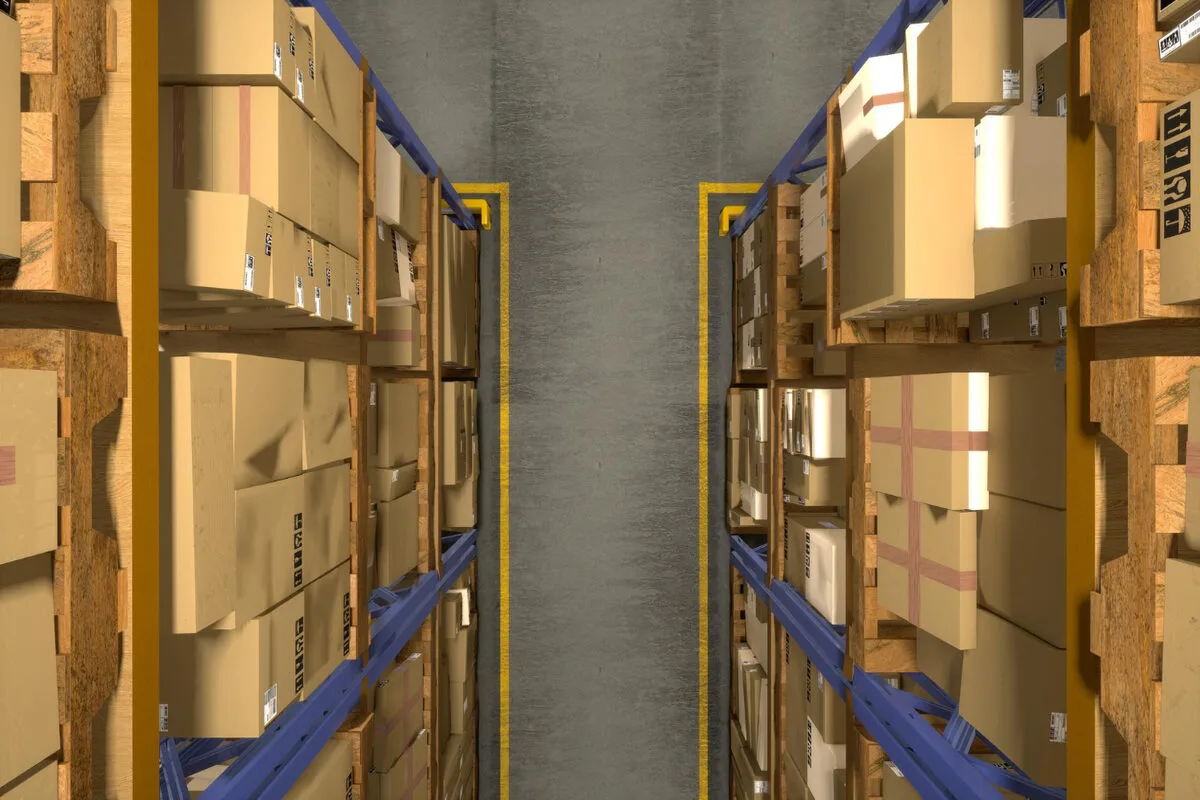
In the vast majority of warehouses in Turkey, the biggest loss is the insufficiency in vertical space utilization. In a warehouse with a net height of 10 meters, products stacked up to 4 meters waste more than half of the rental cost.
There are three basic approaches to vertical space utilization:
Direct vertical stacking with high-tonnage racks
Creating additional floors with mezzanine systems and mezzanine racking systems
Integrating the roof structure into the racking system with clad-rack warehouse racking systems
The critical point in vertical utilization is equipment compatibility. A racking system that will rise to a height of 12 meters reveals its true value only when combined with a reach truck or turret truck suitable for it.
What Should Be Considered for Earthquake Safety in a Warehouse Racking System?
Points to consider in terms of earthquake safety:
Performing static/dynamic analysis according to the seismic zone and soil class of the region
Choosing anchoring details suitable for the soil type
Applying horizontal stabilizers and cross connections fully
Clearly indicating maximum load labels visibly
Protective elements against forklift impact being part of the system
A system without earthquake calculations is cheap to build, but the real cost emerges at the first big tremor.
Should Manual or Automated Be Chosen in a Warehouse Racking System?
Racking systems are divided into three main categories according to their automation level. Which level you choose depends on the size of the operation and your vision for the future.
Manual systems require low investment and offer medium-level efficiency. Semi-automatic racking systems are solutions that work particularly with shuttle technology; the forklift does not enter the rack, the shuttle places the pallet itself. In projects carried out with a fully automated racking system manufacturer, Pallet AS/RS, Miniload AS/RS, and Carton AS/RS solutions come into play.
Concepts to consider in advanced level automation:
Smart racking systems: Traceable infrastructures integrated with WMS
Autonomous warehouse racking systems: Systems working in conjunction with AGV and AMR robots
Dark warehouse racking solutions: Warehouses with no lighting costs because there are no humans inside
Unmanned E-Commerce racks: Automated systems designed for fast pick-pack
In today's Turkey, where e-commerce has exploded, full automation is no longer a luxury but a condition of competition for growing players.
How to Calculate ROI in Warehouse Racking System Investment?
The most common mistake in racking system investment is looking only at the initial investment cost. For the right decision, a Total Cost of Ownership (TCO) approach is essential. This calculation should include the initial investment, handling equipment, labor savings, maintenance expenses, and insurance costs together.
A concrete comparison: While approximately 800 pallets can be stored with a classic back-to-back system in a 1,000 m² area, 1,800-2,200 pallets can be stored in the same area with a drive-in or shuttle system. This difference pays back the investment within 2-3 years in metropolitan regions where rental costs are high.
How to Determine the Right Manufacturer for a Warehouse Racking System?
A racking system is an infrastructure that will age with your warehouse after installation. Therefore, the choice of manufacturer is at least as decisive as the choice of product. Criteria to be questioned when working with the right manufacturer:
Technological infrastructure of the production facility (automatic welding lines, robotic bending, powder coating facility)
Seismic calculation capacity of the static engineering staff
Compliance with FEM, EN 15512, and EN 15620 standards
Sectoral diversity and scale size of reference projects
Periodic inspection service after installation
The right storage system is formed by a holistic approach to site analysis, engineering support, project design, manufacturing, and installation processes. An expert engineering staff and a quality-oriented approach form the basis of sustainable system solutions suitable for business needs.
Choosing the right warehouse racking system is not just a purchasing decision; it is a strategic decision that directly determines the operational performance, occupational safety, and total cost of your warehouse for the next 10-15 years. While an incorrectly selected system leads to loss of space, occupational accidents, and a constant need for additional investment, the correctly selected system transforms your warehouse into a competitive advantage.
When you think of racking system selection like choosing products from a catalog, decisions that seem like cost advantages in the short term can turn out to be much more expensive in the long run. Therefore, the selection process must proceed step-by-step from an engineering perspective.
Why is Choosing the Right Warehouse Racking System So Important in Turkey?
Warehouse investments in Turkey have increased rapidly over the last 10 years. The claim to be a production base, the growth of e-commerce, and the widespread use of logistics centers have made racking system selection a strategic decision.
The core benefits of choosing the right racking system for you:
Increasing storage capacity per square meter
Lowering forklift and labor costs
Reducing the risks of occupational accidents and product damage
Protecting the investment against seismic risks
Being able to adapt to the system during growth periods
The geographical reality of Turkey is active fault lines and variable soil conditions. This situation makes the need for earthquake-resistant racking systems important at a national level. A system installed without seismic resistance creates a domino effect on the entire investment during the first major tremor.
Which Parameters Should Be Determined Before Choosing a Warehouse Racking System?
The selection of a racking system does not start by opening a product catalog. First, the business's own reality must be clarified. Before starting to work with the engineering team, you should have the following parameters in hand:
The type, weight, size, and sensitivity of the products to be stored
Stock turnover rate (need for FIFO, LIFO)
Net height of the warehouse building, column spacing, floor load capacity
Existing and planned handling equipment
3-5 year growth projection
A racking project started without these data will require revisions halfway through. Having this information clarified before starting discussions with a warehouse racking manufacturer is also a prerequisite for getting an accurate offer.
How to Choose a Warehouse Racking System According to Product Type?
The character of the product to be stored is the most critical factor directly determining the racking selection. It is perfectly normal for different product groups in the same warehouse to require different racking solutions.
For palletized products, classic back-to-back racking systems, drive-in racking systems, shuttle racking, or pallet live racking solutions are preferred. Drive-in increases space efficiency particularly in sectors where high quantities of the same SKU are stored.
For boxed and small part products, light duty racking, carton and box handling racking, and carton flow racking systems stand out. These systems, which directly affect pick-pack speed in e-commerce operations, are designed for ergonomic layout.
For long profile materials, cantilever racking systems are mandatory. For molds and heavy industrial parts, mold racking systems provide precise load distribution and easy access. The fundamental rule of determining the right system is this: The character of the product chooses the rack, not the rack the product.
How to Use Vertical Space Efficiently in a Warehouse Racking System?
In the vast majority of warehouses in Turkey, the biggest loss is the insufficiency in vertical space utilization. In a warehouse with a net height of 10 meters, products stacked up to 4 meters waste more than half of the rental cost.
There are three basic approaches to vertical space utilization:
Direct vertical stacking with high-tonnage racks
Creating additional floors with mezzanine systems and mezzanine racking systems
Integrating the roof structure into the racking system with clad-rack warehouse racking systems
The critical point in vertical utilization is equipment compatibility. A racking system that will rise to a height of 12 meters reveals its true value only when combined with a reach truck or turret truck suitable for it.
What Should Be Considered for Earthquake Safety in a Warehouse Racking System?
Points to consider in terms of earthquake safety:
Performing static/dynamic analysis according to the seismic zone and soil class of the region
Choosing anchoring details suitable for the soil type
Applying horizontal stabilizers and cross connections fully
Clearly indicating maximum load labels visibly
Protective elements against forklift impact being part of the system
A system without earthquake calculations is cheap to build, but the real cost emerges at the first big tremor.
Should Manual or Automated Be Chosen in a Warehouse Racking System?
Racking systems are divided into three main categories according to their automation level. Which level you choose depends on the size of the operation and your vision for the future.
Manual systems require low investment and offer medium-level efficiency. Semi-automatic racking systems are solutions that work particularly with shuttle technology; the forklift does not enter the rack, the shuttle places the pallet itself. In projects carried out with a fully automated racking system manufacturer, Pallet AS/RS, Miniload AS/RS, and Carton AS/RS solutions come into play.
Concepts to consider in advanced level automation:
Smart racking systems: Traceable infrastructures integrated with WMS
Autonomous warehouse racking systems: Systems working in conjunction with AGV and AMR robots
Dark warehouse racking solutions: Warehouses with no lighting costs because there are no humans inside
Unmanned E-Commerce racks: Automated systems designed for fast pick-pack
In today's Turkey, where e-commerce has exploded, full automation is no longer a luxury but a condition of competition for growing players.
How to Calculate ROI in Warehouse Racking System Investment?
The most common mistake in racking system investment is looking only at the initial investment cost. For the right decision, a Total Cost of Ownership (TCO) approach is essential. This calculation should include the initial investment, handling equipment, labor savings, maintenance expenses, and insurance costs together.
A concrete comparison: While approximately 800 pallets can be stored with a classic back-to-back system in a 1,000 m² area, 1,800-2,200 pallets can be stored in the same area with a drive-in or shuttle system. This difference pays back the investment within 2-3 years in metropolitan regions where rental costs are high.
How to Determine the Right Manufacturer for a Warehouse Racking System?
A racking system is an infrastructure that will age with your warehouse after installation. Therefore, the choice of manufacturer is at least as decisive as the choice of product. Criteria to be questioned when working with the right manufacturer:
Technological infrastructure of the production facility (automatic welding lines, robotic bending, powder coating facility)
Seismic calculation capacity of the static engineering staff
Compliance with FEM, EN 15512, and EN 15620 standards
Sectoral diversity and scale size of reference projects
Periodic inspection service after installation
The right storage system is formed by a holistic approach to site analysis, engineering support, project design, manufacturing, and installation processes. An expert engineering staff and a quality-oriented approach form the basis of sustainable system solutions suitable for business needs.
Frequently Asked Questions (FAQ) About Choosing the Right Warehouse Racking System
Frequently Asked Questions (FAQ) About Choosing the Right Warehouse Racking System
Frequently Asked Questions (FAQ) About Choosing the Right Warehouse Racking System
What is the Return on Investment Period of a Warehouse Racking System?
It varies depending on the type of system and the size of the warehouse. A ROI period of 3-5 years is typical for classic manual systems, and 4-7 years for automated solutions. This period is significantly shortened in metropolitan areas where the cost per square meter is high.
Can My Existing Warehouse Racking System Be Expanded?
Is It Logical to Buy a Used Racking System?
How Many Years Is the Lifespan of a Warehouse Racking System?
How Does the Forklift Type Affect the Rack System Selection?

Contact
Do you want to receive more information? We have expert and reliable contact persons available for any questions, issues, and suggestions.
Reta Engineering Warehouse Racking Systems Industry and Trade Inc.
Address
Muradiye Organized Industrial Zone, 10th St. No: 30 Yunusemre / Manisa
info@retamuhendislik.com.tr