
How to Plan a Defense Industry Racking System?
How to Plan a Defense Industry Racking System?
How to Plan a Defense Industry Racking System?
How to plan secure, seismically calculated, and automation-integrable rack systems for defense industry warehouses? Examine the selection criteria.
How to plan secure, seismic-compliant, and automation-integrated racking systems for defense industry warehouses? Examine the selection criteria.
How to plan secure, seismically calculated, and automation-integrable rack systems for defense industry warehouses? Examine the selection criteria.
A defense industry shelving system is not simply a structure that ensures the orderly storage of products. It enables the secure, traceable, and sustainable management of critical stock such as ammunition, military spare parts, sensitive electronic components, optical equipment, maintenance kits, and classified documents.
For this reason, a conventional warehouse approach is not sufficient when choosing a shelving system for the defense industry. The system must be evaluated along with security protocols, earthquake resistance, access control, stock rotation, automation infrastructure, and long-term capacity planning. Choosing the right warehouse rack manufacturer or warehouse rack producer at this point directly impacts the success of the investment.
What Factors Determine the Choice of Shelving Systems in the Defense Industry?
The choice of shelving in defense industry warehouses varies according to the type of product stored. Different shelving structures are required for large and heavy parts, different ones for small and sensitive components, and different ones for materials requiring controlled access.
The following criteria stand out in the decision-making process:
Weight, dimensions, and sensitivity level of the material
Daily entry-exit density and stock turnover rate
Authorized access, record-keeping, and security requirements
Warehouse floor, ceiling height, and forklift movement area
Existing facility conversion or greenfield installation status
Integration of automation, WMS, ERP, barcode, or RFID
A shelving choice made before these details are clarified may lead to capacity loss, access difficulties, or security risks at a later stage.
Why is an Earthquake-Calculated Shelving System Important in Defense Industry Facilities?
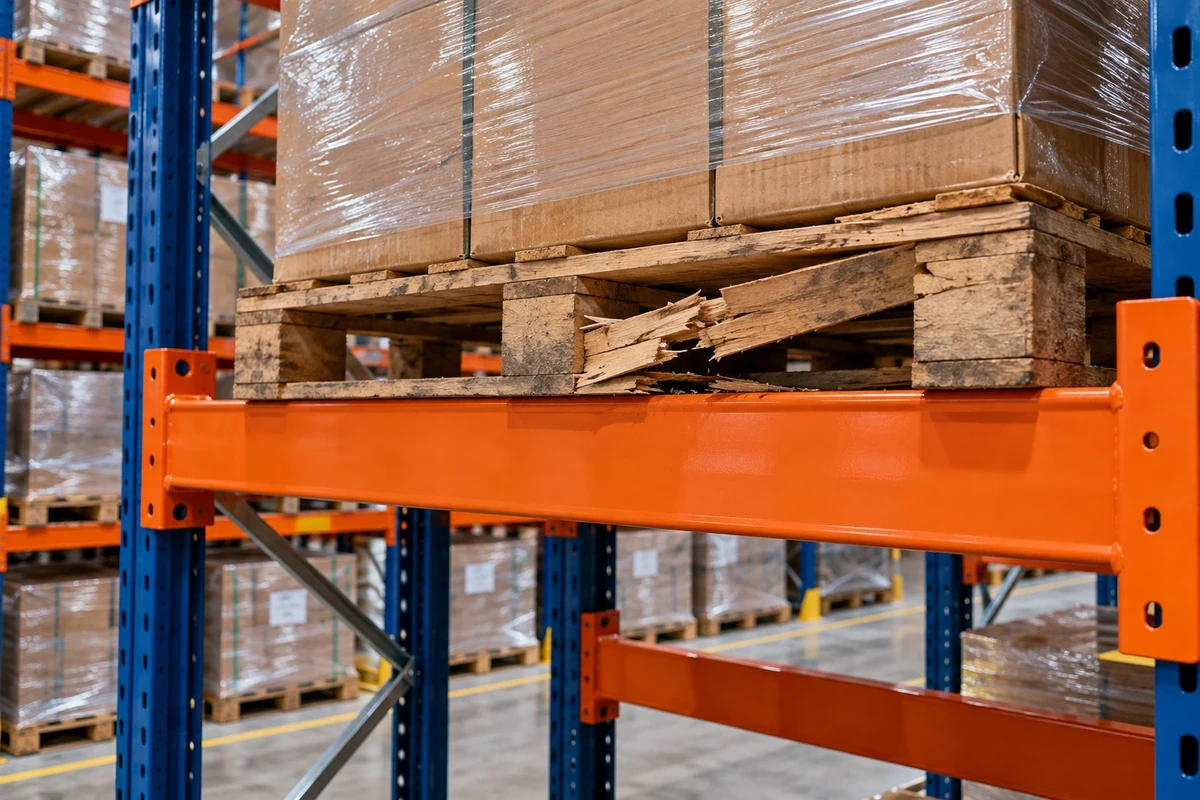
In regions with high earthquake risk like Turkey, an earthquake-calculated shelving system is a critical need for defense facilities. It is not enough for the shelves to carry only vertical loads; horizontal loads during an earthquake, risk of overturning, anchorage strength, and ground behavior must also be calculated.
Seismic rack manufacturing differs from standard rack manufacturing in this respect. The goal is not just to build a load-bearing system, but to create a safe structure that will maintain operational continuity after an earthquake. Especially in ammunition, critical spare parts, and sensitive electronic inventory, rack damage means not only product loss but also a risk to security and mission continuity.
How are Static and Dynamic Rack Manufacturing Positioned in Defense Industry Warehouses?
In the defense industry, static rack manufacturing is suitable for low-turnover and long-term stored products. Military spare parts, maintenance equipment, prototype parts, and archived inventory can be safely managed on static racks.
Dynamic rack manufacturing, on the other hand, is preferred in areas where product movement needs to proceed in a controlled manner. Pallet flow rack solutions operating on the FIFO principle provide advantages for products requiring lot tracking, expiration date, or serial number management. For ammunition, chemically sensitive materials, and maintenance parts requiring rotation, dynamic systems may be more appropriate.
In short; static systems provide access flexibility, while dynamic systems provide flow control.
Which Types of Shelving are Used in Defense Industry Warehouses?
The types of shelving used in defense industry warehouses are not limited to a single product group. Depending on the operational structure of the facility, heavy-duty racks, mobile systems, automated racks, and custom carrier solutions can be used together.
Area of Use | Suitable System | Key Advantage |
Heavy military spare parts | Pallet rack / drive-in rack system | High carrying capacity |
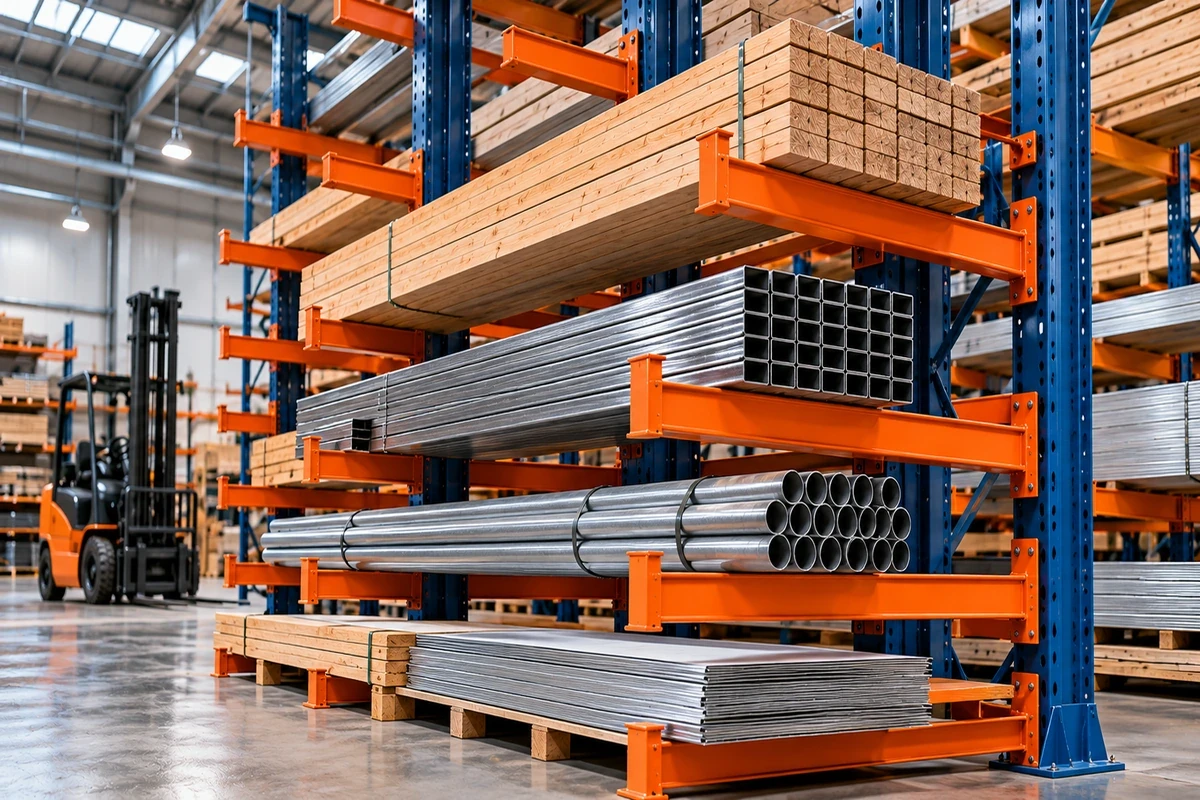
Long and irregular parts | Cantilever rack | Ease of side access |
Sensitive electronic components | Light duty rack / locked cabinet | Controlled storage |
Ammunition and rotated stock | Dynamic rack / gravity flow rack | FIFO management |
Classified documents | Mobile shelving systems | Space efficiency and access control |
Automated warehouse | Pallet AS/RS, Mini-Load AS/RS, Case AS/RS | Reducing human error |
Especially in facilities with limited space, a mobile shelving system provides the advantages of controlled access and high capacity. In high-volume and homogenous inventories, a shuttle rack may be preferred. On the other hand, in projects where ceiling height needs to be utilized efficiently, a narrow aisle rack system or automated storage AS/RS racks can be evaluated.
What Do Smart Shelving Systems Provide in Defense Industry Warehouses?
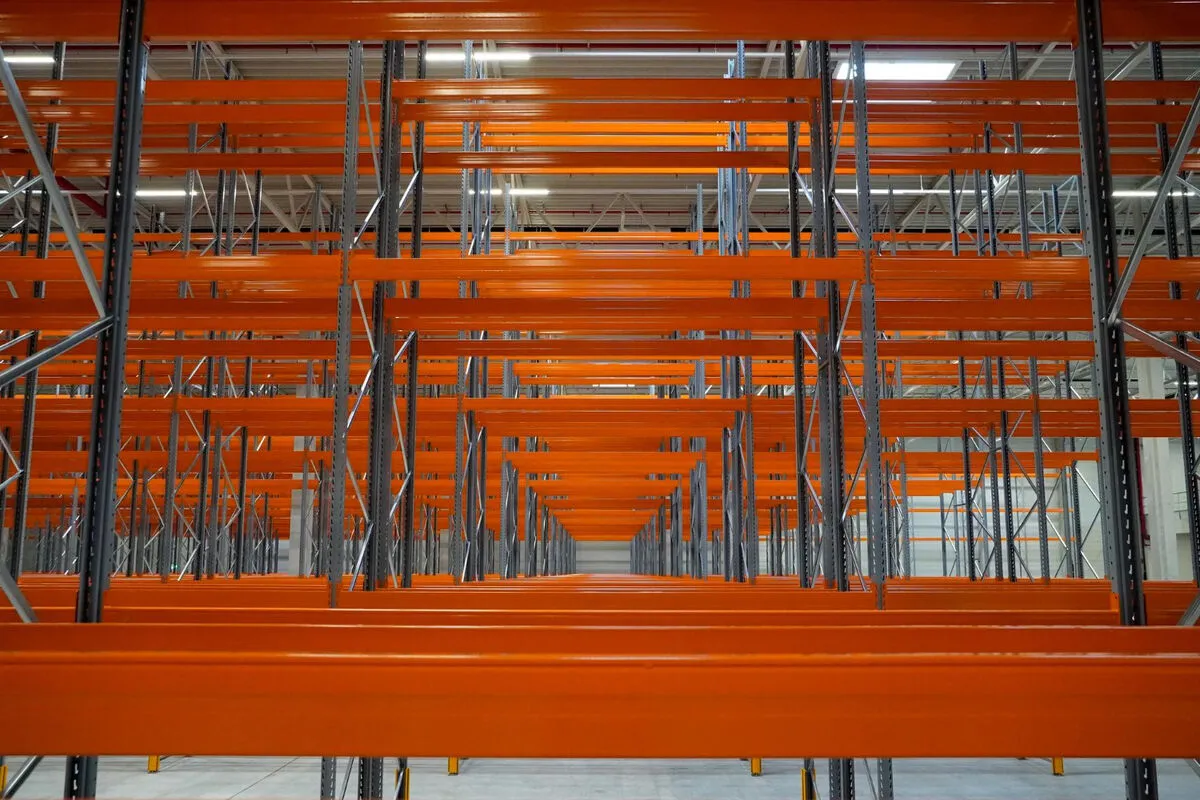
Smart shelving systems enable defense industry stocks to be managed not only physically, but also digitally. Thanks to barcode, RFID, WMS, and ERP integration, every product movement can be recorded.
This structure is particularly important in the following areas:
Instantly seeing which product is in which location
Reducing the risk of unauthorized access
Tracking serial numbers, lots, and expiration dates
Providing retrospective records during audit processes
Preventing critical parts from being lost or shipped incorrectly
In defense industry warehouses, traceability is as important as operational speed. Therefore, smart systems support both security and efficiency simultaneously.
When are Semi-Automatic and Fully Automatic Shelving Systems Preferred in the Defense Industry?
Semi-automatic shelving systems are suitable for facilities that want to speed up warehouse movements without completely eliminating manual operation. Shuttle systems, motorized mobile shelves, or guided picking solutions fall into this category.
On the other hand, choosing a fully automatic shelving system manufacturer becomes important in projects aiming for higher security, lower human error, and faster stock movement. In these systems, shelves, software, carrier equipment, sensors, and security protocols work together.
Pallet AS/RS is used for heavy and large loads, Mini-Load AS/RS for small and sensitive components, and Case AS/RS for managing packages ready for shipment. These systems make stock movements much more controlled, especially in high-security defense warehouses.
How are Autonomous and Unmanned Warehouse Shelving Systems Used in the Defense Industry?
Autonomous warehouse shelving systems and unmanned warehouse shelving systems reduce security risks by minimizing human intervention. Product entry, storage, transfer, and exit processes are managed with software support. Thus, the possibility of incorrect product picking, unauthorized access, or unrecorded movement is reduced.
Dark warehouse shelving solutions are also an advanced version of this approach. Human traffic inside the warehouse is minimized; movements are performed by robotic systems, conveyors, and automatic carriers. This model may not be suitable for every defense facility, but it provides significant advantages in warehouses requiring standard product flow and high security.
Although the expression "unmanned e-commerce shelves" is not directly used for the defense industry, the logic of fast picking and automatic sorting behind it can be adapted to defense logistics for maintenance kits and mission-based shipment packages.
What are the Benefits of Storage Systems in the Defense Industry?
The benefits of storage systems in the defense industry are not limited to gaining space alone. The right shelving system provides security, traceability, disaster resistance, and operational continuity.
The main benefits are:
Storing critical inventory in a safe and controlled manner
Reducing the risks of earthquakes, impacts, and incorrect usage
Authorized access and digital record management
Lot, serial number, and expiration date tracking
Faster shipment and maintenance preparation
Reducing human error and the risk of lost products
Making more efficient use of the existing warehouse space
These benefits elevate the shelving system from being a simple equipment investment into a strategic infrastructure decision for the defense industry.
What Should be Considered When Choosing a Warehouse Rack Manufacturer for the Defense Industry?
In defense industry projects, the choice of a warehouse rack manufacturer should be considered for the long term. The manufacturer must not only produce racks but also be able to understand the security and engineering needs of the facility.
For the right choice, the manufacturer's capacity for seismic calculation, project drawing, site discovery, assembly planning, automation integration, and after-sales support should be evaluated. In addition, it is important that they offer modular solutions suitable for potential growth. Because warehouse needs in the defense industry can change over time; the system must be able to adapt to this.
A defense industry shelving system is not simply a structure that ensures the orderly storage of products. It enables the secure, traceable, and sustainable management of critical stock such as ammunition, military spare parts, sensitive electronic components, optical equipment, maintenance kits, and classified documents.
For this reason, a conventional warehouse approach is not sufficient when choosing a shelving system for the defense industry. The system must be evaluated along with security protocols, earthquake resistance, access control, stock rotation, automation infrastructure, and long-term capacity planning. Choosing the right warehouse rack manufacturer or warehouse rack producer at this point directly impacts the success of the investment.
What Factors Determine the Choice of Shelving Systems in the Defense Industry?
The choice of shelving in defense industry warehouses varies according to the type of product stored. Different shelving structures are required for large and heavy parts, different ones for small and sensitive components, and different ones for materials requiring controlled access.
The following criteria stand out in the decision-making process:
Weight, dimensions, and sensitivity level of the material
Daily entry-exit density and stock turnover rate
Authorized access, record-keeping, and security requirements
Warehouse floor, ceiling height, and forklift movement area
Existing facility conversion or greenfield installation status
Integration of automation, WMS, ERP, barcode, or RFID
A shelving choice made before these details are clarified may lead to capacity loss, access difficulties, or security risks at a later stage.
Why is an Earthquake-Calculated Shelving System Important in Defense Industry Facilities?
In regions with high earthquake risk like Turkey, an earthquake-calculated shelving system is a critical need for defense facilities. It is not enough for the shelves to carry only vertical loads; horizontal loads during an earthquake, risk of overturning, anchorage strength, and ground behavior must also be calculated.
Seismic rack manufacturing differs from standard rack manufacturing in this respect. The goal is not just to build a load-bearing system, but to create a safe structure that will maintain operational continuity after an earthquake. Especially in ammunition, critical spare parts, and sensitive electronic inventory, rack damage means not only product loss but also a risk to security and mission continuity.
How are Static and Dynamic Rack Manufacturing Positioned in Defense Industry Warehouses?
In the defense industry, static rack manufacturing is suitable for low-turnover and long-term stored products. Military spare parts, maintenance equipment, prototype parts, and archived inventory can be safely managed on static racks.
Dynamic rack manufacturing, on the other hand, is preferred in areas where product movement needs to proceed in a controlled manner. Pallet flow rack solutions operating on the FIFO principle provide advantages for products requiring lot tracking, expiration date, or serial number management. For ammunition, chemically sensitive materials, and maintenance parts requiring rotation, dynamic systems may be more appropriate.
In short; static systems provide access flexibility, while dynamic systems provide flow control.
Which Types of Shelving are Used in Defense Industry Warehouses?
The types of shelving used in defense industry warehouses are not limited to a single product group. Depending on the operational structure of the facility, heavy-duty racks, mobile systems, automated racks, and custom carrier solutions can be used together.
Area of Use | Suitable System | Key Advantage |
Heavy military spare parts | Pallet rack / drive-in rack system | High carrying capacity |
Long and irregular parts | Cantilever rack | Ease of side access |
Sensitive electronic components | Light duty rack / locked cabinet | Controlled storage |
Ammunition and rotated stock | Dynamic rack / gravity flow rack | FIFO management |
Classified documents | Mobile shelving systems | Space efficiency and access control |
Automated warehouse | Pallet AS/RS, Mini-Load AS/RS, Case AS/RS | Reducing human error |
Especially in facilities with limited space, a mobile shelving system provides the advantages of controlled access and high capacity. In high-volume and homogenous inventories, a shuttle rack may be preferred. On the other hand, in projects where ceiling height needs to be utilized efficiently, a narrow aisle rack system or automated storage AS/RS racks can be evaluated.
What Do Smart Shelving Systems Provide in Defense Industry Warehouses?
Smart shelving systems enable defense industry stocks to be managed not only physically, but also digitally. Thanks to barcode, RFID, WMS, and ERP integration, every product movement can be recorded.
This structure is particularly important in the following areas:
Instantly seeing which product is in which location
Reducing the risk of unauthorized access
Tracking serial numbers, lots, and expiration dates
Providing retrospective records during audit processes
Preventing critical parts from being lost or shipped incorrectly
In defense industry warehouses, traceability is as important as operational speed. Therefore, smart systems support both security and efficiency simultaneously.
When are Semi-Automatic and Fully Automatic Shelving Systems Preferred in the Defense Industry?
Semi-automatic shelving systems are suitable for facilities that want to speed up warehouse movements without completely eliminating manual operation. Shuttle systems, motorized mobile shelves, or guided picking solutions fall into this category.
On the other hand, choosing a fully automatic shelving system manufacturer becomes important in projects aiming for higher security, lower human error, and faster stock movement. In these systems, shelves, software, carrier equipment, sensors, and security protocols work together.
Pallet AS/RS is used for heavy and large loads, Mini-Load AS/RS for small and sensitive components, and Case AS/RS for managing packages ready for shipment. These systems make stock movements much more controlled, especially in high-security defense warehouses.
How are Autonomous and Unmanned Warehouse Shelving Systems Used in the Defense Industry?
Autonomous warehouse shelving systems and unmanned warehouse shelving systems reduce security risks by minimizing human intervention. Product entry, storage, transfer, and exit processes are managed with software support. Thus, the possibility of incorrect product picking, unauthorized access, or unrecorded movement is reduced.
Dark warehouse shelving solutions are also an advanced version of this approach. Human traffic inside the warehouse is minimized; movements are performed by robotic systems, conveyors, and automatic carriers. This model may not be suitable for every defense facility, but it provides significant advantages in warehouses requiring standard product flow and high security.
Although the expression "unmanned e-commerce shelves" is not directly used for the defense industry, the logic of fast picking and automatic sorting behind it can be adapted to defense logistics for maintenance kits and mission-based shipment packages.
What are the Benefits of Storage Systems in the Defense Industry?
The benefits of storage systems in the defense industry are not limited to gaining space alone. The right shelving system provides security, traceability, disaster resistance, and operational continuity.
The main benefits are:
Storing critical inventory in a safe and controlled manner
Reducing the risks of earthquakes, impacts, and incorrect usage
Authorized access and digital record management
Lot, serial number, and expiration date tracking
Faster shipment and maintenance preparation
Reducing human error and the risk of lost products
Making more efficient use of the existing warehouse space
These benefits elevate the shelving system from being a simple equipment investment into a strategic infrastructure decision for the defense industry.
What Should be Considered When Choosing a Warehouse Rack Manufacturer for the Defense Industry?
In defense industry projects, the choice of a warehouse rack manufacturer should be considered for the long term. The manufacturer must not only produce racks but also be able to understand the security and engineering needs of the facility.
For the right choice, the manufacturer's capacity for seismic calculation, project drawing, site discovery, assembly planning, automation integration, and after-sales support should be evaluated. In addition, it is important that they offer modular solutions suitable for potential growth. Because warehouse needs in the defense industry can change over time; the system must be able to adapt to this.
Frequently Asked Questions (FAQ) About Defense Industry Racking Systems
Frequently Asked Questions (FAQ) About Defense Industry Racking Systems
Frequently Asked Questions (FAQ) About Defense Industry Racking Systems
How is the Selection of Rack Systems Made in Defense Industry Warehouses?
The choice of rack system in defense industry warehouses is made according to load type, weight, access frequency, security level, earthquake risk, and automation need. A single type of rack solution is not sufficient in most facilities.
Why Is a Warehouse Rack Manufacturer Important for the Defense Industry?
Is It Mandatory to Use Automation in Defense Warehouses?
Which Rack Systems Are Used in Ammunition Depots?
Are Mobile Racking Systems Safe in Defense Industry Warehouses?

Contact
Do you want to receive more information? We have expert and reliable contact persons available for any questions, issues, and suggestions.
Reta Engineering Warehouse Racking Systems Industry and Trade Inc.
Address
Muradiye Organized Industrial Zone, 10th St. No: 30 Yunusemre / Manisa
info@retamuhendislik.com.tr