

What is Data-Driven Warehouse Design?
What is Data-Driven Warehouse Design?
What is Data-Driven Warehouse Design?
What is data-driven warehouse design? Learn the details now for a more efficient warehouse setup by using space, inventory, and order data correctly.
What is data-driven warehouse design? Learn the details now for a more efficient warehouse setup by using space, inventory, and order data correctly.
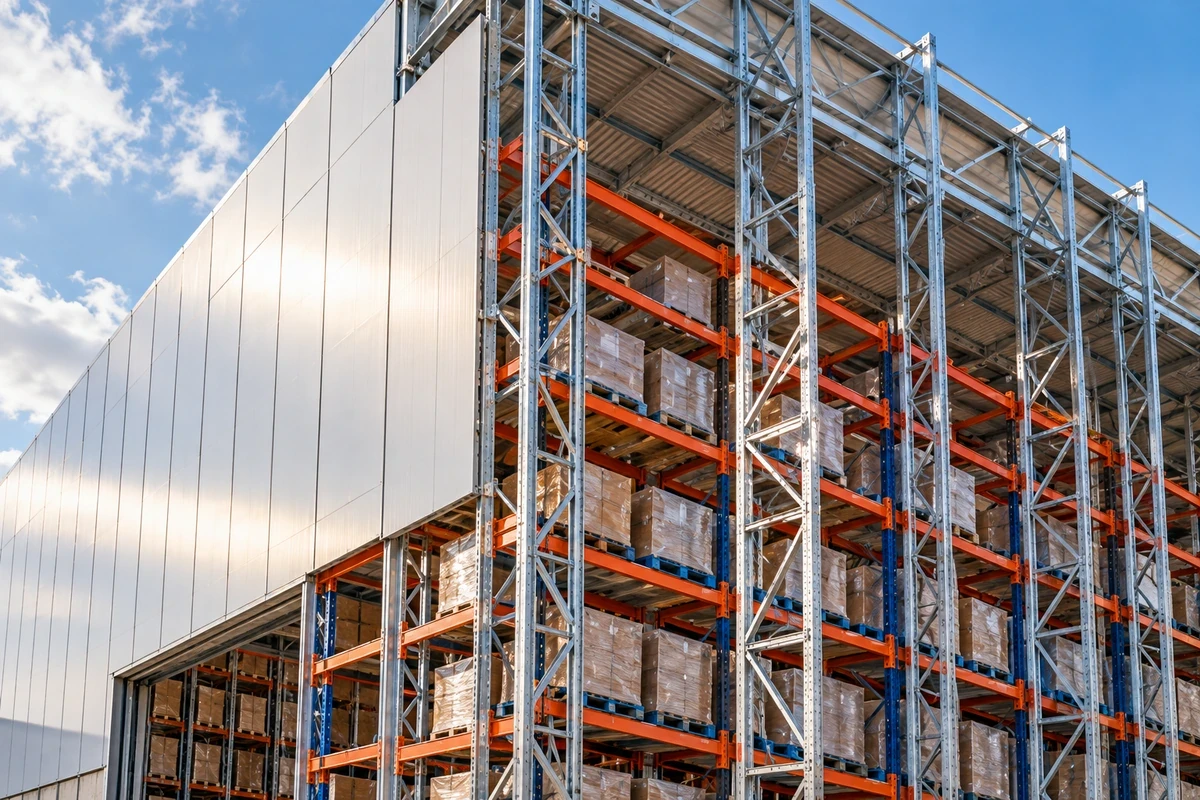
One of the most common mistakes made in warehouse investments is evaluating the design solely based on the physical limits of the existing space. However, in modern warehouse management, the main determining factor is not the size of the area, but the data, operational logic, and product flow with which that area is configured. At this point, data-driven warehouse design refers to shaping all decisions, from rack layout to aisle width, stock positioning to equipment selection, with measurable data.
Especially for medium and large-scale enterprises operating in the logistics, production, and retail sectors, a warehouse is not merely a stock-keeping area. The warehouse system is an operational center directly influential on shipping speed, order accuracy, labor efficiency, equipment utilization, and return on investment. Therefore, correct design should be shaped not by intuitive decisions, but by concrete data such as product movement, order profile, inventory turnover rate, pallet structure, and space usage. Advancing with a strong corporate solution partner ensures that this data is read correctly and the project planning process progresses on a technical foundation.
What is the Basic Logic of Data-Driven Warehouse Design?
Data-driven warehouse design is planning the physical layout inside the warehouse based on the actual operational data of the business rather than past habits or general assumptions. In other words, instead of the approach "we can put a rack here," the question "which product group, with which access frequency, and with what equipment should be placed here?" is taken as the basis.
At the core of this approach lies the fact that not every product behaves the same way in the warehouse. Some products experience high-frequency inflow-outflow, while others remain stationary for a long time. Some occupy high volume but generate low movement, while others generate very intensive operations with low volume. Data-driven design makes these differences visible and transforms the warehouse system into a need-based structure rather than a single uniform one.
Therefore, correct warehouse design does not only produce space that is used well in terms of square footage. At the same time, it provides fewer placement errors, shorter access times, more balanced labor utilization, and the opportunity for more controlled growth.
Which Data Should Be Collected in Warehouse Design?
The first condition for data-driven warehouse design is creating the correct data set. Planning carried out with incomplete or superficial data may yield a system that appears neat at first glance but generates issues when operations scale up. Therefore, not only the quantity of products but also product behavior must be analyzed before design.
The primary data areas that need to be evaluated are:
Number of SKUs and product variety
Movement structure of products on a pallet, box, or unit basis
Order frequency and order line density
Inflow-outflow quantities and seasonal density changes
Inventory turnover rate and holding time
Product dimensions, weight distribution, and packaging standard
FIFO or LIFO requirements
Type of equipment used and operation time
This data influences many decisions, from rack height to aisle configuration. For example, in a warehouse with a high number of different SKUs, direct access is prioritized, whereas in a structure where a small number of SKUs are kept at high density, more compact storage solutions may stand out. Therefore, the data collection phase is one of the most critical starting steps of warehouse investment.
How Does Raw Data Transform into Design Decisions?
Collecting warehouse data is not enough on its own. The real value emerges when this data is made decision-guiding. This is because every data set does not directly represent a design decision. Data needs to be interpreted, processed, and linked to operational scenarios.
For instance, when order history is analyzed, one can see which products move together. This information reduces picking times by ensuring that products are kept in close locations to each other. Similarly, positioning fast-moving products at lower levels and easily accessible areas provides advantages in terms of both speed and safety.
The following questions are important during the data interpretation process:
What are the most frequently moving product groups?
Which products generate low movement despite occupying large space in the warehouse?
Which products are ordered together in the same order?
In which aisles or zones is congestion occurring?
How well does the current location structure match product dimensions?
The answers to these questions remove warehouse design from being an intuitive decision and turn it into an engineering-based layout decision. An experienced expert engineering team does not just report data at this point; they transform it into applicable project planning decisions.
Why is Slotting, ABC Analysis, and Movement Profile Decisive?
At the core of data-driven warehouse design lies the slotting approach. Slotting is placing products in warehouse locations not randomly, but according to movement speed, order profile, size, and the tendency of being ordered together. In layouts made without this approach, even if the warehouse looks full, operational speed decreases.
ABC analysis is also one of the most powerful tools of this structure. Class A products are the most frequently moving, Class B products rotate with moderate frequency, and Class C products are slower moving. However, this classification should not be based solely on sales quantities. Volume, order frequency, the space occupied by the product in the warehouse, and its impact on labor should be evaluated together.
In a correct layout configuration:
Class A products are kept in easily accessible, low-level, and fast-picking zones
Class B products are placed in moderate-density access zones
Class C products are positioned at higher levels or in more distant areas
Thanks to this approach, unnecessary movement inside the warehouse decreases, picking times drop, and the most valuable spaces are allocated to the products that generate the most business. This is why data-driven warehouse design is important not only for space utilization but also for time management.

What is the Role of Data in Selecting a Racking System?
Racking system selection is often considered with a focus on capacity. However, selecting the correct system depends on product profile, order model, and operational density as much as capacity. A rack preference made without using data may seem to yield space gains in the short term, but it creates bottlenecks in the long term.
For example, in structures that require direct access and have a high diversity of SKUs, back-to-back racking systems can offer a more controlled and flexible solution. For businesses wanting to use aisle space more efficiently and having suitable equipment infrastructure, narrow aisle racking systems can be considered. In areas where the same product is kept in large quantities, drive-in racking systems can provide high-density storage opportunities.
In operations with high-density pallet circulation aiming for semi-automatic flow, shuttle racking may provide more efficient results. In facilities where box-based movement is high, mezzanine systems can significantly increase space utilization by transforming vertical space into a second operations floor. Automated storage AS/RS racking stands out as a more advanced system solution in high-volume, high-precision operations aiming for full automation.
What is important here is to select systems according to needs validated by data, rather than according to catalog information. This is the correct corporate and technical approach.
Advantages of Data-Driven Design for Businesses
Data-driven warehouse design does not only produce a more organized warehouse appearance. The real benefit manifests as the measurable improvement of the operation. A correctly designed warehouse system uses the existing space more efficiently while maintaining balance in labor and equipment utilization.
The primary contributions of this approach are:
Increase in location utilization rate
Reduction in order picking times
Reduction in unnecessary internal movements
Lowering the risk of product damage and misplacement
Ability to postpone new investment needs
More controlled scaling of the system when operations grow
This advantage becomes critical, especially for businesses in growth periods. This is because unplanned warehouse structures generate new space requirements, more equipment usage, and higher error rates within a short time. Data-driven design, on the other hand, addresses capacity increases not just in terms of square footage, but together with efficiency.
Data Discipline for Sustainable Warehouse Performance
Data-driven warehouse design should not be viewed as a one-time project effort. This is because product profiles change, order structures transform, channel intensity increases, and operations grow. A layout that is correct today can become inefficient within a few years if data is not updated. Therefore, data discipline must be constant for sustainable warehouse performance.
The correct approach is to treat warehouse design as a living system regularly fed with operational data. This way, rack layout, location logic, picking zones, and equipment utilization can be updated based on the actual movement of the business rather than fixed rules. This perspective transforms the warehouse system from being merely a physical investment into a corporate operational infrastructure that delivers control over quality, speed, and cost.
Combining your product movement data, order density, and space utilization rates in a single technical analysis before moving onto new warehouse investments provides a strong start for a more precise warehouse configuration.
One of the most common mistakes made in warehouse investments is evaluating the design solely based on the physical limits of the existing space. However, in modern warehouse management, the main determining factor is not the size of the area, but the data, operational logic, and product flow with which that area is configured. At this point, data-driven warehouse design refers to shaping all decisions, from rack layout to aisle width, stock positioning to equipment selection, with measurable data.
Especially for medium and large-scale enterprises operating in the logistics, production, and retail sectors, a warehouse is not merely a stock-keeping area. The warehouse system is an operational center directly influential on shipping speed, order accuracy, labor efficiency, equipment utilization, and return on investment. Therefore, correct design should be shaped not by intuitive decisions, but by concrete data such as product movement, order profile, inventory turnover rate, pallet structure, and space usage. Advancing with a strong corporate solution partner ensures that this data is read correctly and the project planning process progresses on a technical foundation.
What is the Basic Logic of Data-Driven Warehouse Design?
Data-driven warehouse design is planning the physical layout inside the warehouse based on the actual operational data of the business rather than past habits or general assumptions. In other words, instead of the approach "we can put a rack here," the question "which product group, with which access frequency, and with what equipment should be placed here?" is taken as the basis.
At the core of this approach lies the fact that not every product behaves the same way in the warehouse. Some products experience high-frequency inflow-outflow, while others remain stationary for a long time. Some occupy high volume but generate low movement, while others generate very intensive operations with low volume. Data-driven design makes these differences visible and transforms the warehouse system into a need-based structure rather than a single uniform one.
Therefore, correct warehouse design does not only produce space that is used well in terms of square footage. At the same time, it provides fewer placement errors, shorter access times, more balanced labor utilization, and the opportunity for more controlled growth.
Which Data Should Be Collected in Warehouse Design?
The first condition for data-driven warehouse design is creating the correct data set. Planning carried out with incomplete or superficial data may yield a system that appears neat at first glance but generates issues when operations scale up. Therefore, not only the quantity of products but also product behavior must be analyzed before design.
The primary data areas that need to be evaluated are:
Number of SKUs and product variety
Movement structure of products on a pallet, box, or unit basis
Order frequency and order line density
Inflow-outflow quantities and seasonal density changes
Inventory turnover rate and holding time
Product dimensions, weight distribution, and packaging standard
FIFO or LIFO requirements
Type of equipment used and operation time
This data influences many decisions, from rack height to aisle configuration. For example, in a warehouse with a high number of different SKUs, direct access is prioritized, whereas in a structure where a small number of SKUs are kept at high density, more compact storage solutions may stand out. Therefore, the data collection phase is one of the most critical starting steps of warehouse investment.
How Does Raw Data Transform into Design Decisions?
Collecting warehouse data is not enough on its own. The real value emerges when this data is made decision-guiding. This is because every data set does not directly represent a design decision. Data needs to be interpreted, processed, and linked to operational scenarios.
For instance, when order history is analyzed, one can see which products move together. This information reduces picking times by ensuring that products are kept in close locations to each other. Similarly, positioning fast-moving products at lower levels and easily accessible areas provides advantages in terms of both speed and safety.
The following questions are important during the data interpretation process:
What are the most frequently moving product groups?
Which products generate low movement despite occupying large space in the warehouse?
Which products are ordered together in the same order?
In which aisles or zones is congestion occurring?
How well does the current location structure match product dimensions?
The answers to these questions remove warehouse design from being an intuitive decision and turn it into an engineering-based layout decision. An experienced expert engineering team does not just report data at this point; they transform it into applicable project planning decisions.
Why is Slotting, ABC Analysis, and Movement Profile Decisive?
At the core of data-driven warehouse design lies the slotting approach. Slotting is placing products in warehouse locations not randomly, but according to movement speed, order profile, size, and the tendency of being ordered together. In layouts made without this approach, even if the warehouse looks full, operational speed decreases.
ABC analysis is also one of the most powerful tools of this structure. Class A products are the most frequently moving, Class B products rotate with moderate frequency, and Class C products are slower moving. However, this classification should not be based solely on sales quantities. Volume, order frequency, the space occupied by the product in the warehouse, and its impact on labor should be evaluated together.
In a correct layout configuration:
Class A products are kept in easily accessible, low-level, and fast-picking zones
Class B products are placed in moderate-density access zones
Class C products are positioned at higher levels or in more distant areas
Thanks to this approach, unnecessary movement inside the warehouse decreases, picking times drop, and the most valuable spaces are allocated to the products that generate the most business. This is why data-driven warehouse design is important not only for space utilization but also for time management.
What is the Role of Data in Selecting a Racking System?
Racking system selection is often considered with a focus on capacity. However, selecting the correct system depends on product profile, order model, and operational density as much as capacity. A rack preference made without using data may seem to yield space gains in the short term, but it creates bottlenecks in the long term.
For example, in structures that require direct access and have a high diversity of SKUs, back-to-back racking systems can offer a more controlled and flexible solution. For businesses wanting to use aisle space more efficiently and having suitable equipment infrastructure, narrow aisle racking systems can be considered. In areas where the same product is kept in large quantities, drive-in racking systems can provide high-density storage opportunities.
In operations with high-density pallet circulation aiming for semi-automatic flow, shuttle racking may provide more efficient results. In facilities where box-based movement is high, mezzanine systems can significantly increase space utilization by transforming vertical space into a second operations floor. Automated storage AS/RS racking stands out as a more advanced system solution in high-volume, high-precision operations aiming for full automation.
What is important here is to select systems according to needs validated by data, rather than according to catalog information. This is the correct corporate and technical approach.
Advantages of Data-Driven Design for Businesses
Data-driven warehouse design does not only produce a more organized warehouse appearance. The real benefit manifests as the measurable improvement of the operation. A correctly designed warehouse system uses the existing space more efficiently while maintaining balance in labor and equipment utilization.
The primary contributions of this approach are:
Increase in location utilization rate
Reduction in order picking times
Reduction in unnecessary internal movements
Lowering the risk of product damage and misplacement
Ability to postpone new investment needs
More controlled scaling of the system when operations grow
This advantage becomes critical, especially for businesses in growth periods. This is because unplanned warehouse structures generate new space requirements, more equipment usage, and higher error rates within a short time. Data-driven design, on the other hand, addresses capacity increases not just in terms of square footage, but together with efficiency.
Data Discipline for Sustainable Warehouse Performance
Data-driven warehouse design should not be viewed as a one-time project effort. This is because product profiles change, order structures transform, channel intensity increases, and operations grow. A layout that is correct today can become inefficient within a few years if data is not updated. Therefore, data discipline must be constant for sustainable warehouse performance.
The correct approach is to treat warehouse design as a living system regularly fed with operational data. This way, rack layout, location logic, picking zones, and equipment utilization can be updated based on the actual movement of the business rather than fixed rules. This perspective transforms the warehouse system from being merely a physical investment into a corporate operational infrastructure that delivers control over quality, speed, and cost.
Combining your product movement data, order density, and space utilization rates in a single technical analysis before moving onto new warehouse investments provides a strong start for a more precise warehouse configuration.
Frequently Asked Questions (FAQ) About Data-Driven Warehouse Design
Frequently Asked Questions (FAQ) About Data-Driven Warehouse Design
Frequently Asked Questions (FAQ) About Data-Driven Warehouse Design
Which Data Should Be Analyzed First in Warehouse Design?
First, product movement frequency, SKU distribution, and order profile should be analyzed. Because most layout decisions are based on these three data fields.
Is It Necessary to Perform ABC Analysis in Every Warehouse?
Is Data-Driven Design Also Necessary for Small Warehouses?
Can Data-Driven Warehouse Design Be Done Without WMS?
How Dependent is the Choice of the Right Racking System on Data?


Contact
Do you want to receive more information? We have expert and reliable contact persons available for any questions, issues, and suggestions.
Reta Engineering Warehouse Racking Systems Industry and Trade Inc.
Address
Muradiye Organized Industrial Zone, 10th St. No: 30 Yunusemre / Manisa
info@retamuhendislik.com.tr