
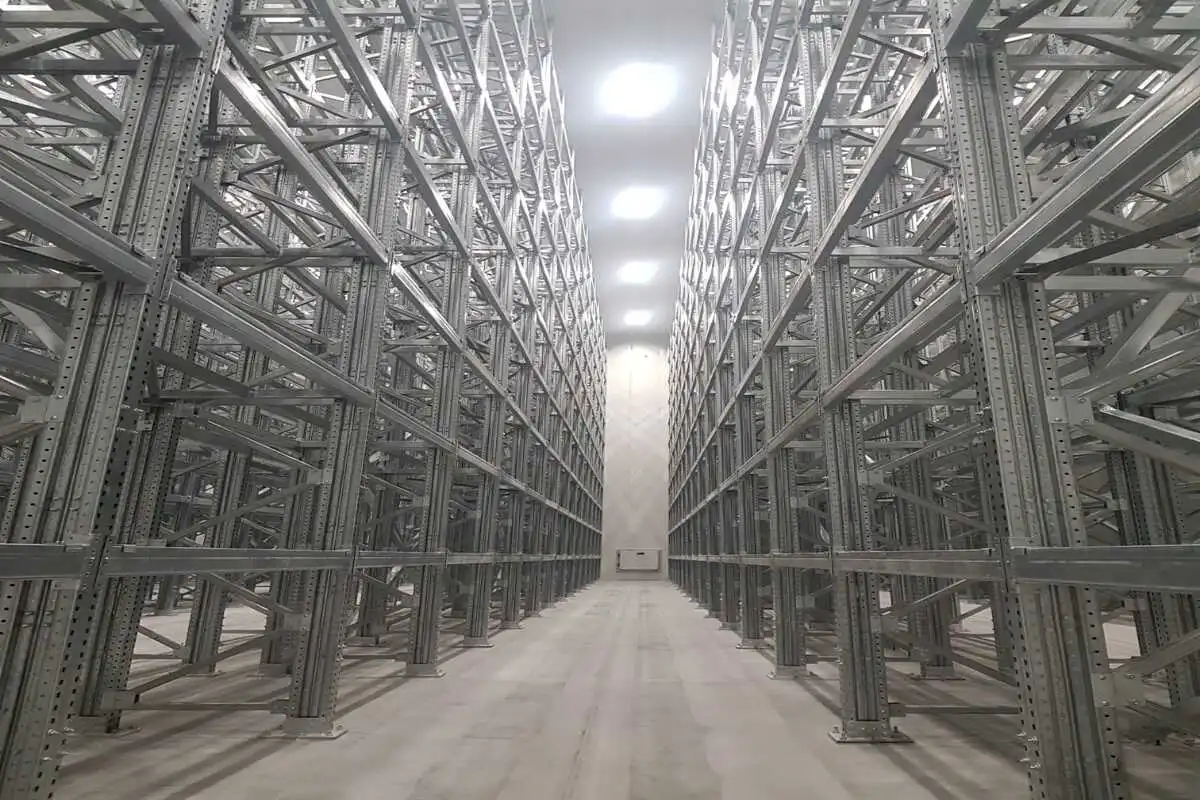
Rack and Floor Design in Cold Storage Facilities
Rack and Floor Design in Cold Storage Facilities
Rack and Floor Design in Cold Storage Facilities
In cold storage facilities, rack and floor design is a determining factor not only in terms of capacity but also safety, equipment compatibility, and operational continuity. The right setup increases efficiency in low-temperature conditions and reduces long-term operational risks.
Learn the critical criteria to consider in rack and floor design in cold storage facilities, how to choose the right racking, and the most common mistakes.
In cold storage facilities, rack and floor design is a determining factor not only in terms of capacity but also safety, equipment compatibility, and operational continuity. The right setup increases efficiency in low-temperature conditions and reduces long-term operational risks.
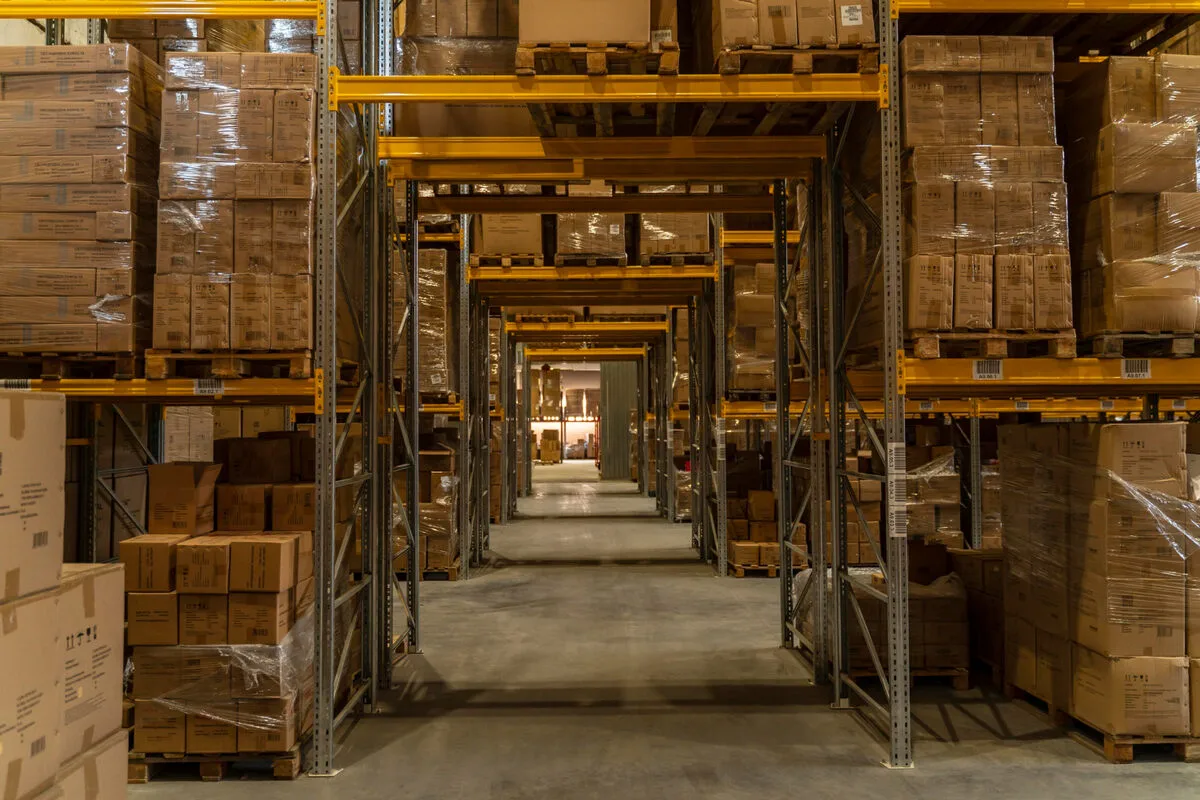
Design of racks and flooring in cold storage facilities requires more technical detail than standard warehouse projects. The main reason is that low temperature, condensation, icing risk, equipment movement, and the need for high operational continuity must all be managed at the same time. An approach that focuses only on increasing capacity can quickly create safety, maintenance, and efficiency problems.
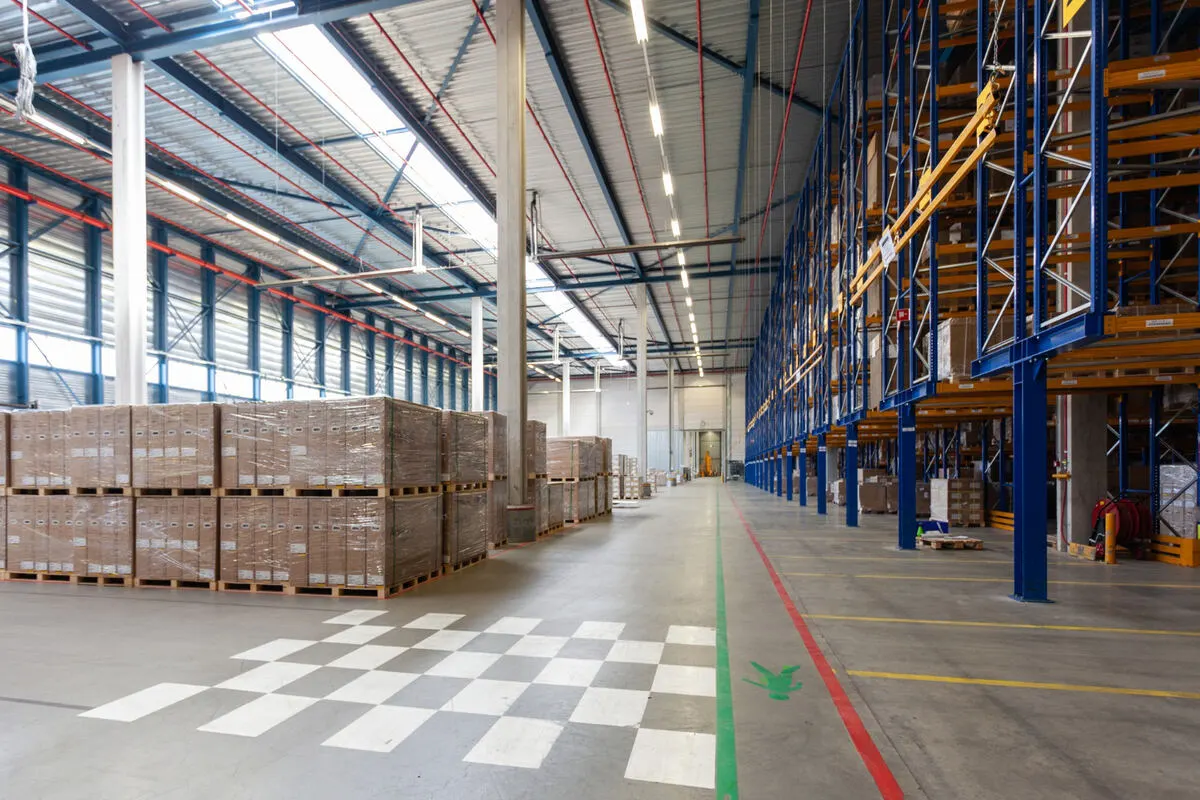
In such projects, rack and floor decisions should not be considered independently. While rack layout, load type, and equipment traffic place direct loads on the floor, floor flatness, slip risk, and strength level also affect rack performance and site safety. Therefore, the right design determines not only initial installation cost but also long-term operating cost.
Especially for businesses in the procurement stage, the right question is this: is this warehouse being built only for today, or is it being planned to also handle growth and increasing operational intensity? Below, we will approach this question with a clear decision framework along the rack and floor axes.
How Is Rack Design Planned in Cold Storage Facilities?
When planning rack design in cold storage facilities, the first step is to clarify the physical structure of the product to be stored. Palletized goods, cartonized goods, box goods, or a mixed structure all change the aisle plan as much as the rack type. In addition, product rotation, intake-outtake frequency, and picking method should be at the center of rack design.
The second step is to assess the temperature range and the operation type together. A chilled warehouse should not be planned with the same site logic as a frozen warehouse. As the low temperature increases, equipment performance, operator working time, and site movement become more sensitive. This creates the need to rebalance access speed and layout density.
The third step is equipment compatibility. If the rack layout is finalized before the forklift type, turning space, and working height are clear, the risk of impact and maneuver loss inside the site increases. Therefore, when calculating capacity, aisles should not be seen as "wasted space."
In projects with high pallet access, a back-to-back racking system often provides a basic starting solution. However, this choice alone may not be sufficient if product turnover is low or high-density needs are present. The goal here is not to choose a single system, but to establish a layout that fits the operational flow.
The technical data that must be clarified at the outset in rack planning are as follows:
product type, pallet dimensions, and maximum load weight
daily intake-outtake intensity and peak period scenario
product rotation requirement (FIFO/LIFO approach)
equipment type to be used and turning space requirement
ceiling height and effective usable height
maintenance, inspection, and impact protection requirements
capacity allowance to be reserved for growth
When these data are clarified from the start, rack design not only creates capacity but also establishes a safe and sustainable operational foundation.
What Should Ideal Flooring Design Be Like in Cold Storage Facilities?
Ideal flooring design in cold storage facilities is not just about creating a durable surface. The floor should be evaluated together in terms of load-bearing capacity, low-temperature behavior, flatness, slip safety, and moisture management. If one of these topics is left incomplete, both the operation and rack stability will be affected over time.
The First Critical Issue Is Load-Bearing Capacity:
Point loads on rack legs cannot be explained by total tonnage alone. The same total load places different stresses on the floor in different rack layouts. Therefore, in flooring design, not only the total load but also load distribution and rack leg pressure must be considered.
The Second Issue Is Flatness:
When floor tolerances are insufficient, rack plumbness can be compromised, equipment movement can become difficult, and the risk of impact can increase. Especially in high-rack warehouses, small floor deviations create large operational impacts on site. This becomes more visible in projects where capacity advantage is the target.
For example, in a cold storage facility planned with a narrow aisle racking system, floor flatness becomes much more critical than in a standard layout. Because equipment movement requires more precise guidance and more controlled aisle use. At this point, floor quality becomes a direct performance criterion.
The Third Issue Is Slip and Icing Risk:
Condensation, door transitions, and operation tempo can reduce surface safety in some areas. Therefore, the floor surface and site management should be considered together. Not only the choice of flooring material, but also the drainage approach and daily operational discipline determine the slip risk.
In short, ideal flooring design should be an infrastructure that safely carries the load of the racking system, supports equipment movement, and maintains continuity in low-temperature conditions.
Why Is Rack and Floor Design Critical in Cold Storage Facilities?
The reason rack and floor design is critical in cold storage facilities is that these two structures continuously affect each other. The load carried by the rack is transferred to the floor, and the behavior of the floor affects the operating safety of the rack. This relationship exists in standard warehouses as well, but in cold storage facilities it becomes more sensitive due to temperature, humidity, and operational intensity.
An incorrect rack-floor combination may not cause problems on day one. However, over time, impact effects, heavy equipment use, surface deterioration, and alignment problems accumulate and turn into operational loss. These losses are often seen only as maintenance costs, yet they also directly affect shipping speed and occupational safety.
This issue is also important in terms of energy efficiency. Unnecessary maneuvering inside the warehouse, downtime caused by impacts, or extended operation times due to poor layout can indirectly increase energy consumption. Therefore, proper design is not just a static engineering issue, but an operational performance issue.
This relationship becomes more visible especially in the clad warehouse racking systems approach, where the structure and racking are addressed together. In such projects, managing rack and floor decisions separately by disconnected teams may increase the need for revisions later. Therefore, a holistic design approach provides a critical advantage.
Which Racking Systems Are Most Suitable for Cold Storage Facilities?
There is no single "most suitable" racking system for cold storage facilities. The right choice depends on product structure, pallet density, rotation needs, access frequency, and equipment usage. Therefore, the operational goal should first be clarified when choosing a system.
In projects with high-density needs and a more limited product variety, a drive-in racking system can be a strong option. This approach can increase space utilization; however, if product rotation and access frequency are not suitable, it may slow down daily operations. Therefore, capacity advantage should not be the only decision criterion.
In some projects aiming for more controlled density and flow, pallet live racking solutions can be considered. In such systems, product flow, operational order, and rotation logic should be addressed together. A system that performs well in the wrong scenario may create significant advantages in the right one.
In warehouses that want to balance access and operational flow alongside high density, shuttle racking may also come into play. However, in this choice, temperature conditions, equipment integration, and the maintenance plan should be clarified from the start. The system should be evaluated not only on initial investment but also on operational continuity.
The table below can be used to compare the selection logic in a practical way:
Need | Suitable Racking Approach | Advantage | Things to Consider |
high storage density | high-density drive-in-type solutions | increases space utilization | access and rotation flexibility |
controlled flow and rotation | pallet live system approaches | provides orderly product flow | product structure and usage scenario |
density + operational balance | shuttle-supported solutions | strengthens the balance between capacity and access | equipment, maintenance, and process plan |
priority on fast access | selective racking layouts | increases operational speed | capacity density may be limited |
Whatever the system choice, the floor tolerance, aisle plan, and equipment compatibility should not be finalized without verification.
Common Design Mistakes in Cold Storage Projects
The most common mistake in cold storage projects is to approach the design solely from a capacity perspective. The goal of fitting more pallets into the warehouse may be correct, but if this goal is not considered together with operational speed, safety, and maintenance access, bottlenecks will occur on site.
Another common mistake is to evaluate the floor after choosing the rack. In some projects, however, the floor condition directly limits the rack system that can be selected. When a rack decision is made and the site is then forced to adapt to it afterward, time and cost increase.
The following mistakes are especially common:
planning aisle and rack height without clarifying the equipment type
leaving floor flatness in the background
seeing condensation and slip risk only as an operational issue
underestimating maintenance and inspection access
not leaving flexible capacity space for growth
evaluating all products with the same stock behavior
Some businesses bring options like mobile racking systems onto the agenda early in the process in pursuit of greater density. It is right to consider this, but if the access frequency and operational pace are not analyzed sufficiently before the decision, the expected efficiency may not be achieved. Therefore, the system choice should always be tested against the real workflow.
Questions to Ask Before Making a Design Decision in a Cold Storage Investment
Asking the right questions at the very beginning of a cold storage investment prevents a significant portion of later revisions. This approach improves not only technical quality but also project duration and overall investment efficiency.
The key questions to clarify before making a design decision are as follows:
What is the structure of the products to be stored; are pallet dimensions, maximum load, packaging type, and product rotation clear?
Is the operation scenario chilled or frozen; how will the temperature range affect rack and floor decisions?
What are the daily throughput and peak period loads; will the design be based on the average day or on the high-intensity scenario?
What is the forklift type to be used and the required equipment movement area; is the aisle layout suitable for this?
Is there a growth plan; in how many years could the current capacity become insufficient?
Which areas should be reserved now for flexible expansion?
Is there automation potential; will solutions like AS/RS racks be considered in long-term planning?
Clarifying these questions from the start prevents rack and floor design from progressing separately. This way, the investment decision can be made not only according to today's needs, but also with a more robust planning approach that preserves operational continuity.
Long-Term Operational Safety with the Right Rack and Floor Layout
When rack and floor design are addressed together in cold storage facilities, the result is not only a safe installation but also a more predictable operational structure. The right approach is to evaluate capacity, access speed, floor strength, equipment compatibility, and maintenance requirements within a single system logic.
Wrong decisions often generate costs not at the initial installation stage, but during the operating period. Therefore, clarifying the technical data at the procurement stage and designing the project accordingly is one of the most effective ways to keep total cost under control.
Design of racks and flooring in cold storage facilities requires more technical detail than standard warehouse projects. The main reason is that low temperature, condensation, icing risk, equipment movement, and the need for high operational continuity must all be managed at the same time. An approach that focuses only on increasing capacity can quickly create safety, maintenance, and efficiency problems.
In such projects, rack and floor decisions should not be considered independently. While rack layout, load type, and equipment traffic place direct loads on the floor, floor flatness, slip risk, and strength level also affect rack performance and site safety. Therefore, the right design determines not only initial installation cost but also long-term operating cost.
Especially for businesses in the procurement stage, the right question is this: is this warehouse being built only for today, or is it being planned to also handle growth and increasing operational intensity? Below, we will approach this question with a clear decision framework along the rack and floor axes.
How Is Rack Design Planned in Cold Storage Facilities?
When planning rack design in cold storage facilities, the first step is to clarify the physical structure of the product to be stored. Palletized goods, cartonized goods, box goods, or a mixed structure all change the aisle plan as much as the rack type. In addition, product rotation, intake-outtake frequency, and picking method should be at the center of rack design.
The second step is to assess the temperature range and the operation type together. A chilled warehouse should not be planned with the same site logic as a frozen warehouse. As the low temperature increases, equipment performance, operator working time, and site movement become more sensitive. This creates the need to rebalance access speed and layout density.
The third step is equipment compatibility. If the rack layout is finalized before the forklift type, turning space, and working height are clear, the risk of impact and maneuver loss inside the site increases. Therefore, when calculating capacity, aisles should not be seen as "wasted space."
In projects with high pallet access, a back-to-back racking system often provides a basic starting solution. However, this choice alone may not be sufficient if product turnover is low or high-density needs are present. The goal here is not to choose a single system, but to establish a layout that fits the operational flow.
The technical data that must be clarified at the outset in rack planning are as follows:
product type, pallet dimensions, and maximum load weight
daily intake-outtake intensity and peak period scenario
product rotation requirement (FIFO/LIFO approach)
equipment type to be used and turning space requirement
ceiling height and effective usable height
maintenance, inspection, and impact protection requirements
capacity allowance to be reserved for growth
When these data are clarified from the start, rack design not only creates capacity but also establishes a safe and sustainable operational foundation.
What Should Ideal Flooring Design Be Like in Cold Storage Facilities?
Ideal flooring design in cold storage facilities is not just about creating a durable surface. The floor should be evaluated together in terms of load-bearing capacity, low-temperature behavior, flatness, slip safety, and moisture management. If one of these topics is left incomplete, both the operation and rack stability will be affected over time.
The First Critical Issue Is Load-Bearing Capacity:
Point loads on rack legs cannot be explained by total tonnage alone. The same total load places different stresses on the floor in different rack layouts. Therefore, in flooring design, not only the total load but also load distribution and rack leg pressure must be considered.
The Second Issue Is Flatness:
When floor tolerances are insufficient, rack plumbness can be compromised, equipment movement can become difficult, and the risk of impact can increase. Especially in high-rack warehouses, small floor deviations create large operational impacts on site. This becomes more visible in projects where capacity advantage is the target.
For example, in a cold storage facility planned with a narrow aisle racking system, floor flatness becomes much more critical than in a standard layout. Because equipment movement requires more precise guidance and more controlled aisle use. At this point, floor quality becomes a direct performance criterion.
The Third Issue Is Slip and Icing Risk:
Condensation, door transitions, and operation tempo can reduce surface safety in some areas. Therefore, the floor surface and site management should be considered together. Not only the choice of flooring material, but also the drainage approach and daily operational discipline determine the slip risk.
In short, ideal flooring design should be an infrastructure that safely carries the load of the racking system, supports equipment movement, and maintains continuity in low-temperature conditions.
Why Is Rack and Floor Design Critical in Cold Storage Facilities?
The reason rack and floor design is critical in cold storage facilities is that these two structures continuously affect each other. The load carried by the rack is transferred to the floor, and the behavior of the floor affects the operating safety of the rack. This relationship exists in standard warehouses as well, but in cold storage facilities it becomes more sensitive due to temperature, humidity, and operational intensity.
An incorrect rack-floor combination may not cause problems on day one. However, over time, impact effects, heavy equipment use, surface deterioration, and alignment problems accumulate and turn into operational loss. These losses are often seen only as maintenance costs, yet they also directly affect shipping speed and occupational safety.
This issue is also important in terms of energy efficiency. Unnecessary maneuvering inside the warehouse, downtime caused by impacts, or extended operation times due to poor layout can indirectly increase energy consumption. Therefore, proper design is not just a static engineering issue, but an operational performance issue.
This relationship becomes more visible especially in the clad warehouse racking systems approach, where the structure and racking are addressed together. In such projects, managing rack and floor decisions separately by disconnected teams may increase the need for revisions later. Therefore, a holistic design approach provides a critical advantage.
Which Racking Systems Are Most Suitable for Cold Storage Facilities?
There is no single "most suitable" racking system for cold storage facilities. The right choice depends on product structure, pallet density, rotation needs, access frequency, and equipment usage. Therefore, the operational goal should first be clarified when choosing a system.
In projects with high-density needs and a more limited product variety, a drive-in racking system can be a strong option. This approach can increase space utilization; however, if product rotation and access frequency are not suitable, it may slow down daily operations. Therefore, capacity advantage should not be the only decision criterion.
In some projects aiming for more controlled density and flow, pallet live racking solutions can be considered. In such systems, product flow, operational order, and rotation logic should be addressed together. A system that performs well in the wrong scenario may create significant advantages in the right one.
In warehouses that want to balance access and operational flow alongside high density, shuttle racking may also come into play. However, in this choice, temperature conditions, equipment integration, and the maintenance plan should be clarified from the start. The system should be evaluated not only on initial investment but also on operational continuity.
The table below can be used to compare the selection logic in a practical way:
Need | Suitable Racking Approach | Advantage | Things to Consider |
high storage density | high-density drive-in-type solutions | increases space utilization | access and rotation flexibility |
controlled flow and rotation | pallet live system approaches | provides orderly product flow | product structure and usage scenario |
density + operational balance | shuttle-supported solutions | strengthens the balance between capacity and access | equipment, maintenance, and process plan |
priority on fast access | selective racking layouts | increases operational speed | capacity density may be limited |
Whatever the system choice, the floor tolerance, aisle plan, and equipment compatibility should not be finalized without verification.
Common Design Mistakes in Cold Storage Projects
The most common mistake in cold storage projects is to approach the design solely from a capacity perspective. The goal of fitting more pallets into the warehouse may be correct, but if this goal is not considered together with operational speed, safety, and maintenance access, bottlenecks will occur on site.
Another common mistake is to evaluate the floor after choosing the rack. In some projects, however, the floor condition directly limits the rack system that can be selected. When a rack decision is made and the site is then forced to adapt to it afterward, time and cost increase.
The following mistakes are especially common:
planning aisle and rack height without clarifying the equipment type
leaving floor flatness in the background
seeing condensation and slip risk only as an operational issue
underestimating maintenance and inspection access
not leaving flexible capacity space for growth
evaluating all products with the same stock behavior
Some businesses bring options like mobile racking systems onto the agenda early in the process in pursuit of greater density. It is right to consider this, but if the access frequency and operational pace are not analyzed sufficiently before the decision, the expected efficiency may not be achieved. Therefore, the system choice should always be tested against the real workflow.
Questions to Ask Before Making a Design Decision in a Cold Storage Investment
Asking the right questions at the very beginning of a cold storage investment prevents a significant portion of later revisions. This approach improves not only technical quality but also project duration and overall investment efficiency.
The key questions to clarify before making a design decision are as follows:
What is the structure of the products to be stored; are pallet dimensions, maximum load, packaging type, and product rotation clear?
Is the operation scenario chilled or frozen; how will the temperature range affect rack and floor decisions?
What are the daily throughput and peak period loads; will the design be based on the average day or on the high-intensity scenario?
What is the forklift type to be used and the required equipment movement area; is the aisle layout suitable for this?
Is there a growth plan; in how many years could the current capacity become insufficient?
Which areas should be reserved now for flexible expansion?
Is there automation potential; will solutions like AS/RS racks be considered in long-term planning?
Clarifying these questions from the start prevents rack and floor design from progressing separately. This way, the investment decision can be made not only according to today's needs, but also with a more robust planning approach that preserves operational continuity.
Long-Term Operational Safety with the Right Rack and Floor Layout
When rack and floor design are addressed together in cold storage facilities, the result is not only a safe installation but also a more predictable operational structure. The right approach is to evaluate capacity, access speed, floor strength, equipment compatibility, and maintenance requirements within a single system logic.
Wrong decisions often generate costs not at the initial installation stage, but during the operating period. Therefore, clarifying the technical data at the procurement stage and designing the project accordingly is one of the most effective ways to keep total cost under control.
Frequently Asked Questions (FAQ) About Rack and Floor Design in Cold Storage Facilities
Frequently Asked Questions (FAQ) About Rack and Floor Design in Cold Storage Facilities
Frequently Asked Questions (FAQ) About Rack and Floor Design in Cold Storage Facilities
How to Reduce Floor Slipping in a Cold Storage Warehouse?
Slip risk is reduced by addressing surface texture, condensation management, drainage planning, and operational discipline together. Focusing only on the floor covering is not enough.
How Often Should Rack Maintenance Be Scheduled in a Cold Storage Warehouse?
Which risks increase as height increases in cold storage warehouses?
Should the Floor Be Rechecked When Replacing Racks in an Existing Cold Storage Facility?
In Cold Storage Design, Should the Racks or the Floor Be Planned First?


Contact
Do you want to receive more information? We have expert and reliable contact persons available for any questions, issues, and suggestions.
Reta Engineering Warehouse Racking Systems Industry and Trade Inc.
Address
Muradiye Organized Industrial Zone, 10th St. No: 30 Yunusemre / Manisa
info@retamuhendislik.com.tr